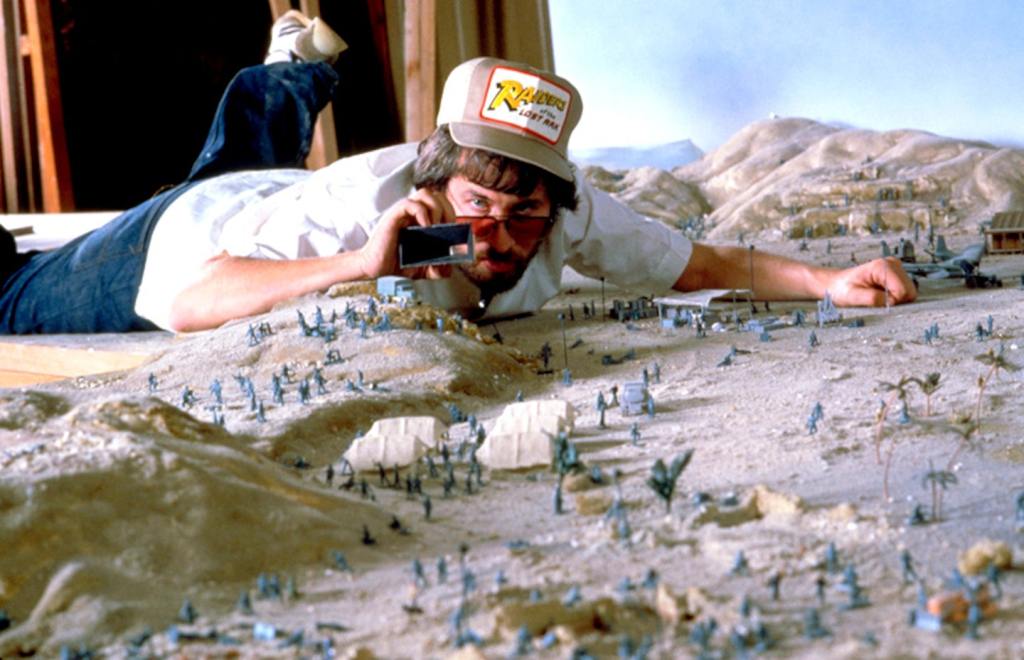
Reader Beware: This is a longer post than what I will normally being covering with this series. It’s just difficult for me not to gush about my absolutely favorite filmmaker. Additional entries in this series will (more than likely) not be this long. There, you’ve been warned.
He is one of the founding pioneers of the New Hollywood wave, considered the “Godfather” of the modern blockbuster, and is known as one of the most popular directors and producers in film history. Steven Spielberg has been influencing and inspiring Hollywood and its creators for over four decades.
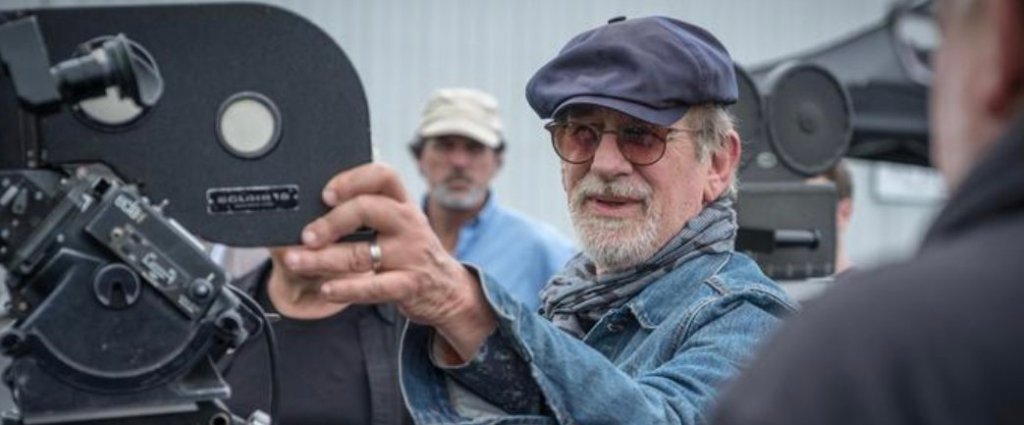
“Once a month the sky falls on my head, I come to and I see another movie I want to make.”
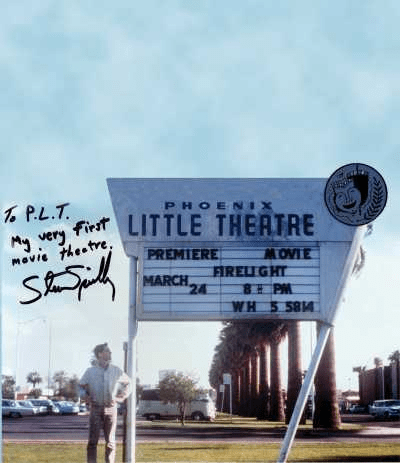
Even at a very young age, Steven Spielberg had been fascinated with the movies. He began his obsession with filmmaking at the age of 12 with his father’s 8mm camera, progressing in his knowledge and passion to releasing his film Firelight, a 140-minute science fiction film at the age of sixteen at a theater in his hometown of Phoenix, Arizona. It had a budget of $500 (which took him a year to shoot), but in the end, his premier recouped its cost. The film would later inspire his science fiction classic, Close Encounters of the Third Kind.
What started out as a homemaking hobby turned into a full-time obsession. Spielberg spent two summer vacations trespassing onto the Universal Studio lot, where he disguised himself as an employee, flashing an expired three-day pass to the smiling main-gate guard in order to keep gaining access. He eventually converted this infatuation into employment within the studio system, garnering recognition with his short films, especially one called Amblin’. It was a 26-minute short with no dialog that Spielberg later referred to as nothing more than a “Pepsi commercial” but professionally made.
Sid Sheinberg, the then-President of Universal, recognized the talent behind the green director, and took young Spielberg under his wing, placing him in the MCA/Universal Television division. After directing a few moderately successful television episodes Spielberg eventually earned the right to direct a little television movie-of-the-week called Duel. This film would later be released theatrically overseas. The rest, shall we say, was history.
DIRECTOR’S TRADEMARKS
Spielberg, like most of his contemporaries, has his own set of director’s trademarks. The ones listed below are undeniably his, and his alone. (I say that with such conviction, but I’m certain that other director’s have similar trademarks, especially reflection shots.) Which trademarks did I leave out? The ones I left out were three specific collaborative pairings with Spielberg. While these artists are masters of their craft in their own right, these three are either very obvious or a little further on the Film-Geek Spectrum (a term that may exist on the internet, but I feel I just coined it here) that most wouldn’t immediately recognize.
Those three pairings are: (1) Composer John Williams, (2) Editor Michael Kahn, and (3) Cinematographer Janus Kaminski. Spielberg has almost consistently collaborated with John Williams for over 50 years starting with The Sugarland Express. There are only a handful of his films that Williams hasn’t scored. Just a few years later Kahn joined forces in Close Encounters of the Third Kind. Strangely enough, it took Spielberg another 15 years before settling down with DP Kaminski starting with Schindler’s List. Outside a few films, those three have collaborated on some of the most iconic scenes in movie history.
Even by removing those three, I believe that most identifiable trademarks are still represented here. (If I’ve missed one, please let me know by leaving a comment.)
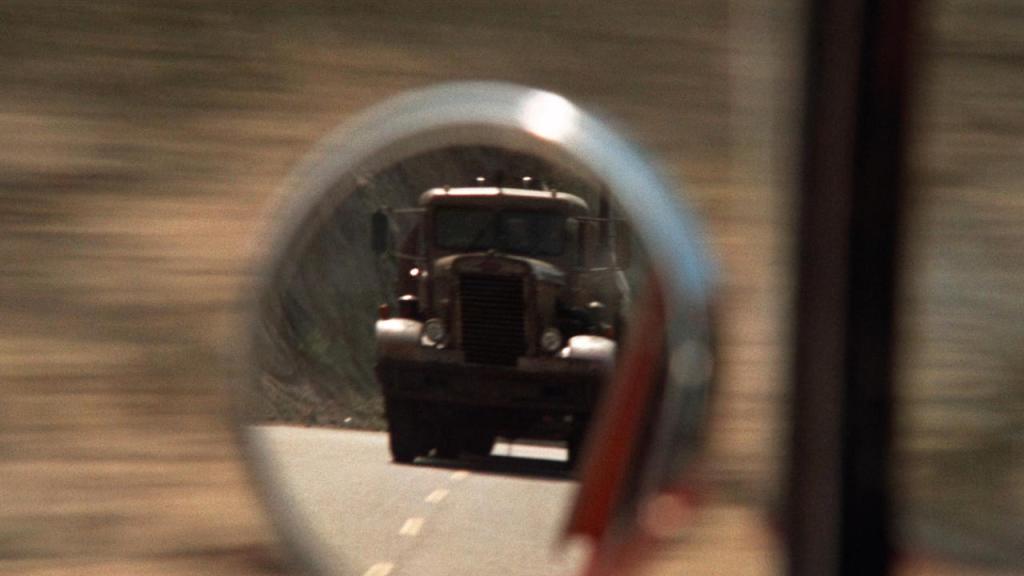
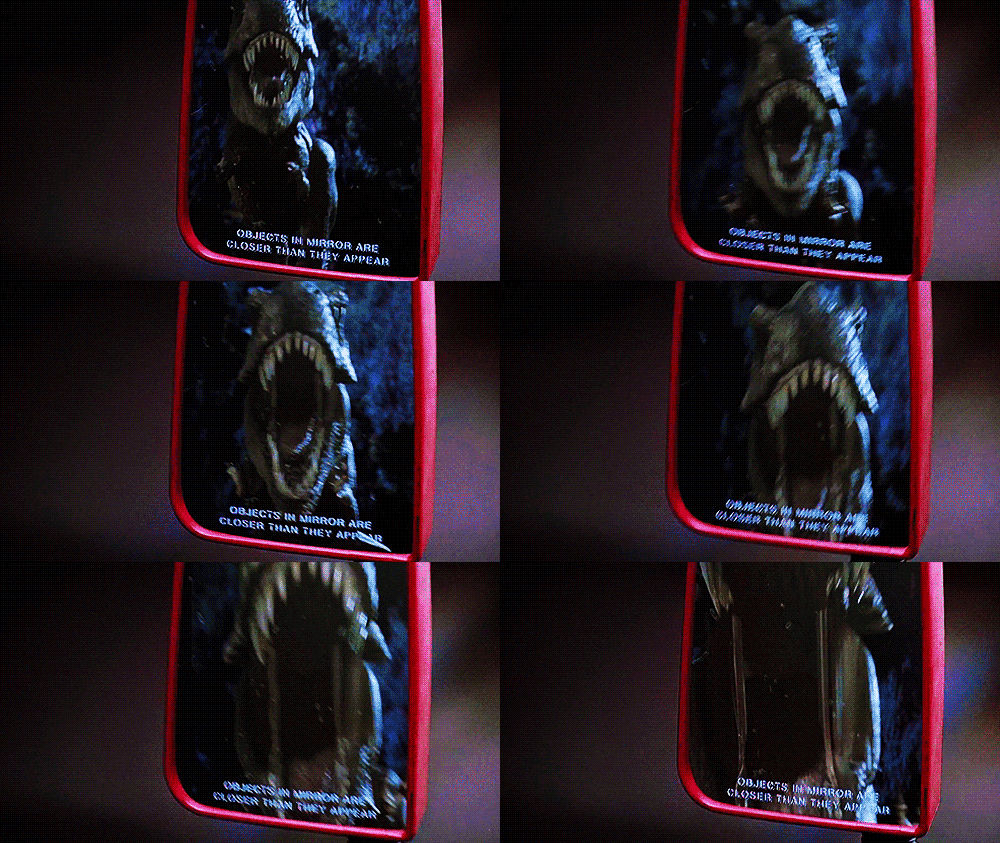
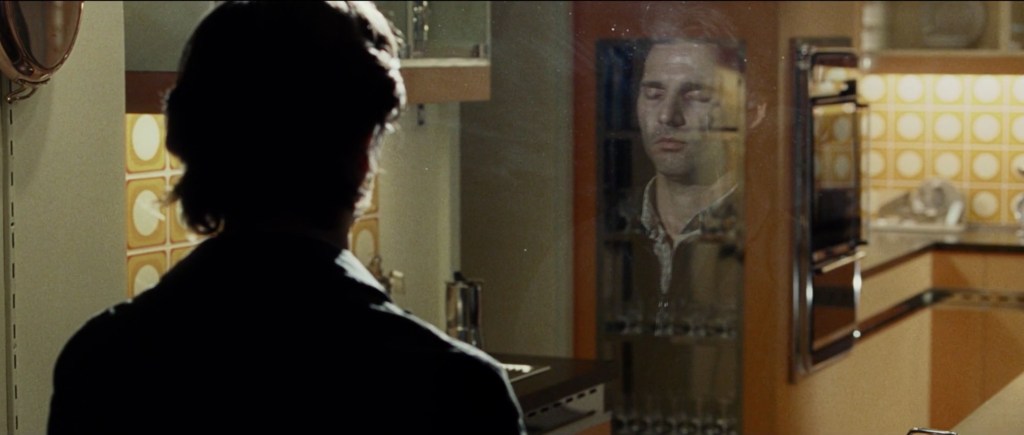
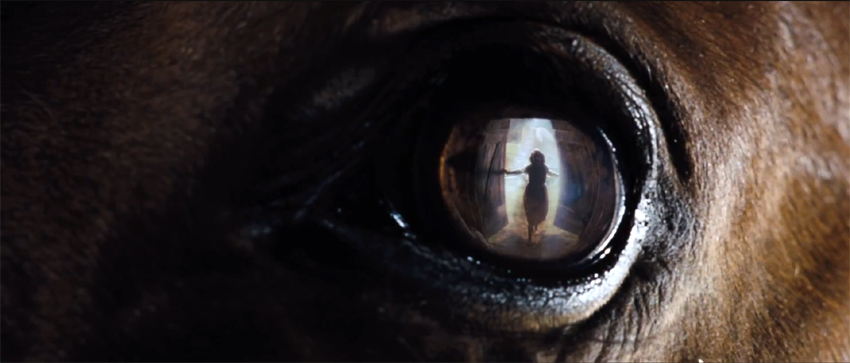
THE REFLECTION SHOT
Spielberg loves to use either practical or impractical images to compose this shot. The easiest and most obvious come with mirrors. This trademark most likely started with Duel and has been in practically every other film he’s released since. When I was younger, I thought this trademark signature shot was only used with side-view or rear-view mirrors on a moving vehicle. As I matured, I began to notice these shots with more than just a mirror on a car, but then seeing it on glass that a character is looking out from, or an indirect reflection on something else entirely. This specific Spielberg trademark is my absolute favorite.
THE SHOOTING STAR
Legend has it that Spielberg and his crew accidentally filmed the shooting star you can glimpse briefly in Jaws. You can see it during the third act on the Orca, during the night sequence, as it moves behind Brody’s head. A second shooting star appears soon after the first in a wide shot before the end of the scene. (It had been heavily debated for years as to whether it was real. It was eventually debunked in 2018. If this interests you in any way, you can read more about it here.)
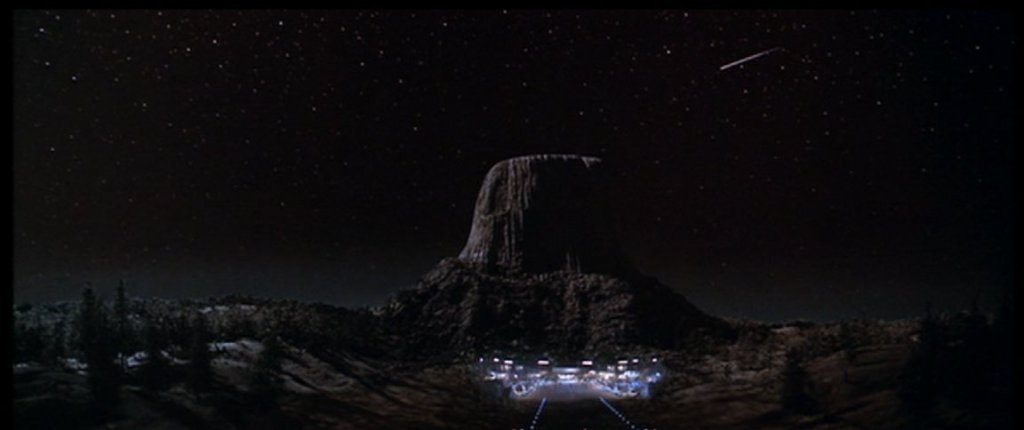
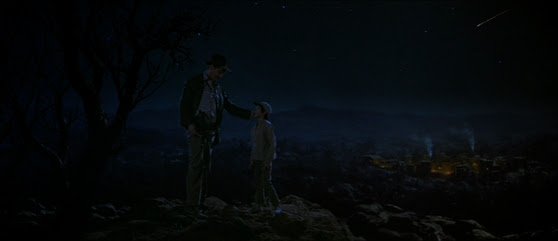
Spielberg has included a shooting star in the background of his movies as a good luck charm, usually before something climatic happens. A shooting star can also be seen in such films as Close Encounters of the Third Kind, and Indiana Jones and the Temple of Doom. This trademark is much more apparent in his earlier work, and while there may be others, I haven’t been able to spot them (or I haven’t been looking hard enough).
THE PARENTAL ISSUE
This thematic trademark is prevalent especially of his earlier work, where those stories involve young children. This familiar element displayed the internal struggle that Spielberg had as he struggled with his parent’s divorce when he was a kid, laying a lot of that personal resentment on his father. Specific examples of this trademark can be seen in The Sugarland Express, Close Encounters of the Third Kind, E.T. The Extra Terrestrial, Indiana Jones and the Last Crusade, Hook, and even as recent as Catch Me If You Can and War of the Worlds.
If I’m being completely transparent here, I started writing this post pre-COVID before letting it sit dormant in my draft folder for approximately 7 years. By the time I came back to it in 2025, Spielberg had directed another four feature films including a semi-autobiographical story of his childhood. Now all you have to do now is watch The Fabelmans if you want to fully understand how and where that internal struggle originated.
THE SPIELBERG FACE
This is another one that seemed almost non-existent before Spielberg. This trademark goes like this: something incredible is happening off camera, but all you’re seeing right now is the character’s face and their emotional reaction to that “said something.” But don’t worry, the payoff is coming soon, but first Spielberg wants you to have an emotional connection to that character before you get to see what it is that they’re looking at for yourself.
If you’re not sure what I’m talking about, I’ll give you a couple of examples. Little Barry in Close Encounters and his facial reactions to the aliens in his house that we never see. Alan Grant and Ellie Sattler riding in the Jeep in Jurassic Park, when they first encounter the dinosaurs before we see them. Indiana Jones in Last Crusade, when we see the look of shock and horror, as he realizes that the tank he is riding on is about to go over a cliff. That is “The Spielberg Face.”
At the bottom of this post I’ll provide examples of each of Spielberg’s Trademarks. However, let’s get to his Essential Five.
THE ESSENTIAL FIVE
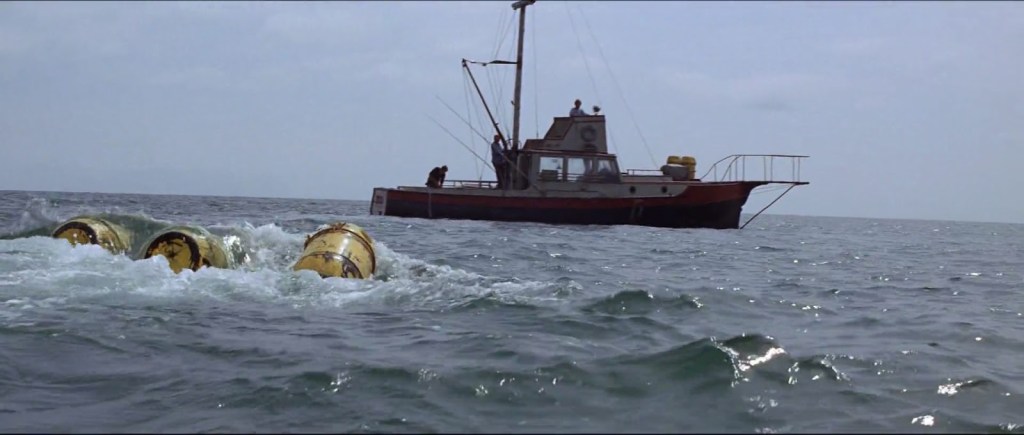
JAWS | 1975
“Martin, it’s all psychological. You yell barracuda, everybody says, ‘Huh? What?’ You yell shark, we’ve got a panic on our hands on the Fourth of July.”
In Jaws, a great white shark unleashes chaos on a small beach town, prompting the local police chief, a marine biologist, and a grizzled shark hunter to join forces in a desperate hunt to capture the monstrous predator. As the body count rises, the trio must confront their fears and confront the terror lurking beneath the waves.
I had always been fascinated with the story of Jaws, even as a young boy. I remember one day riding with my father down to see my Grandpa in Huntington Beach, California. I couldn’t have been more than twelve at the time and my father, recognizing my peaked interest in the story (and that it wasn’t going away), chose to narrate the entire plot of the movie to me on that trip. Understanding my relatively gentle nature (especially at that age), he proceeded to tell me everything that happened, including all of the scary parts. I guess that was his way making sure that if I still really wanted to see the movie, that nothing would take me by surprise. My interest in this film hasn’t waned since that conversation. Sadly, upon recently sharing this memory with my father, he doesn’t recall doing this at all. I guess it wasn’t as memorable to him as it was to me.
I have watched Jaws at least once a year for the last thirty years, most often around the Fourth of July. The second time I became fixated with this film arrived in 1995 when I purchased this specific issue of Premiere Magazine (see image below) that featured a behind the scenes article marking its 20th Anniversary at that time, and further fueling my obsession:


RAIDERS OF THE LOST ARK | 1981
“Oh, Marcus. What are you trying to do, scare me? You sound like my mother. We’ve known each other for a long time. I don’t believe in magic, a lot of superstitious hocus pocus. I’m going after a find of incredible historical significance, you’re talking about the boogie man. Besides, you know what a cautious fellow I am.”
In Raiders of the Lost Ark, archaeologist Indiana Jones embarks on a globe-trotting quest to locate the biblical Ark of the Covenant before it falls into the hands of the Nazis, who seek its supernatural powers to conquer the world. With a mix of thrilling adventure, cunning traps, and daring escapes, Indy must outsmart his enemies while unraveling ancient mysteries.
Raiders of the Lost Ark is the one movie on this Essential list of Spielberg films where I can’t exactly recall the first time I saw it. The film was in steady rotation at home, probably taped off of television with commercials (edited for time and content). By the time I had my own television and VCR in my room (yes, I am aware of how old I am), along with my own income, I purchased a copy. But if I were a betting man, I would think the first time I laid eyes on this film was probably when it was first broadcast on network television for the ABC Sunday Night Movie. I would have been at the appropriate viewing age by the time it was shown on television (which was 1986). There’s a good change I would have freaked out over the melting face finale if I had been younger.
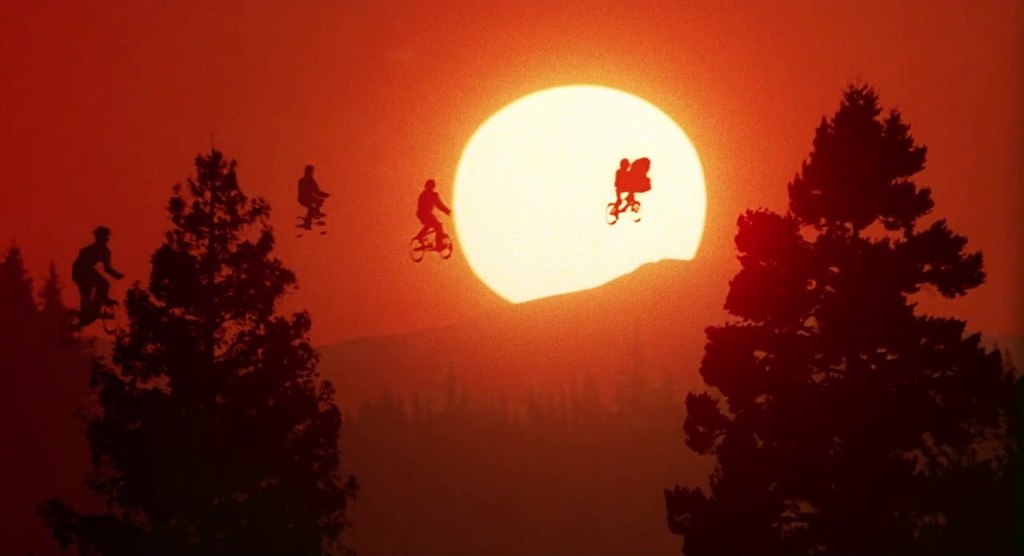
E.T. THE EXTRA TERRESTRIAL | 1982
“Elliot, I don’t think he was left here intentionally, but his being here is a miracle, Elliot. It’s a miracle and you did the best that anybody could do. I’m glad he met you first.”
In E.T. The Extra-Terrestrial, a young boy named Elliott befriends an alien stranded on Earth and helps him evade capture while trying to return to his home planet. Together, they embark on an adventure of friendship and discovery that ultimately teaches them about love, sacrifice, and the importance of connection.
I remember first hand the first time I saw E.T. It was during the summer of 1982 and we had gone to see it at the Drive-In. We went to see it in the station wagon, and on the way home, as we rode in the back (facing backwards, mind you) my cousin Amber got car sick. It’s funny how certain memories are burned into your brain.
Time is a funny thing. I’ve had a 40 year emotional rollercoaster relationship this movie. A core memory was created when I saw that move when I was 6-years-old. Most kids my age likely had that exact same connection. Once I was in my 20s, I would still watch E.T., but it would typically be with a more critical eye — admiring Spielberg’s talents behind the camera as my interest in filmmaking grew.
But something changed again soon after I turned 44 and I once again became emotionally invested in this film. If you ever want to know how a grown man can bawl like a little boy at the end of this movie, all you have to do is watch that same man have to say goodbye to his first family dog as an adult. That’s how. I made the mistake of watching E.T. soon after we lost Amity in 2019 (yes, we named our dog after the island in Jaws). That was an emotional gut punch I was not expecting. Took me my complete surprise. And I’ll still re-watch it to this day, just please don’t look at me during the last 10 minutes, that’s all I ask, or you’ll witness this:

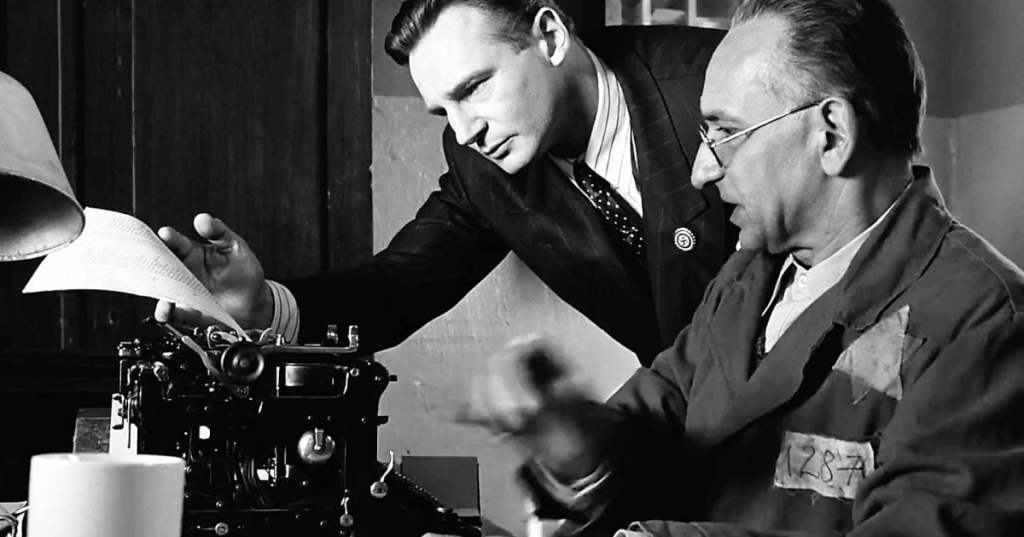
SCHINDLER’S LIST | 1993
“This list… is an absolute good. The list is life. All around its margins lies the gulf.”
In Schindler’s List, businessman Oskar Schindler emerges as an unlikely hero, saving over a thousand Polish Jews during the Holocaust by employing them in his factories. As he witnesses the horrific atrocities committed by the Nazis, Schindler risks everything to protect those he has come to see as friends, ultimately transforming his own life in the process.
I was still in High School when Schindler’s List was released in the theaters. I recall having an internal struggle about wanting to see it and afraid of what I was going to see. I had learned of the atrocities that occurred in Nazi Germany and the surrounding countries under its rule during WWII, but I never really clearly understood what happened until I saw this film. I’m unsure as to who I went with, or exactly when I saw it, but I new it was soon after the new year in 1994. When I walked out of the theater, I was emotionally drained. I wouldn’t feel the same way leaving a theater for another five years.
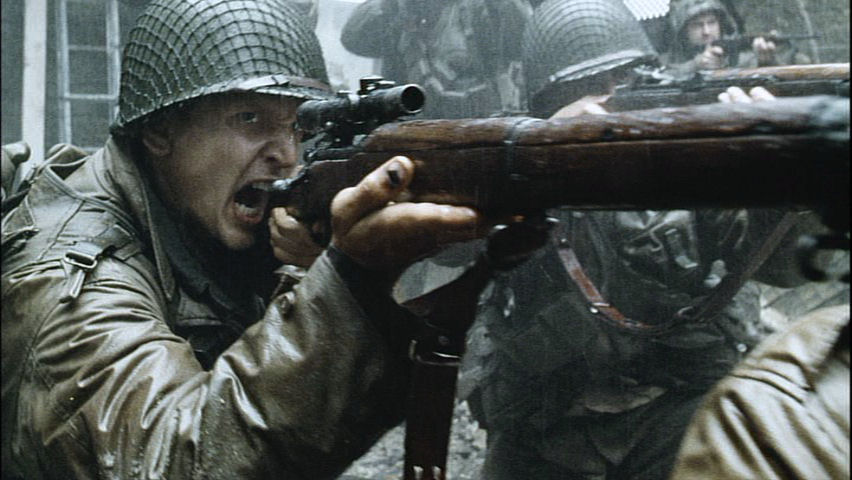
SAVING PRIVATE RYAN | 1998
“You want to leave? You want to go off and fight the war? All right. All right. I won’t stop you. I’ll even put in the paperwork. I just know that every man I kill the farther away from home I feel.”
In Saving Private Ryan, a group of U.S. soldiers embarks on a perilous mission during World War II to locate and bring home Private James Ryan, whose brothers have been killed in action. Amidst the brutal realities of war, the film explores themes of sacrifice, brotherhood, and the moral complexities faced by soldiers on the battlefield.
By the time Saving Private Ryan was released in the theaters, my love of film and filmmaking had grown exponentially. When I heard that Spielberg was going to make a WWII War film, I could hardly contain my excitement. After my first viewing, I was once again emotionally drained but had also garnered a new found respect for my grandfathers, who were both WWII Veterans (as well as all veterans in general) that I had never fully realized before. After my second viewing, I had come to the conclusion that Spielberg was one of the greatest filmmakers of our generation. I still believe that.
THE 6TH PICK (Honorable Mention)
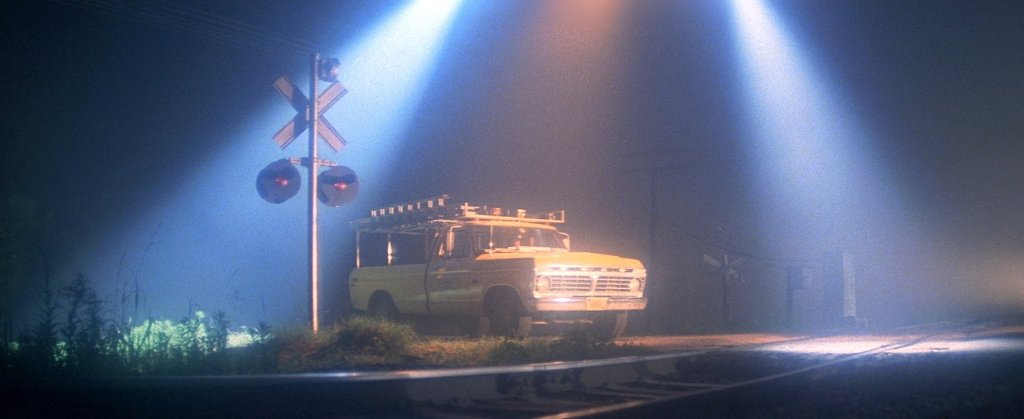
CLOSE ENCOUNTERS OF THE THIRD KIND | 1977
“I know this sounds crazy, but ever since yesterday on the road, I’ve been seeing this shape. Shaving cream, pillows… Dammit! I know this. I know what this is! This means something. This is important.”
In Close Encounters of the Third Kind, a group of people are drawn together by mysterious visions and encounters with UFOs, leading them to a remote location in Wyoming. As they seek to understand what is happening, one man’s obsession ultimately brings him face-to-face with extraterrestrial visitors, unraveling the profound connection between humanity and otherworldly life.
Considered Spielberg’s most personal film, I knew of Close Encounters only by certain scenes for years before I actually sat down and watched the film from start to finish. I was probably around thirteen at the time. While parts absolutely fascinated me, some also put me to sleep. This film could not be made today for many reasons. Or should I say, this exact version would not be made today. Attention spans have decreased over the past few decades, and audiences want to get to the story. They don’t want the film to slowly unfold the way it does on screen here. The pacing would be quicker, the story would be shorter, and the lead protagonist would likely stay with his family. Spielberg isn’t the same filmmaker as he was in 1977. A young, ambitious, and carefree writer/director allows Roy Neary, husband and father of three, to leave his family in pursuit of an extra terrestrial encounter. That’s what makes the film so original and groundbreaking.
TRADEMARK | The Reflection Shot

TRADEMARK | The Shooting Star

TRADEMARK | The Parental Issue
E.T.: The Extra-Terrestrial (1982)
Close Encounters of the Third Kind (1977)
War of the Worlds (2005)
TRADEMARK | The Spielberg Face
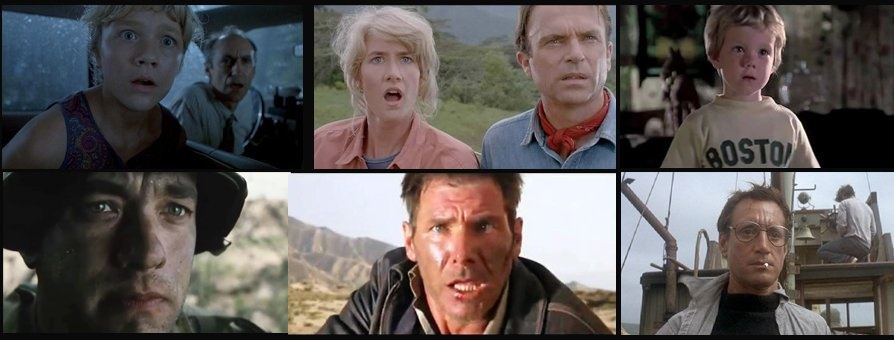
While I already went into some detail regarding this trademark, sharing one video essay that’s just under 10 minutes provides a multitude of these signature shots, as well as key insight into origin of the shot, and its influence in cinema today.
KEY SCENES
T-Rex Makes His Grand Appearance
In Jurassic Park, the first appearance of the T-Rex is a thrilling and iconic moment. Ripples in a glass of water lead to paralyzing panic when the silhouette of the T-Rex appears, emerging through the darkness. The seamless blend of computer graphics and practical effects creates an unforgettable moment that perfectly sets the tone for the chaos and danger that unfolds throughout the film. (Rumor has it that Spielberg was listening to Earth, Wind, and Fire in his car one day and noticed the ripples the thumping bass were creating in his beverage. He then incorporated that imagery into this scene.)
The Girl In Red
In Schindler’s List, the Girl in Red represents the innocence and humanity lost during the Holocaust. She serves as a poignant symbol within the narrative, contrasting the harsh realities faced by the victims of Nazi Germany. The scene in which Oskar Schindler sees her amidst the chaotic scenes of suffering and desolation highlights the atrocities of the era.
Storming The Beach
In the opening scene of Saving Private Ryan, the viewers are subjected to an unrelenting 23 minutes of the most intense and realistic war violence put on screen. So much so, that many WWII veterans reported feeling significant distress while watching it. Below is just a brief segment of that entire sequence where we feel just as disoriented as Captain Miller does, even if it’s only for a few moments.
Chief Brody’s Paranoia
Every fan has their favorite scene in Jaws, and they often have more than one. Whether it’s Chrissie’s Death, Chief Brody’s intimate interaction with his son at the dinner table, You’re gonna need a bigger boat, Quint’s US Indianapolis speech, or a dozen more. Mine has always been Chief Brody’s paranoia becomes a reality. He knows that a shark is out there in the water waiting to feast on its next victim (R.I.P. Alex Kintner), but he’s been silenced by the mayor. He can’t focus on anything but water and what’s out there lurking. I don’t know what’s better in this scene: the brilliance of cuts as people pass by in front of the camera quickly moving us closer to Brody, or the Dolly Zoom when he realizes that his worst nightmare has just come true.
Indy Fights the Nazi Mechanic
Michael Kahn demonstrates how masterful an editor he really is in this scene from Raiders of the Lost Ark. The tension slowly builds up as Indy and Marion’s predicament changes from trying to board the plane, to fighting the Nazi mechanic. From avoiding the fuel leak, to rescuing Marion who is now stuck in the cockpit. Then back to continuing the fight with another Nazi mechanic at what feels like impossible odds until the propellers eliminate the threat, and then quickly running away from the plane before it explodes. It’s a perfect failed attempt to be sneaky and wait for the ark to arrive rather than just take it, which then leads to the best action sequence in the entire film – the truck chase. There’s a reason why Michael Kahn won his first Oscar for this film.
Spider Robots
In an homage to one of his contemporaries (Brian De Palma), Spielberg stretches his legs and shoots a majority of this scene from overhead so the viewer can truly grasp how invasive these spider robots are in a normal human being’s everyday life. The scene is important because it serves as a chilling visual representation of the film’s dystopian future, where advanced surveillance technology can invade even the most private spaces, highlighting the potential for intrusive monitoring and the loss of personal privacy in a world where technology is highly integrated into daily life. (Sound familiar?)
I could continue to dig through YouTube for another week collecting a dozen more scenes, but these are just a few of my favorites that represent Spielberg at the height of his craft. Instead of doing that, I’ve decided to create a new segment for this series where I can recommend a few more films for you, dear reader, to checkout at your leisure. A majority of his films (at least his most popular ones) are usually available to watch on more than one streaming platform.
Further Viewing – A Cultivated Selection
I’ll try and keep this list as short as possible. When you’re dealing with a very active filmmaker that’s had a monumental presence in Hollywood for more than 50 years, it can sometimes be difficult to whittle down a long list of movies into a more cultivated selection to recommend for further viewing, but I’ll do my best. (Too late. Future me just scrolled down and it’s already longer than I was originally intending. Not the amount of additional movies I’m recommending, but my thoughts on them. So, my apologies in advance if you’ve already made it this far. )
UNDERRATED GEMS
Duel (1973)
This 90 minute TV movie that was expanded and given a international theatrical release truly exhibits Spielberg’s raw talent behind the camera. The story is incredibly simple and very primal in nature. This is often one of the more difficult of his titles to locate on any streaming platform (and just one more reason why physical media is important). However, if you appreciate Spielberg in any way, and you haven’t seen this yet, you’re doing yourself an incredible disservice.
Empire of the Sun (1987)
This was probably the first example of how Spielberg could easily blend a coming of age story within a hard gripping war drama. The film is one of Spielberg’s more ambitious efforts of the 1980s and it features one of Christian Bale’s first film roles as a young boy of a wealthy British family in Shanghai, China who becomes a prisoner of war in an internment camp run by the Japanese during World War II.
Bridge of Spies (2015)
In the fall of 2015 Spielberg demonstrated his ability to embody old-school Hollywood craftsmanship in a ever-changing landscape of short attention spans and seizure-inducing quick-cut editing. The end result was a gripping character study and cold war era thriller of a story that seemed all but forgotten with the passing of time.
PERFECTLY PAIRED WITH POPCORN
Jurassic Park (1993)
Let’s be honest here. A majority of what Spielberg has released over his expansive career have been popcorn movies, but I would be remiss if I didn’t at least tell the twelve or so people that will actually read this post that this movie here demonstrates his blockbuster credentials in absolute peak form. The fact that he made this and then immediately hopped on a plane for Poland to start film Schindler’s List just so he didn’t miss the opportunity to film during the winter is mind boggling.
Indiana Jones and the Last Crusade (1989)
Again, there’s not much more to say about this movie that hasn’t already been said. If you haven’t seen Last Crusade yet, I’d be shocked to know to know why you’re even reading this post in the first place! The fact that Spielberg bookended the 1980s with two of the greatest action adventure films 20th Century is astonishing in and of itself. To realize that most believe Last Crusade is better than the original is even a greater accomplishment. I’m not one of those people, mind you. Raiders is still superior (and I’ll fight you if you say otherwise), but Last Crusade proved that going back to the well a third time was one of the best decisions Spielberg and George Lucas ever made. (I’ll get into this more once I decide to write the JONESing series that will cover all of the Indiana Jones movies at greater length.)
GUILTY PLEASURE
Hook (1991)
At the time it was released, it wasn’t well received by the critics and was seen as a regression to safe territory – a kid friendly movie in the most Spielberg way possible. Even if Spielberg himself had regrets over how he executed the story, over time the film has developed quite the cult following. It’s far from the first thing I reach for when I want to watch one of his movies, but every once in a while, it very much scratches that itch (and I’ve seen it more times that I would probably like to admit).
The Lost World: Jurassic Park (1997)
When this movie was released, I was in Peak Spielberg Obsession mode (Or what I’m now going to start referring to as PSO from now on), and I consumed everything he had his fingers in creatively, whether it was generally received as good, bad, or indifferent. Most Jurassic Park purists don’t care for this film, and that’s fine. It’s riddled with plot holes, structurally it’s a mess, and the last 30 minutes is either a blatant ripoff or terrible homage to Godzilla (and either one of those isn’t great). But you cannot deny that that ‘ol Stevie was having a blast while making this movie and some of his set pieces in this picture are so intensely fun to watch. And because you asked nicely, I’ll share one of those wonderfully crafted sequences below, just so you can watch it on your way out.
Until Next Time, Dear Readers.

 The Inconsistent Writer
Leave a comment