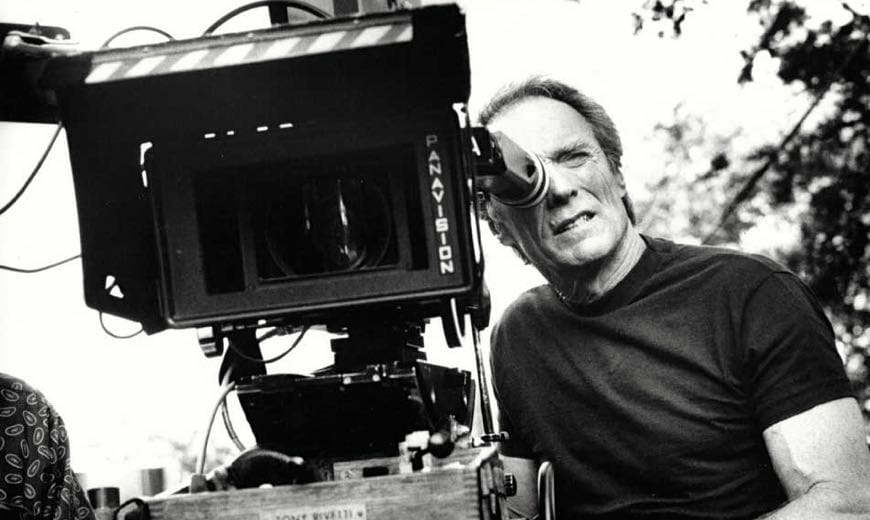
Reader Beware: I lied. This post is just as long as the last one. I didn’t think I had that much to say about Clint Eastwood, but I guess I was wrong. No more warnings moving forward. Either you’ll read these (potentially lengthier) posts, or you won’t.
I’ve been a devoted Clint Eastwood fan for as long as I can remember. The epitome of a tough guy, his films have captivated me since childhood. From my teenage years to now, as I approach fifty, Eastwood’s presence on screen has remained a constant in my life. I’m not exactly sure when this started, but if I think hard enough about it, I might have been wandering the aisles at The Wherehouse as a young boy, looking for a movie to rent. What’s The Wherehouse, you say? Funny you should ask. Get in, Loser! We’re going time traveling:
While at that video store (which may or may not not have been at The Wherehouse) I likely grabbed this title because it looked really cool:
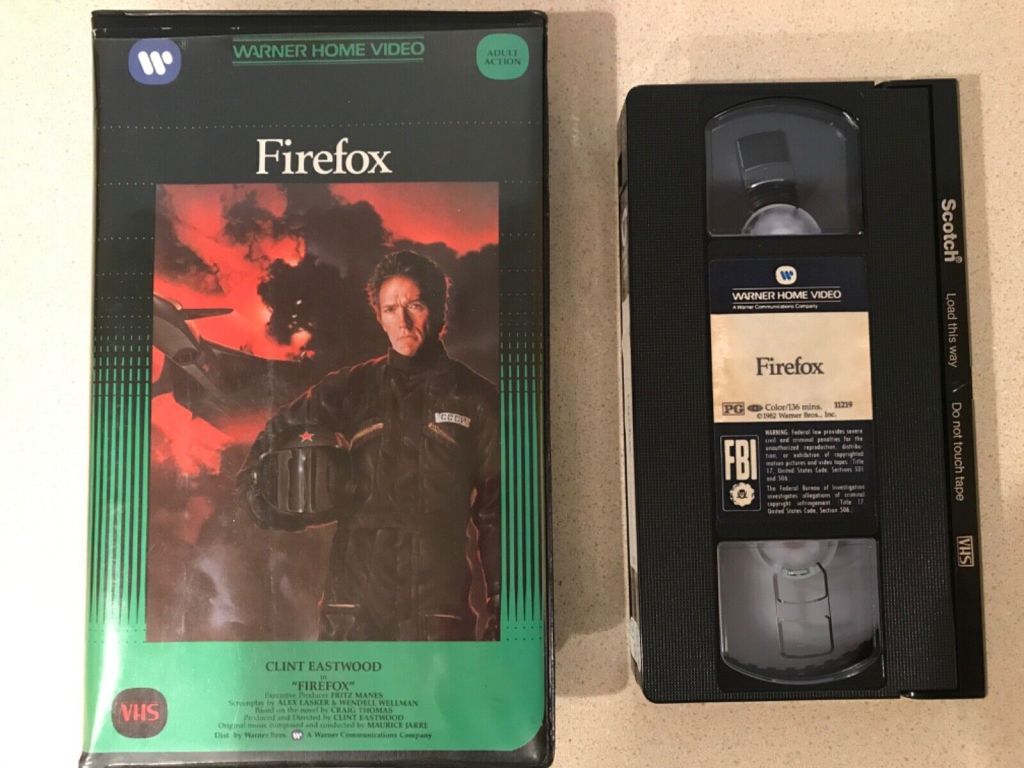
What do you want from me? I was probably 8-years-old at the time. But I’m fairly certain my parents allowed me to rent it because it was rated PG. The true test of every kid growing up in the 1980s and whether or not it was safe to watch:
Me: Can we rent Firefox?
Mom/Dad: What’s it about?
Me: It’s got this guy on the cover who has a helmet and there’s a plane on it.
Mom/Dad: What’s it rated?
Me: PG.
Mom/Dad: Okay.
But my 8-year-old ass watched that movie and I was sold! Yes, I know, it wasn’t really that great of a movie, but when you’re 8, you don’t have much of a discerning palette (more on Firefox towards the end of this post).
“Sometimes if you want to see a change for the better, you have to take things into your own hands.”
Born Clinton Eastwood Jr. in San Francisco sometime around the dawn of civilization (okay, it was 1930), Eastwood grew up in Northern California during the Great Depression. Academics weren’t exactly his strong suit—his mind was often occupied with “fast cars and easy women.” Whether or not he officially graduated high school remains a mystery, but by 20, he was drafted into the U.S. Army and stationed at Fort Ord in Monterey Bay, California, where he served as a lifeguard, swimming instructor, and training film projectionist. He was honorably discharged in 1953, the same year the Korean War ended.
While at Fort Ord, Eastwood was discovered by Universal-International (yes, that Universal) and spent the rest of the decade in their Young Actors’ Program. He cut his teeth in B-movie schlock like Revenge of the Creature and Tarantula, along with guest spots on shows like Maverick and Alfred Hitchcock Presents. His big break came with the role of Rowdy Yates in the Western series Rawhide, which put his steely gaze and quiet intensity on display—but also started to feel a bit limiting.
Then, in 1963, fate (or rather, the Rome branch of the William Morris Agency) came calling. International producers of a low-budget Western, The Magnificent Stranger—later renamed A Fistful of Dollars (which was a not-so-subtle ripoff inspired adaptation of Yojimbo)—needed an affordable American lead. At first, Eastwood hesitated, as European productions had a shaky reputation, but after reading the script (once he deciphered the clumsy translation), he saw an opportunity to create a grittier, more mysterious character. Eager for a change, he accepted, reasoning that the worst-case scenario was a bad movie… but at least he’d get a free trip to Europe. Filming in Spain, he made key changes to the script, trimmed his character’s dialogue, and crafted the now-iconic look of The Man with No Name—a character that would cement his place in cinematic history.
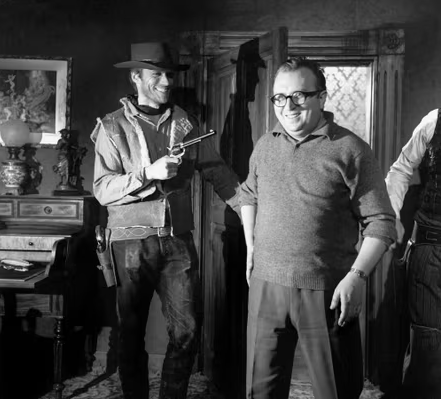
I could go on, but I won’t—I’m not here to write Eastwood’s entire life story. This is just a quick glimpse into the experiences that shaped him as a director. Let’s just say those eight years on Rawhide (the good, the bad, and the ugly—oh, come on, that was a solid pun!)—along with his early films under Sergio Leone and Don Siegel—left a lasting mark. Those influences didn’t just shape his style; they completely rerouted his career, turning him into one of Hollywood’s most iconic figures, both in front of and behind the camera.
DIRECTOR’S TRADEMARKS
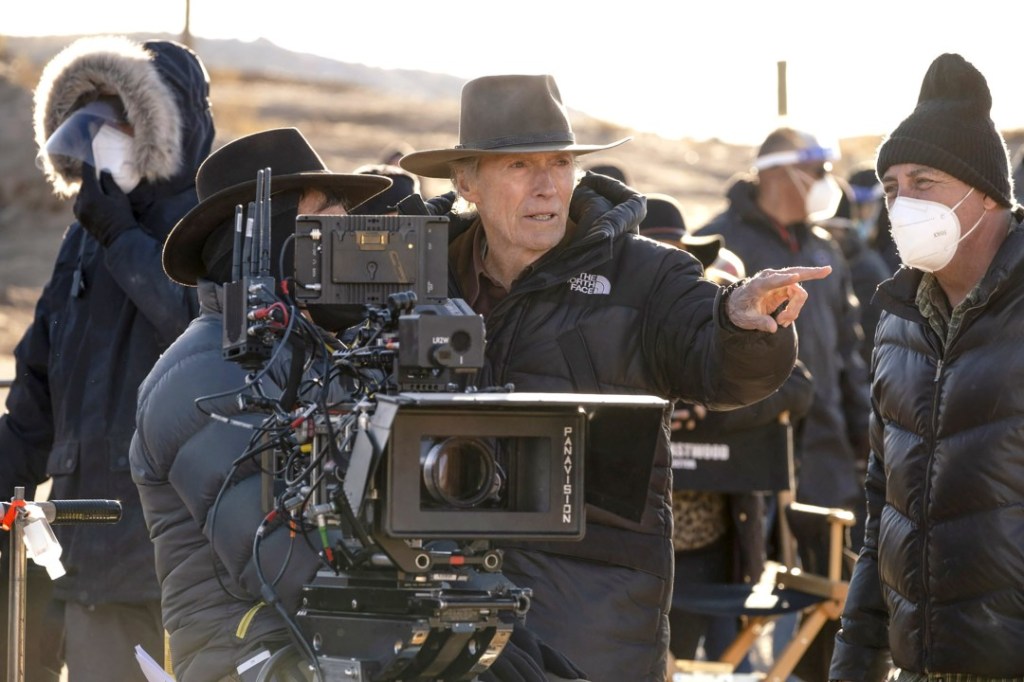
Clint Eastwood is known for a certain directorial style of filmmaking, especially on set. He’s often referred to as “an actor’s director.” Being an actor himself, he frequently prioritizes the quality of the actor’s performance over other aspects of the production. Tom Hanks best summarizes what it’s like to work with Clint:
He’s also known for shooting minimal takes. He’s incredibly efficient, quickly moving the cast and crew throughout the day, all while staying often ahead of schedule and under budget (a studio executive’s dream). The end result is (usually) a movie where the actors have incredibly natural performances.
So, while you can’t really provide proper examples of Eastwood’s directorial style within the film you’re watching, his style is very much one of his continuing trademarks. His other trademarks are listed below.
JAZZ MUSIC
Clint Eastwood has been drawn to jazz since childhood, teaching himself piano by listening to records and sneaking into jazz clubs as a teenager. This lifelong passion is woven throughout his films, starting with his directorial debut, Play Misty for Me, where he plays a jazz-loving disc jockey. Whether taking center stage in Bird, his biopic on saxophonist Charlie Parker, or subtly enhancing scenes in The Bridges of Madison County through diegetic sound—like a radio playing in the background—jazz has remained an integral part of Eastwood’s cinematic storytelling.
UNLIKELY HEROISM
In some of Eastwood’s films, we’re witness to a story that will follow an unlikely hero thrown into an extreme situation. He really likes to exploit those types of stories — ones that focus on character study and how those individuals act under pressure. Those types of films would include Sully, Richard Jewell, Flags of Our Fathers, and The 15:17 to Paris.
THE ANTI-HERO
After portraying “The Man with No Name” in three films and then being cast as the lead in Dirty Harry, while I’m not saying that Clint Eastwood created the Anti-Hero persona, he sure as hell perfected it. These types of characters would become synonymous with him as well as his bread and butter for the next four decades, and while he would occasionally play against type, Eastwood pretty much broke the anti-hero mold, and then cast himself in those roles while often directing it at the same time. If you’re a fan, you likely already know the movies. If you aren’t, some prime examples are High Plains Drifter, Sudden Impact (the 4th film in the Dirty Harry series), Pale Rider, Unforgiven, Absolute Power, and Gran Torino among others.
At first glance, I thought this was going to be easy. Then I realized that I wasn’t making a Top 5 Clint Eastwood movies list. That’s a list based off of entirely different set of criteria: his more iconic roles and performances (and some of his most iconic roles he did not direct). So once I finished that fight inside my head — which, by the way, probably looked like this:
— I was finally able to piece together a fairly concise — Eastwood’s Essential Five Films as a Director — that I believe best represents his talents behind the camera.
THE ESSENTIAL FIVE
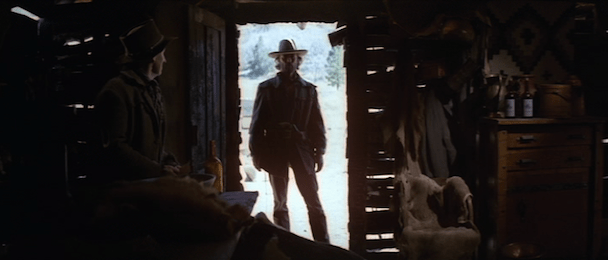
THE OUTLAW JOSEY WALES
“He’s mean as a rattler, and twice as fast with them pistols.”
In The Outlaw Josey Wales (1976), a Missouri farmer named Josey Wales seeks vengeance against Union soldiers who slaughtered his family during the Civil War. As he embarks on a journey through the changing landscape of the post-war West, Wales encounters a diverse group of outcasts who join him in his quest for justice and redemption.
This is my second favorite western directed by Eastwood. Regarded as a revisionist western (which subverts the myth and romance of the traditional genre), Eastwood’s portrayal of Josey Wales is significantly more vulnerable than the previous macho gunslingers he’s played in the past. While Josey is still cool under pressure, what really elevates this film past his others is the amount humor and levity that Chief Dan George as Lone Watie brings to the picture. Considering the film is primarily about vengeance, The Outlaw Josey Wales is also surprisingly funny.
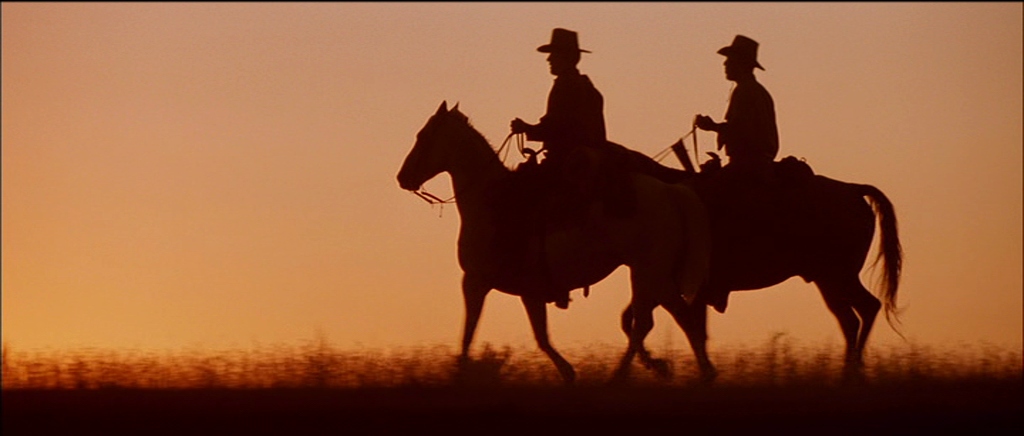
UNFORGIVEN
“It’s a hell of a thing, killing a man. Take away all he’s got and all he’s ever gonna have.”
In Unforgiven (1992), retired outlaw William Munny is reluctantly drawn back into his violent past when he takes on one last job to avenge the brutal attack on a prostitute. As he teams up with his old partner and a young gunslinger, Munny confronts the darker realities of his former life and the cost of violence in a changing West.
Only Eastwood could turn the genre that made him onto its head. I remember seeing this in the theater. I went with my then girlfriend and her parents. (“Hey Jamie, you know what would be neat? To go to the movies and watch a darkly violent western about some terrible men who want to kill some other terrible men for cutting up a whore. And we should definitely go see it with your parents!” Let’s just say it was an odd experience.) To top it all off, I didn’t care for it. I don’t believe my 16-year-old teenage boy brain had matured just yet. (I mean, who’s had at that age anyway?) I didn’t really understand what I had witnessed at that time.
Unforgiven wasn’t your stereotypical western. There weren’t any traditional gunfights. The supposed good guy seemed like the bad guy and the bad guys sorta seemed like… well… not that bad. Everything was backwards. But once my brain finally developed into the mature brain that it still is today, I saw the film again in my 20s and had a complete reversal of opinion. Unforgiven is a great film because it subverted the traditional western tropes, leaning hard into a morally ambiguous story while showcasing the brutality of the Old West in a realistic light. It was an anti-Western — a picture that chose not to glorify violence but instead have the main character grapple with the consequences of it — so it was incredibly befitting that this was also Eastwood’s last western. (I mean, if you’re going to go out, go out with a bang.)
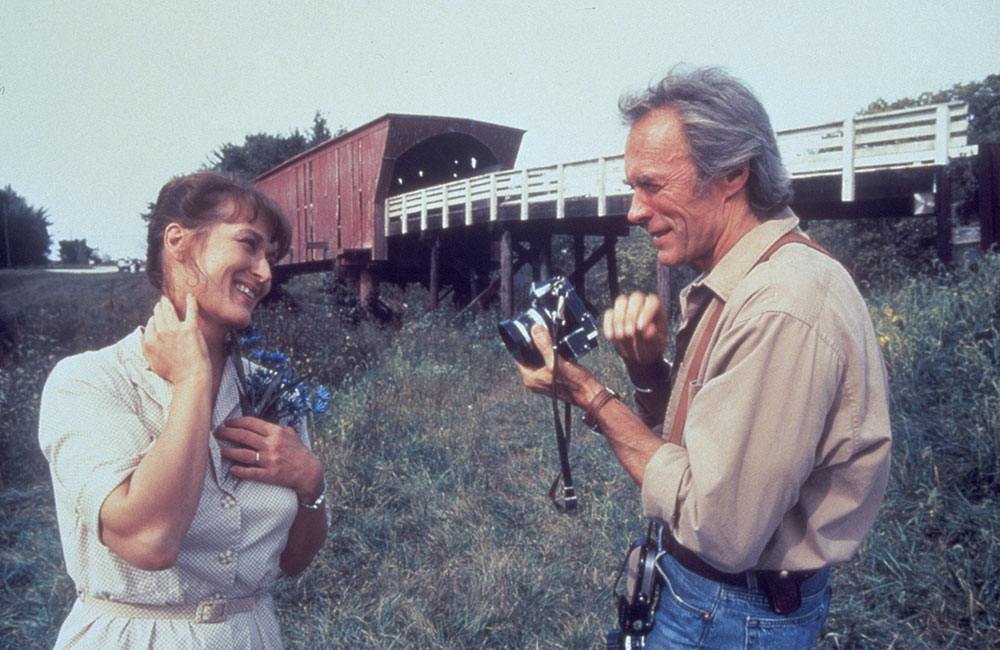
THE BRIDGES OF MADISON COUNTY
“This kind of certainty comes but just once in a lifetime.”
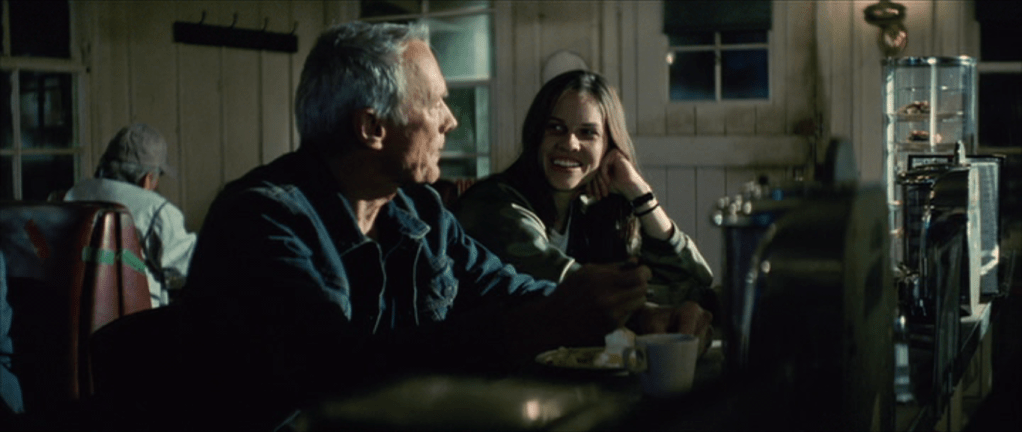
In The Bridges of Madison County (1995), a lonely Italian-American housewife, Francesca, embarks on a brief but passionate affair with a traveling photographer named Robert Kincaid during a humid summer in 1965. Their encounter, set against the picturesque backdrop of rural Iowa, forces Francesca to confront the choices she has made in her life and the longing for a love she never fully pursued.
This was a terribly difficult decision for me. To place this film here. Why do I say this? Because I’m still a little self conscious about telling everyone about how much I love this movie. I’ve only openly talked or shared about this movie twice before: once during a 30 Day Movie Challenge (that you can probably find if you care to dig around enough for it on this site) and once on a Pick 6 episode of my podcast. (I lifted and then heavily re-edited from both of those entries into what you now read below.)
Everyone knows that I love Clint Eastwood, but most don’t know about how much I love The Bridges of Madison County. I am not an advocate for extramarital affairs (except for this film). Not because this film justifies it, but for some reason I believe in the immediate chemistry between these two characters. For some reason beyond my comprehension, I love this movie and I find it incredibly moving. Clint Eastwood’s tender, yet masterful direction on conveying a connection between those two characters just hits me right in the gut. It’s filled with these beautifully crafted quiet scenes of revelation building up to conflicting emotions by the finale.
It’s not what anyone would expect me to love, including my wife, who couldn’t care less about this film. It’s just a sappy romantic film with a downer for an ending, but my heart just goes out to Francesca when she so desperately wants to leave her family, and run away with Robert, but can’t (or won’t). Who would have ever thought that Dirty Harry had a soft spot?
MILLION DOLLAR BABY
“If there’s magic in boxing, it’s the magic of fighting battles beyond endurance, beyond cracked ribs, ruptured kidneys and detached retinas. It’s the magic of risking everything for a dream that nobody sees but you.”
In Million Dollar Baby (2004), a determined female boxer named Maggie Fitzgerald seeks the mentorship of seasoned trainer Frankie Dunn, who is initially reluctant to take her on. As their bond deepens, they confront personal and professional challenges, leading to a heart-wrenching journey of ambition, sacrifice, and the quest for redemption.
Million Dollar Baby is an anomaly – it deviates from what everyone is expecting, and that’s why it’s such a power film. It’s one-part triumphant sports movie and one-part incurable illness tearjerker. The greatness of this film is its heart, with Morgan Freeman’s Eddie Scrap-Iron at the center who is holding, connecting, and interweaving all of the characters together to create this magnificent tapestry with Eastwood at the helm. It’s uplifting, heroic, heartfelt, inspiring, beautiful, humorous, touching, sincere, and incredibly tragic. One element doesn’t outweigh any of the others, which gives it such a perfect balance. I don’t watch this movie very often. It’s another one of his heavy entries as an artist. If you’ve seen it, you probably know why. If you haven’t and you want to, just make sure you emotionally prepare yourself.
GRAN TORINO
“Take these three items, some WD-40, a vise grip, and a roll of duct tape. Any man worth his salt can fix almost any problem with this stuff alone.”
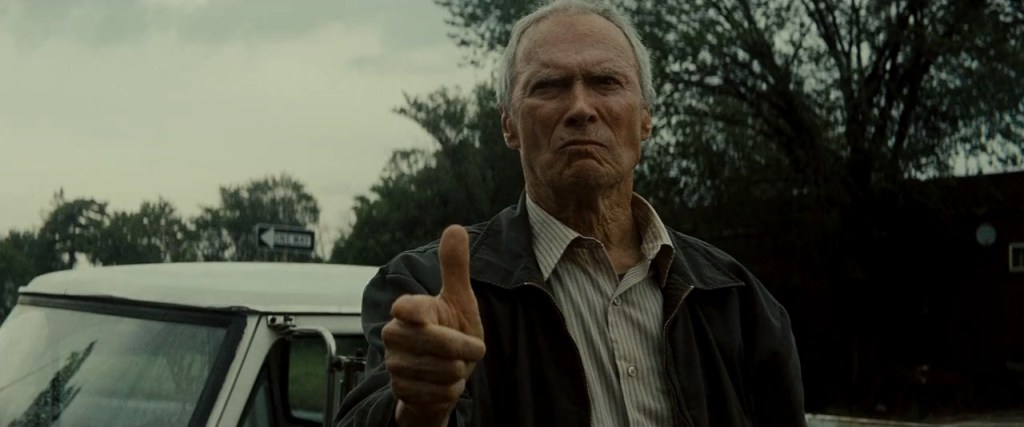
In Gran Torino (2008), a grizzled Korean War veteran named Walt Kowalski forms an unexpected bond with his Hmong neighbors, particularly a young man named Thao, after Walt intervenes to protect them from local gang members. As their friendship deepens, Walt confronts his own prejudices and past trauma, ultimately finding redemption through acts of courage and sacrifice.
Gran Torino is old fashioned filmmaking at its best. Eastwood takes his time to tell the story of Walt Kowalski, who has grown old, and his whole world around him has changed. His tough love act (where love is almost non-existent, sort of like a watermark on a paper check), which never seemed to break through with his own family, works differently with his new neighbors. Walt has demonstrated in the past that he will sacrifice everything (if necessary), in order preserve freedom. Whether it’s overseas in the Korean War, or 50 years later, to help his neighbors. The crowning achievement of this film is that tolerance can truly lead to understanding. Is it an over-the-top anti-racism parable? Yes. Is it affective? Absolutely.
THE 6TH PICK (Honorable Mention)
MYSTIC RIVER
“The reality is we’re still 11 year old boys locked in a cellar imagining what our lives would have been if we’d escaped.”
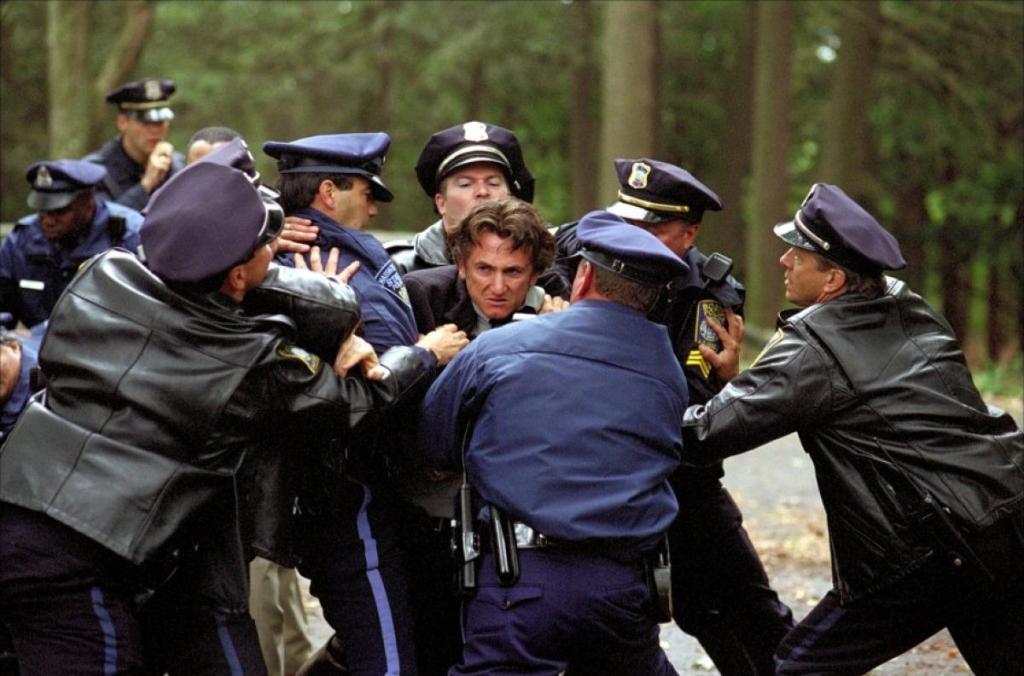
In Mystic River (2003), childhood friends Sean, Jimmy, and Dave are reunited by a traumatic event when Dave’s daughter is murdered, plunging them into a web of grief and suspense. As secrets unravel and tensions rise, the film explores themes of loss, revenge, and the haunting impact of the past on their lives.
Creating a somber and atmospheric film, Eastwood’s direction here effectively captures the tension and emotional weight of the lasting effects of childhood trauma. Just like Unforgiven did 10 years earlier, Mystic River reinvigorated Eastwood in exploring similar themes, except here it’s the suggestion of a moral complexity beneath the cop thriller, another genre he knew very well. Mystic River would also be the first of seven feature films between 2003 and 2011 where Eastwood was also credited as the composer of his own films.
It took me three days before I finally placed Mystic River here at this coveted spot. Why did it take this long? Well, Mystic River is a difficult film to watch. The subject matter — where the abuse of the innocent centers around the entire film — is not for everyone. But it also took this long because it was fighting for a spot in the Essential Five that Bridges eventually took.
TRADEMARK | Jazz Music
Play Misty For Me (1971)
Eastwood shot footage for his directorial debut at the actual 1970 Monterey Jazz Festival.
The Bridges of Madison County (1995)
Robert Kincaid adjusts the radio to find a preferable station. The entire scene is then underscored by Johnny Hartman as he sees Francesca enter the kitchen. Eastwood captures the mood perfectly while also incorporating his love for Jazz into the fabric of the film. (If you’re ever looking for a mellow album to play on a lazy Sunday morning, this soundtrack would be an excellent choice. You can easily find it on Spotify and Apple Music.)
TRADEMARK | Unlikely Heroism
Richard Jewell (2019)
There’s just something special about Paul Walter Hauser’s delivery in this scene. It demonstrates his frustration but also his resilient character as a very unlikely hero who was almost immediately seen as the primary suspect for the bombing at the 1996 Summer Olympics, even though he was just doing his job.
Sully (2016)
Captain Sullenberger was under almost immediate scrutiny by the STSB for how he handled Flight 1549. Tom Hanks’ performance is so perfectly even keeled as he tells the board on his first interview that he had relied purely on instinct during this crisis.
TRADEMARK | The Anti-Hero
High Plains Drifter (1973)
The first 10 minutes play out and you’re still not entirely sure if Eastwood is playing the protagonist or the antagonist. Quite possibly the most anti Anti-Hero he’s ever played on screen (at least in my opinion).
I could share more clips, but this one speaks volumes to the Anti-Hero persona that Eastwood has embodied for 50+ years.
KEY SCENES
“I’m Here to Kill You, Little Bill“
Spoiler Warning: If you have never seen Unforgiven, well, don’t watch this clip. Instead, go watch the damn movie already! If you have, then I’m certain you’ve already watched this specific scene a good 300 times or more already. Simply put, it is one of the greatest scenes in cinematic history.
Luther Flirting with the Authorities
Luther is a high-profile burglar, and Det. Seth Frank knows this. The playful banter between cop and crook is on full display here. Luther knows more than he’s leading on, but he has to keep his cards close to his chest so he doesn’t incriminate himself in the process.
Standing In The Rain
Quite literally the most vulnerable character that Eastwood has ever portrayed. That sense of longing and just knowing that they can never be together just breaks my heart. I’m not crying, you’re crying!
“Don’t Pick It Up”
In just under 90 seconds, Eastwood’s direction demonstrates a sniper’s constant moral dilemma. The intensity of this scene in just palpable. There’s no better way to describe it.
“It’s a Cultural Thing”
Just one shining example of how tolerance can lead to understanding.
“It’s The Only Thing I Ever Felt Good Doing”
When he has the opportunity, Eastwood likes to shoot in low lighting, giving off a noir-like feel. Minimal lighting has often been a key signature of his films, but when it’s paired with Hillary Swank’s performance, the scene becomes so much more.
“Go Ahead, Make My Day”
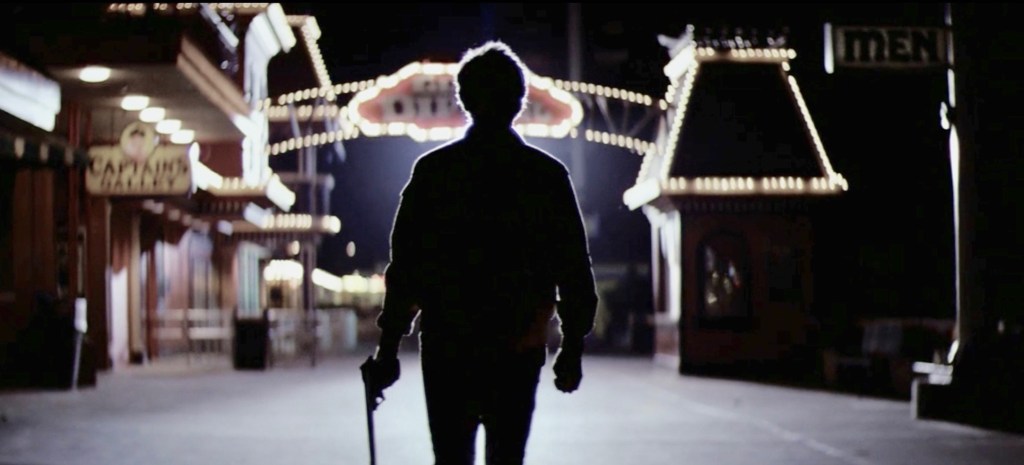
While Sudden Impact isn’t the weakest entry (I’m looking at you, Dead Pool), the Dirty Harry movies progressively got worse with each new entry after Magnum Force. This film, however, had a few solid scenes and winded up featuring Dirty Harry’s most quoted line, which was even used by our President.
He also had his Director of Photography, Bruce Surtees, create what I believe is the most iconic image from the entire Dirty Harry franchise during the film’s climax:
Further Viewing – A Cultivated Selection
UNDERRATED OR OVERLOOKED GEMS
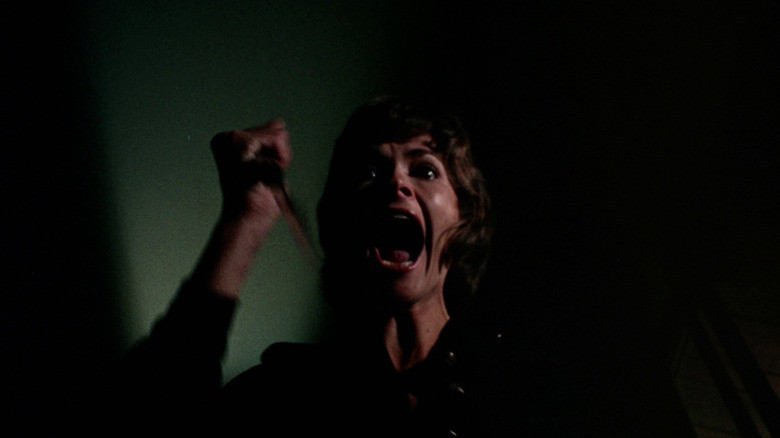
Play Misty For Me (1971)
A radio DJ’s life takes a dark turn when he becomes entangled with a volatile and obsessive fan who will stop at nothing to possess him.
Before the days of an ever expansive internet, film geeks like myself had to rely on fairly large tomes that covered a plethora of titles, like Videohound’s Golden Movie Retriever, Leonard Maltin’s Movie Guide or The Film Encyclopedia. These books were massive and they typically weighed a good 4-5 pounds. This was how you found out who directed which film and what it was about before scouring your local video store to see if they carried that title. This is how I originally discovered Play Misty For Me. After watching this film, I became briefly fixated with this specific type of sub-genre. These type of movies were littered all over landscape in the 1990s and some of my favorite titles of that sub-genre were Unlawful Entry (1992), and Fear (1996).
I even wrote and directed a short “film” while in college that explored the same type of themes: a seemingly normal interaction quickly turns obsessive and eventually psychotic between two students. (It was a blatant ripoff – definitely not an homage – and thankfully there’s only one copy of that short still in existence. I’ve hidden the VHS tape somewhere in my house so you’ll never end up witnessing how truly terrible it was.)
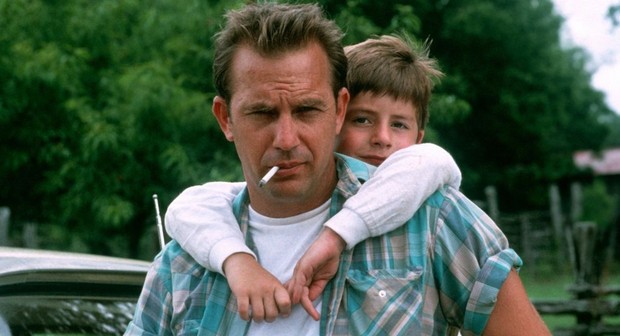
A Perfect World (1993)
Kevin Costner stars as Butch Haynes, a career criminal on the run takes a young boy hostage during a highway robbery, leading to an unlikely bond that forces both of them to confront issues of innocence, fatherhood, and the search for redemption amidst a tense police pursuit.
This was Eastwood’s next project after Unforgiven. Warner Bros. probably marketed it as a powerhouse team-up of two Academy Award-winning directors (Costner won his Oscar for the 1990 film Dances With Wolves). Like most of his films (at least at this time for me), this was a video store discovery probably after I graduated high school when I had a lot more spare time on my hands. I spent a lot of that time (probably too much of that time) at the video store once I had my own money and the ability to watch whatever I wanted, whenever I wanted. I always held a special little place in my heart for this film. Not exactly sure why. Costner and the child actor who plays Phillip have this beautiful connection – a genuine chemistry that never feels forced. It’s a sad tale of mixed motive and misunderstood actions resulting in tragic consequences.
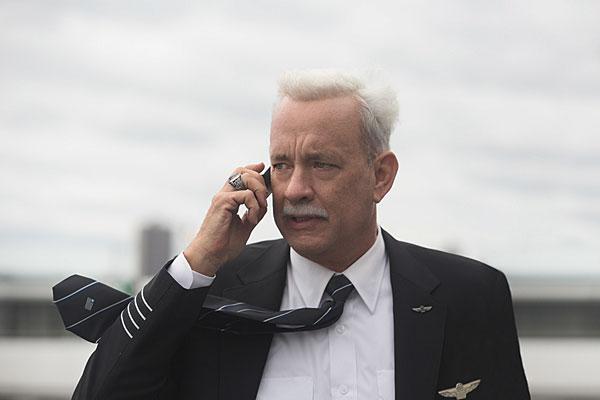
Sully (2016)
Captain Chesley “Sully” Sullenberger becomes an unlikely hero (see what I did there?) when he successfully lands US Airways Flight 1549 on the Hudson River after both engines fail, saving all 155 passengers on board while facing intense scrutiny from investigators questioning his decisions.
By the time the 2010s rolled around, I was feeling a bit burned out on Eastwood. His films either seemed like calculated Oscar bids or tackled subjects that didn’t interest me at the time. Looking back, I regret not catching Sully in theaters. When I finally watched it, I kicked myself for waiting so long. Though more than seven years had passed since 9/11, the memory was still fresh, and the Miracle on the Hudson could have been another devastating tragedy for New York City—but thankfully, it wasn’t.
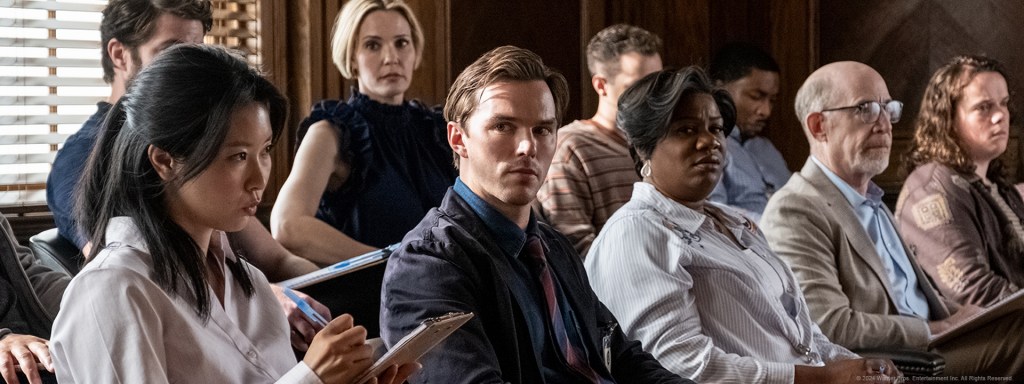
Juror No. 2 (2024)
Nicholas Hoult plays a juror grappling with personal biases and past traumas must confront his moral compass while deliberating the fate of a defendant accused of a heinous crime, ultimately seeking redemption and justice amidst the complexities of the judicial system.
I was disappointed with Eastwood’s last film, Cry Macho, which he released during COVID. It felt like his heart wasn’t in it, and the story rehashed themes he’d explored before. I hoped it wouldn’t be his final film—and thankfully, it wasn’t.
If you haven’t seen Juror No. 2 yet, you’re missing out. I was lucky enough to catch it during its limited theatrical run (why Warner Bros. chose to bury Clint’s final film is beyond me). It’s a solid legal thriller with a beautifully ambiguous ending—had it come out in the ’90s during the peak of the John Grisham legal drama craze, it would’ve been a massive hit. If this truly is Eastwood’s last film before retiring at 94, he’s more than earned it. Classic Eastwood, going out on top.
PERFECTLY PAIRED WITH POPCORN
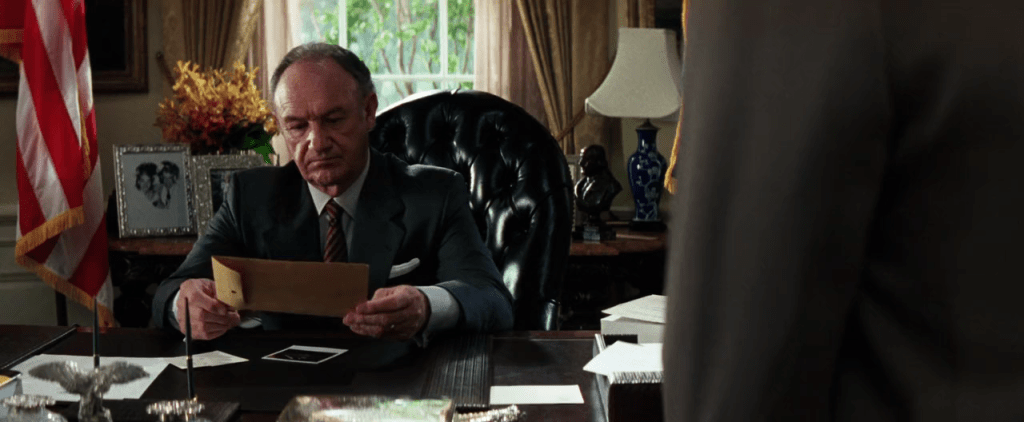
Absolute Power (1997)
A master thief witnesses a brutal crime involving the President of the United States and must navigate a dangerous web of conspiracies to expose the truth while ensuring his own survival.
This movie is classic Clint where his laconic charm fills the starring role while also bringing in the highest caliber talent to work beside him. The premise is also quite interesting as he plays a guy who is outside of the law, so he can’t really go to the police when he witnesses a horrific crime. It’s richly dark, sprinkled with moments of brevity with a very satisfying ending.
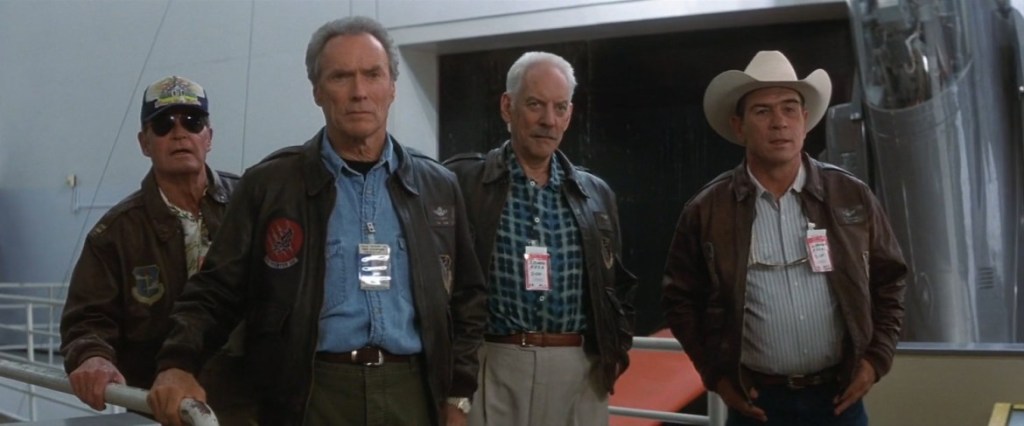
Space Cowboys (2000)
A group of retired NASA test pilots, led by Frank Corvin, must come together to save a malfunctioning satellite when they are recruited for a mission that tests their skills and rekindles long-buried rivalries.
Space Cowboys is basically the senior citizen equivalent of Armageddon with better direction and a significantly more believable plot. This is one of Eastwood’s more light-hearted and funnier action-comedies. And with a stellar cast that included Donald Sutherland, James Garner, and Tommy Lee Jones, you just can’t go wrong.
GUILTY PLEASURE
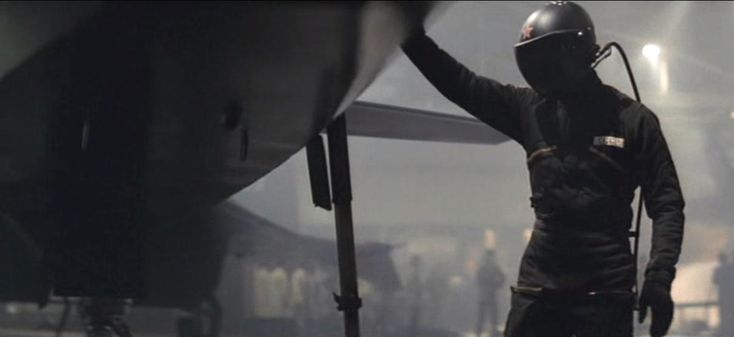
Firefox (1982)
An ex-pilot is tasked with infiltrating the Soviet Union to steal a cutting-edge stealth fighter that can be controlled by thought, facing numerous challenges and espionage along the way.
Firefox is two-thirds spy thriller and one-third high-speed aerial combat, packed with high speed effects-driven dogfights. When I first watched it at eight years old, I didn’t grasp any of the themes, but I loved it anyway. Over the years, my opinion swung wildly—sometimes I was all in, other times I dismissed it as a cheesy, special effects-laden mess. By my mid-20s, I bad-mouthed it relentlessly. “It’s a corny, cheese-filled spectacle with awful effects!” But revisiting it years later, I saw it in a new light. Beneath the Cold War tension, it’s a solid thriller that also explores PTSD in Vietnam veterans. Is the thought-controlled stealth fighter still a bit over-the-top? Sure. But at this point, I don’t care. I like what I like.
Until Next Time, Dear Readers.


Leave a Reply