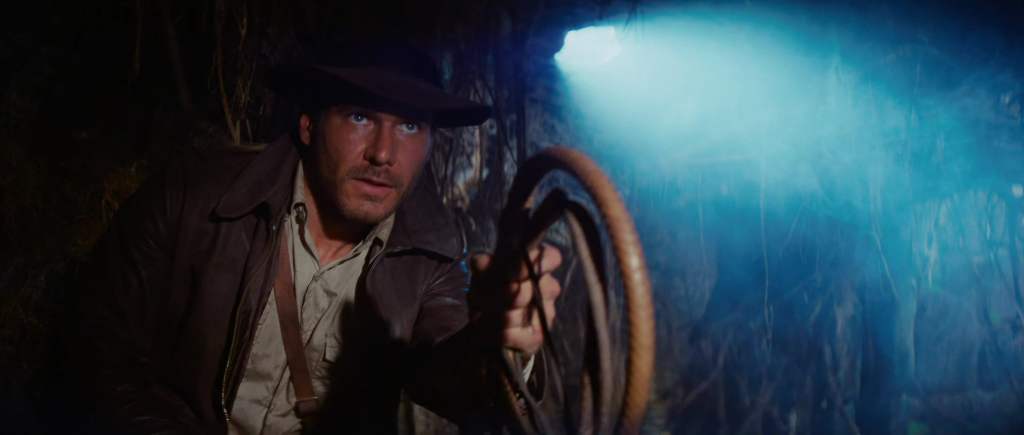
“Professor of Archeology, expert on the occult, and how does one say it… obtainer of rare antiquities.”
Directed by Steven Spielberg
Produced by Frank Marshall
Written by Lawrence Kasdan
Story by George Lucas, Philip Kaufman
Release Date: June 12, 1981
Running Time: 115 Minutes
The Cold Open
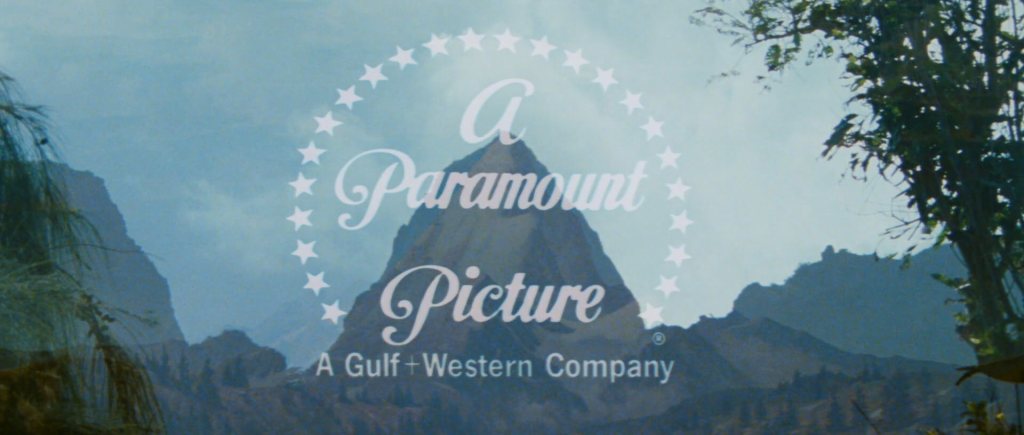
As cold opens go, this one is still about as close to perfect as they come. In just under thirteen minutes, it tells us nearly everything we need to know about Indiana Jones. The film opens with a crossfade from the Paramount Gulf + Western Company logo to a mountain in Peru that closely mirrors the shape of the famous Paramount peak. It’s a simple visual gag, but one that became a beloved tradition throughout the franchise. By the time an Indiana Jones film begins, fans aren’t just watching the logo—they’re already looking for what it will transform into next.
We follow him and his guides through the jungles of Peru, but the moment a map is produced, one of those guides reveals his true intentions by pulling a gun. Indy responds by effortlessly disarming him with his whip, and only then do we finally get our first good look at our hero.
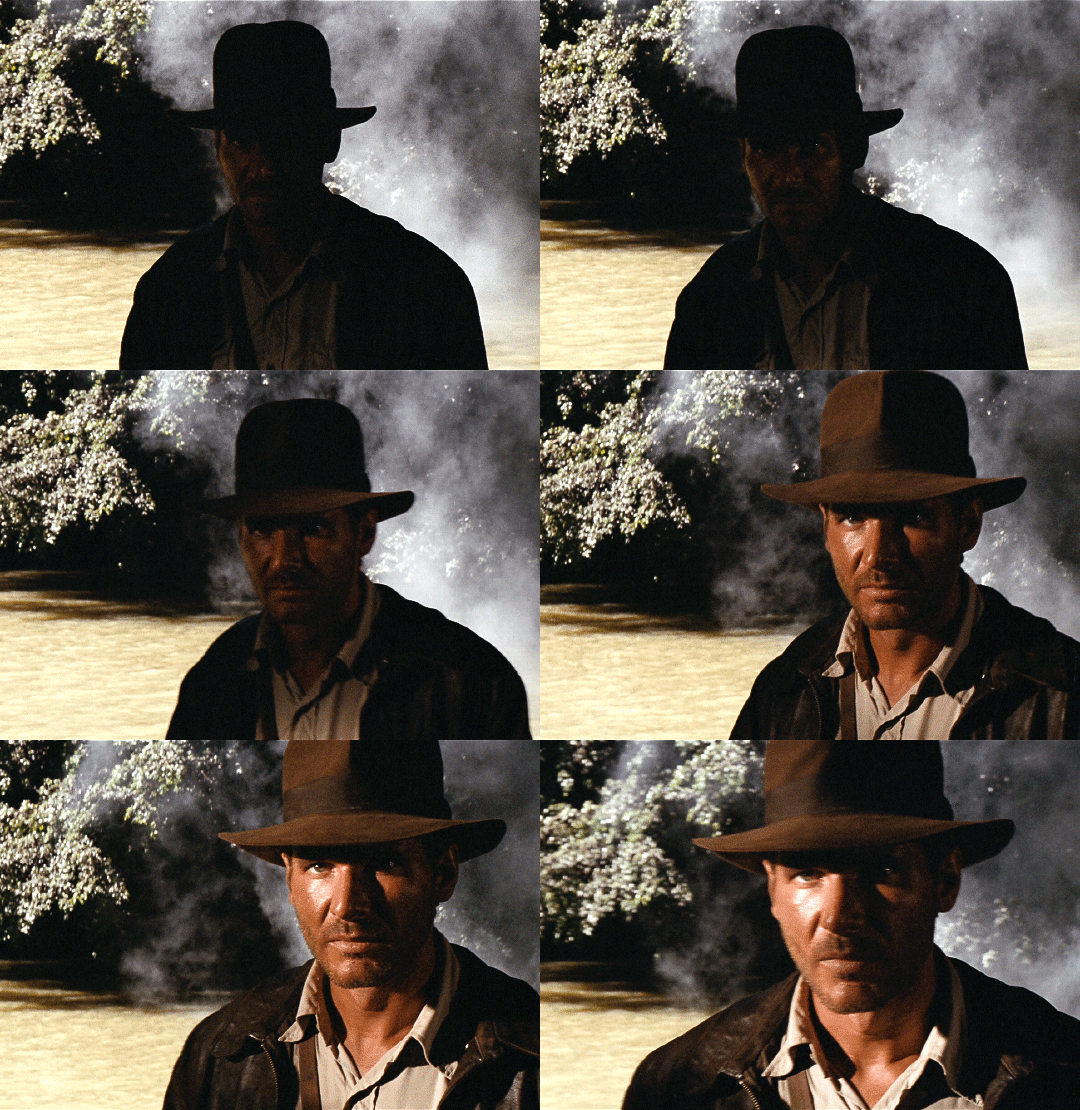
It’s a masterclass in character introduction. Spielberg keeps Indy shrouded in mystery, concealing his face until after he’s demonstrated his intelligence, resourcefulness, and confidence. Only then does he step out of the shadows and into the light. By the time we finally see him clearly, we already know exactly who he is.
I’m admittedly biased since Raiders of the Lost Ark is my favorite film, but I think even those who don’t hold it in quite the same regard would struggle to argue against this being one of the great character introductions in modern cinema.
Once Indy enters the Peruvian temple, things become considerably more complicated. The deeper he ventures inside, the more dangerous the environment becomes. He narrowly avoids deadly booby traps, swings across a bottomless pit, and carefully navigates a maze of pressure-sensitive floor plates before finally reaching his prize: a golden idol resting upon a pedestal.
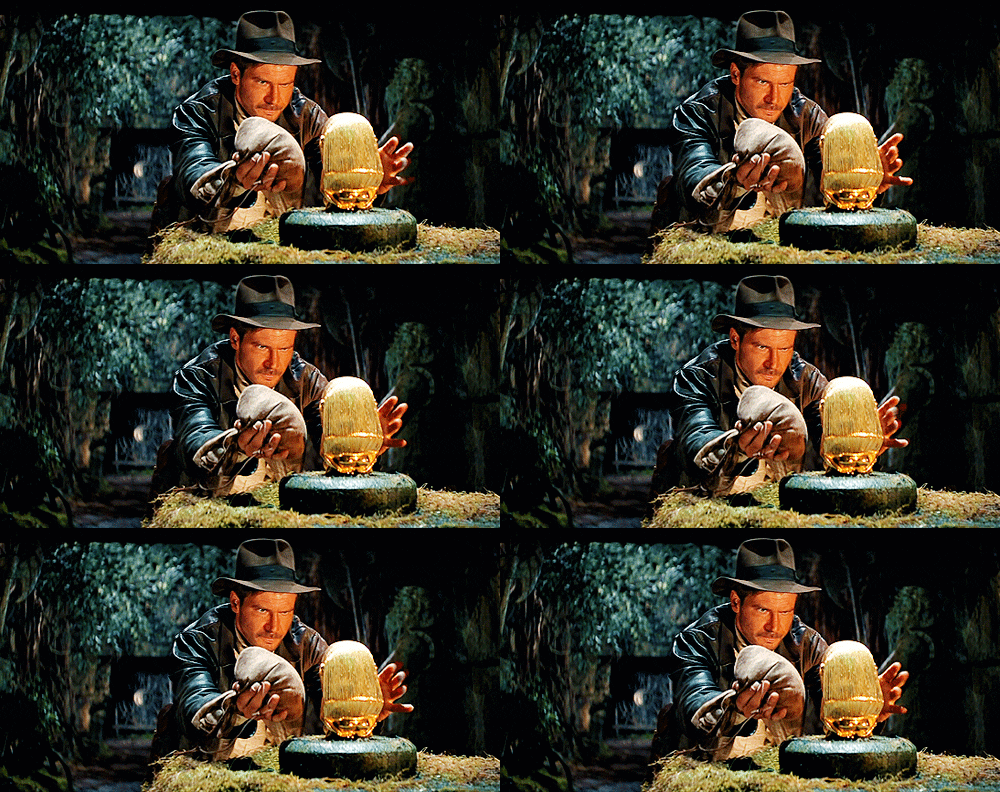
Believing he can outsmart the temple, Indy attempts to replace the idol with a bag of sand of what he thinks is equal weight. For a brief moment, it appears to work. Then all hell breaks loose.
As the temple begins collapsing around him, Indy races for the exit only to be betrayed by his other guide, Satipo, who utters the now-famous line, “No time to argue! Throw me the idol, I’ll throw you the whip!” After a daring leap across the pit and a grim realization that Satipo’s greed has caught up with him, Indy barely escapes the temple before being pursued by one of cinema’s most iconic obstacles: a giant rolling boulder.
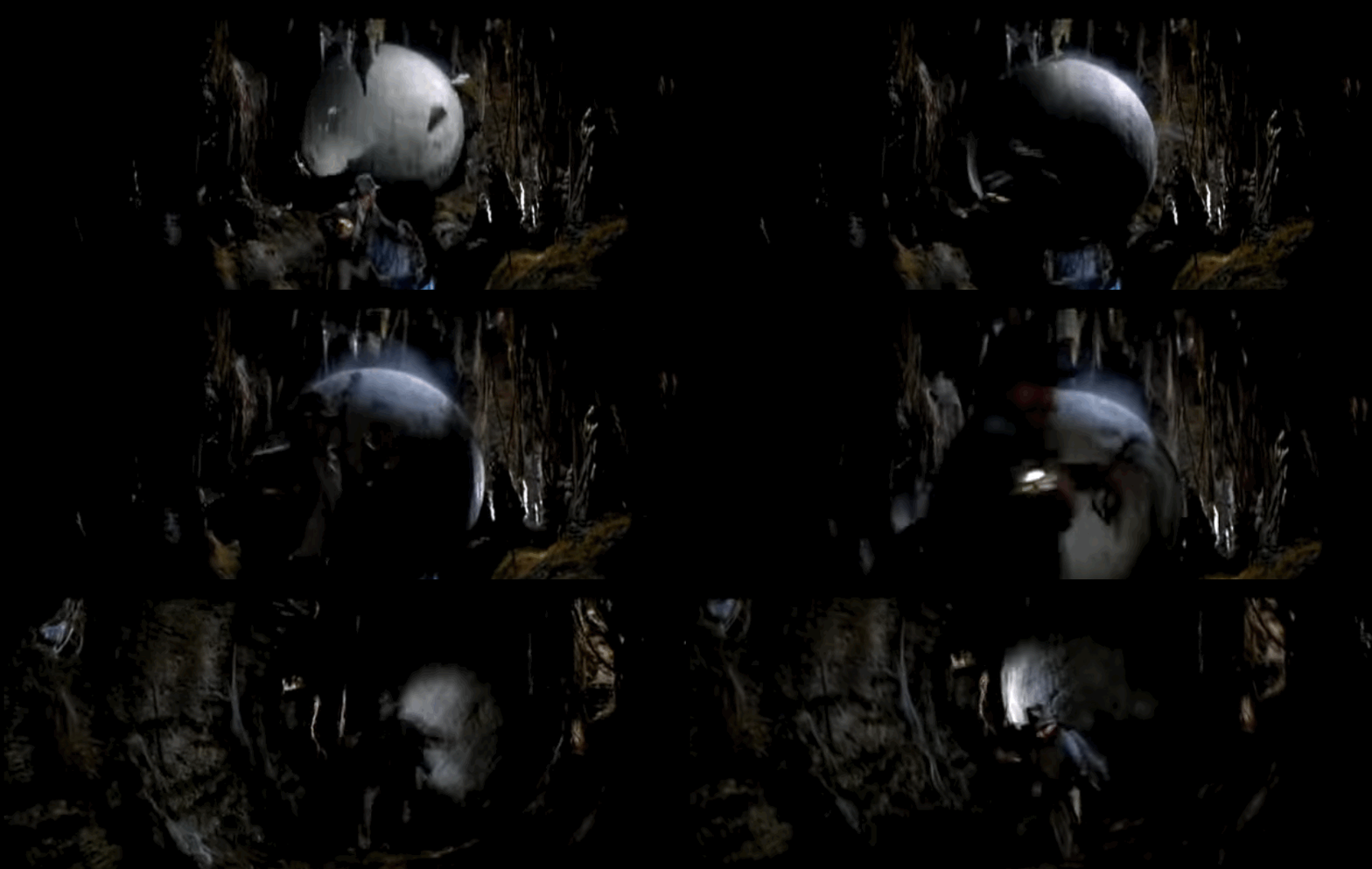
And just when he thinks he’s survived the ordeal, Spielberg introduces another complication. Waiting outside is Belloq, who calmly relieves Indy of the idol while surrounded by a tribe of Hovitos warriors. It’s our first introduction to the film’s true antagonist and one of the most effective villain entrances in adventure-film history. Outnumbered and outmatched, Indy surrenders the idol, flees through a hail of arrows, and narrowly escapes aboard Jock’s waiting floatplane.
And the most impressive part? The entire sequence functions as a self-contained adventure. The idol is recovered, lost, and largely left behind as the film shifts its focus to the Ark of the Covenant. By the time Indy boards Jock’s floatplane, we’ve already experienced enough action, suspense, betrayal, and narrow escapes to fill an entire movie serial chapter—and the real adventure hasn’t even begun.
If there is a Gold Standard for cold opens that serves as a benchmark, it is this one. Other cold opens can be compared to it, but without this foundational sequence, we would not have a reference point for any of the others. One could argue that the cold open in Last Crusade is superior, and I may explore that in future posts. However, this particular cold open is essential for measuring all the others that follow.
Confession Time: Yes, I know I just spent a thousand words talking about the first thirteen minutes of a movie. Before you panic, no, I do not intend to break down the rest of Raiders of the Lost Ark shot by shot. In fact, I probably won’t give another cold open this much attention throughout the remainder of the series.
The problem is that I love Raiders of the Lost Ark, and those first thirteen minutes are such a remarkable piece of filmmaking that I find it difficult not to gush about them. They establish Indiana Jones, teach us everything we need to know about the character, and somehow manage to function as a complete adventure unto themselves. They also set the stage for everything that follows while having almost nothing to do with the plot itself.
That’s the kind of storytelling that earns a little extra attention.
The Story
The year is 1936. As the Nazi Party tightens its grip on Europe in preparation for war, they deploy teams of archaeologists to search the globe for powerful religious artifacts. When U.S. Army Intelligence requests a face-to-face meeting with Indiana Jones regarding these expeditions, Major Eaton remarks, “Hitler’s a nut on the subject. He’s crazy. He’s obsessed with the occult.”
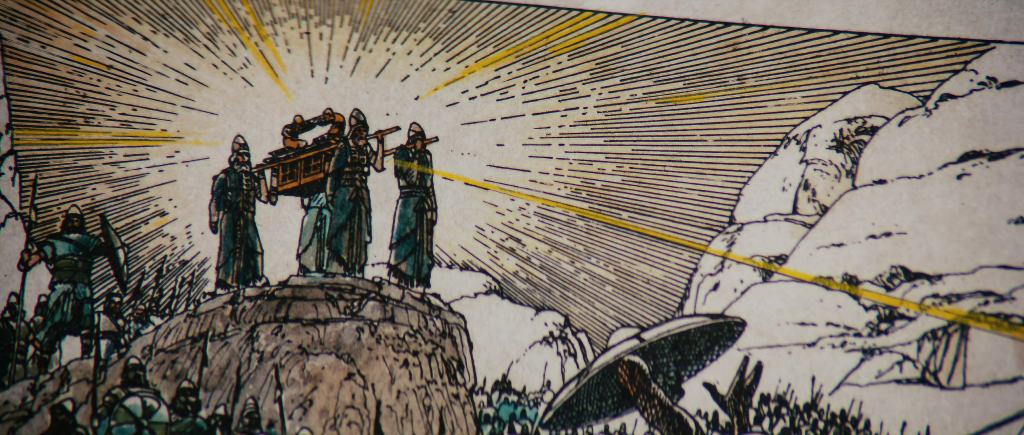
The Nazis have pinpointed the location of the Ark of the Covenant, believed to be hidden near Cairo. To thwart their plans, the U.S. Government enlists Indiana Jones, a renowned archaeologist known for his knack for obtaining rare antiquities, to track down his former mentor, Abner Ravenwood, and ensure that the Ark remains out of Nazi hands.
It’s a premise that sounds completely ridiculous when summarized aloud, yet Raiders of the Lost Ark sells every second of it with such confidence that you never stop to question it. As a loving homage to the adventure serials that inspired George Lucas as a child, the film asks for a little suspension of disbelief from its audience—and rewards it generously.
The Villain
René Belloq, played magnificently by Paul Freeman, remains one of my favorite underrated movie villains. He rarely shows up on lists of great antagonists, maybe because he isn’t overtly sinister or theatrically evil. He’s not even the one in charge—he’s still answering to the Third Reich—which makes his motivations even more interesting. He’s a gifted archaeologist whose moral compass gave out long ago, leaving greed and self‑interest to guide his decisions.
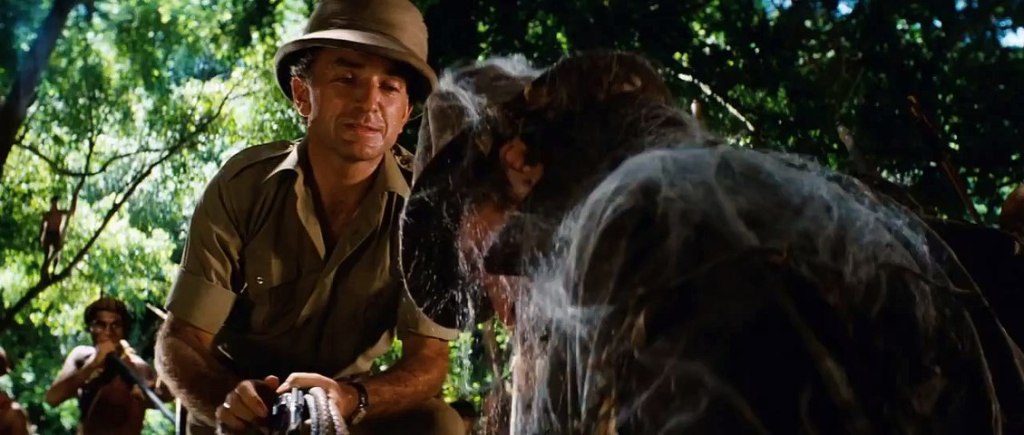
What makes him so effective is how perfectly he mirrors Indiana Jones. They’re cut from the same cloth, but Belloq lacks the ethical boundaries that keep Indy from becoming the very thing he fights against. And the fact that he repeatedly stays one step ahead of our hero is just icing on the cake.
The Heavy
Ronald Lacey plays Major Arnold Toht, a bookish, relatively small, and unassuming man who quickly reveals himself to be an incredibly sadistic Gestapo agent. If you’re being particularly picky, you could argue that Raiders of the Lost Ark doesn’t really have a traditional “heavy” in the James Bond sense. In that case, Toht would simply fall under the broader Villain category alongside Belloq, Colonel Dietrich and the rest of the Nazis for that matter.
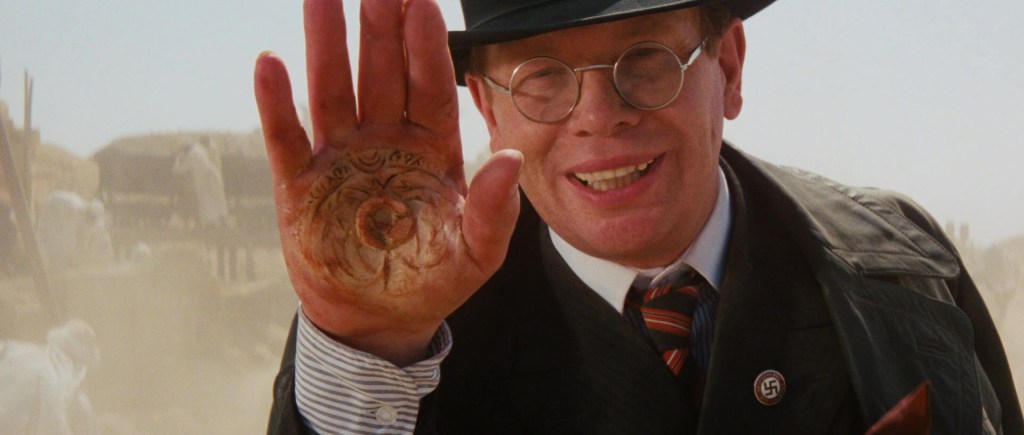
But for me, Toht is the heavy.
What makes him stand out is how genuinely menacing he feels whenever he appears on screen. We first see him shadowing Indy after he leaves San Francisco, suggesting he’s already been tracking Dr. Jones long before the adventure truly begins. He then arrives in Nepal, where his pursuit of Abner Ravenwood’s medallion immediately places Marion in danger and sets much of the plot into motion.
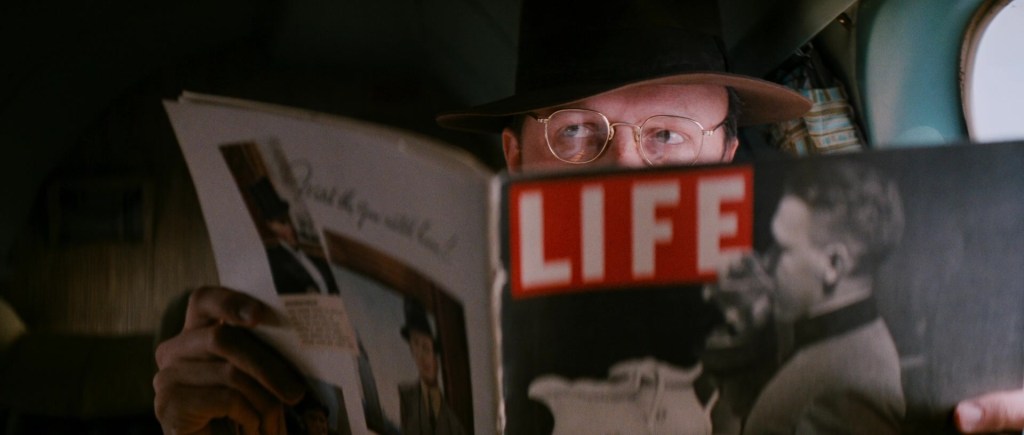
Toht lacks the imposing physical presence often associated with heavies, but he more than compensates with sheer cruelty. From his sadistic interrogation tactics to the infamous burn scar on his hand, he’s a constant reminder that not all threats come in the form of towering henchmen. Belloq may be Indy’s intellectual rival, but Toht is the character who consistently makes the audience uncomfortable whenever he enters a scene.
The Love Interest
Marion Ravenwood, portrayed by Karen Allen, is a survivor. Unlike many adventure-film love interests of the era, she’s rarely relegated to the role of damsel in distress. When Indy first finds her in Nepal, she’s holding her own against every patron in the bar and proving she has no problem standing up to bullies. She can take care of herself, isn’t afraid to throw a punch—or a frying pan—and refuses to be intimidated by anyone.
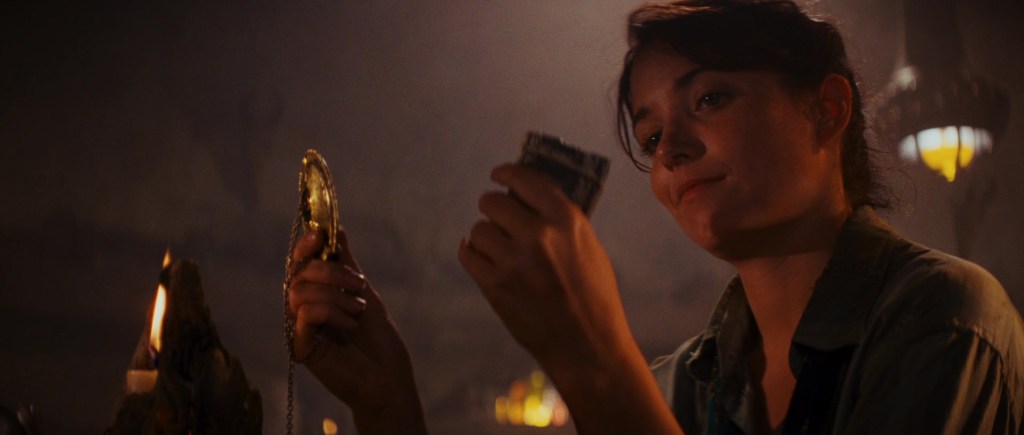
In many ways, Marion is Indiana Jones’s equal. She shares his stubbornness, his resourcefulness, and his knack for finding trouble. Karen Allen and Harrison Ford also have incredible chemistry, helped by the complicated history between their characters. Like Indy, Marion is capable, resilient, and occasionally prone to making questionable decisions. She embodies the classic “girl next door” charm: attractive, approachable, and easy to root for. Just don’t underestimate her, or she might punch you in the face.
The Fedora Report
This is where I examine Indiana Jones beyond the whip, the hat, and the swagger. It’s easy to admire the legend; it’s usually more interesting to study the man, and to measure the years and the mileage that shaped him.
MARION’S LONG SHADOW
I try not to dwell on this too much, but when you’ve seen this movie as many times as I have—and after one too many late-night text conversations with my nephew—your mind inevitably begins to wander after hearing the following exchange:
Marion: I’ve learned to hate you in the last ten years!
Indiana: I never meant to hurt you.
Marion: I was a child. I was in love. It was wrong and you knew it!
Indiana: You knew what you were doing.
Indy and Marion’s relationship casts a long shadow over repeat viewings, especially as you get older. Depending on how one interprets the timeline, Marion may have been as young as fifteen when the two became involved. That possibility becomes even harder to ignore when you learn that George Lucas originally envisioned Marion as being exactly that age—an idea that Steven Spielberg and Lawrence Kasdan immediately pushed back against. By the time the script was finalized, the details of their history had become far less explicit, leaving much of it open to interpretation.
It’s an uncomfortable piece of backstory, one that complicates the otherwise charming rogue presented throughout much of the film. Indiana Jones isn’t a flawless hero. He’s brilliant, adventurous, charismatic, and occasionally capable of making terrible decisions. Raiders introduces us to all of those qualities—sometimes within the very same scene.
THE PART-TIME PROFESSOR
Imagine, if you will, that you’re a newly enrolled freshman at Marshall College. You’re studying out of state, you’ve barely moved into your dorm room, and you’ve just discovered you’re three credit hours shy of qualifying for financial aid. There are only a handful of classes left with openings, and Intro to Archaeology wasn’t exactly at the top of your wish list.
Then your roommate lets you in on a little secret: Dr. Jones’s class is an easy A. He cancels half his lectures every semester, the required reading is minimal, tests are rare, and the final is open book.
Honestly, that’s probably the best-case scenario for having Indiana Jones as your professor.
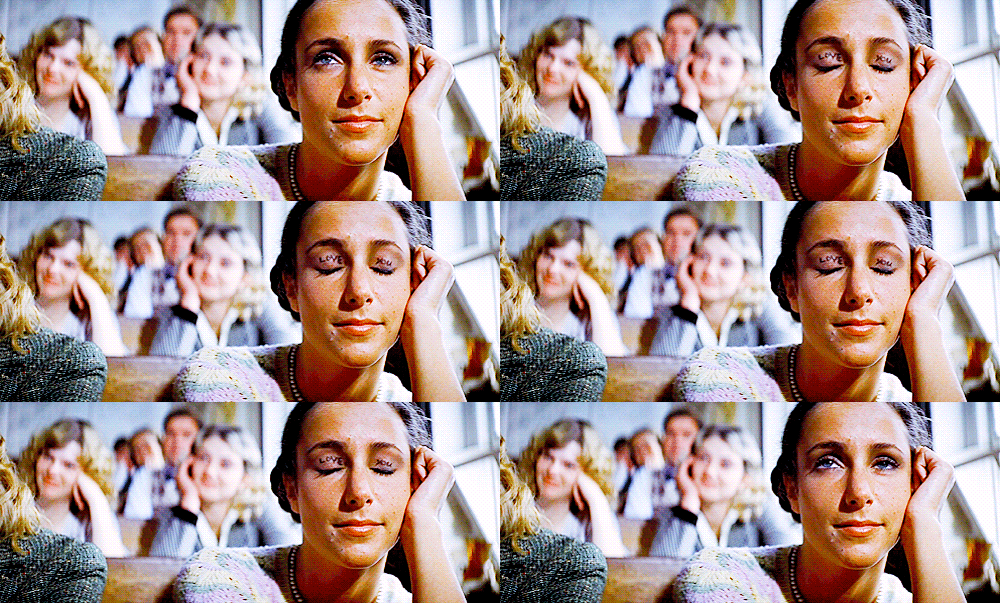
The worst-case scenario? His attendance record is exactly the same, except you’re stuck with a substitute—most likely Marcus Brody—who somehow manages to teach from either an outdated textbook or the wrong one altogether. Term papers vanish into the abyss, or worse, spend eternity buried beneath a mountain of ungraded assignments on Dr. Jones’s desk. By the end of the semester, the exams are so incomprehensible that dropping the class begins to feel like the only rational choice.
Of course, this is all pure speculation. For all we know, Indiana Jones was an exceptional educator who meticulously graded every paper, never missed a deadline, and maintained perfect attendance. Then again, I’ve seen Raiders of the Lost Ark, and I’m willing to bet the registrar’s office had an entire filing cabinet dedicated exclusively to explaining his absences, probably all signed by Marcus Brody.
Whatever arrangement kept Dr. Jones employed, Marcus Brody must have possessed the patience of a saint. Recovering lost artifacts is one thing. Recovering Indiana Jones’s lesson plans was probably the real adventure.
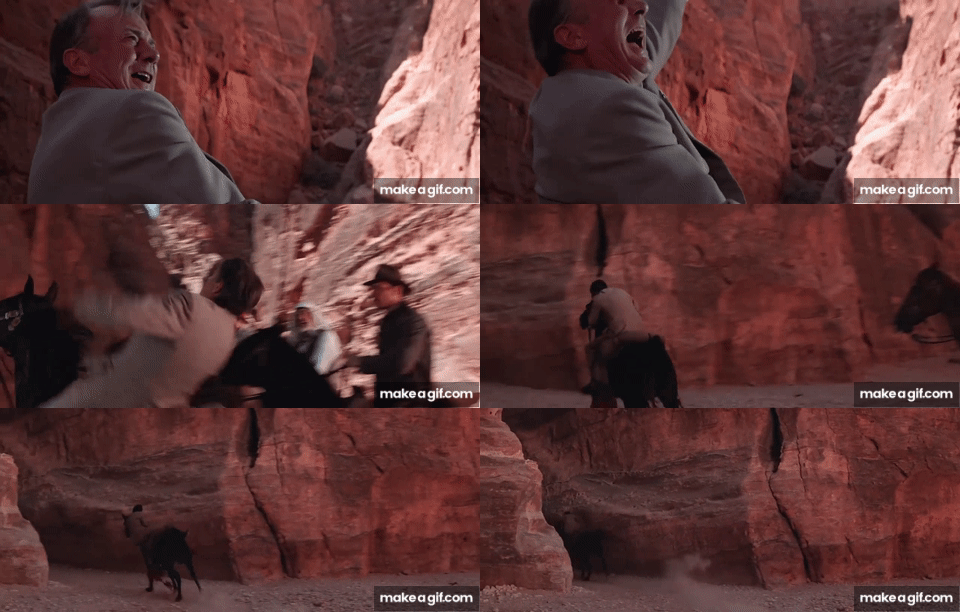
Newly Unearthed Observation: Somehow, it took me decades to notice that nearly every student in Indy’s classroom is female. Aside from the student who places an apple on his desk and a handful of male students visible as the class exits, the room is overwhelmingly occupied by women. It may be the clearest visual indication that Professor Jones was every bit as popular on campus as his reputation suggests. My wife wholeheartedly agrees with this sentiment.
THE MORAL COMPASS
When you sit down for a pint and start chatting about Raiders of the Lost Ark, there are several themes that can spark a lively debate. You could discuss Science vs. the Supernatural, as Indiana Jones was a scientist first, but he always had respect for things even he couldn’t comprehend. There’s also Faith vs. Hubris, where Belloq thinks he can control the power of God. However, the one that really grabs my attention is the Temptation of Greed. You see, Indiana Jones isn’t in it for fortune or glory. Sure, he has this awesome reputation, but what really drives him is the need to protect history and ensure that the artifacts he finds end up in museums where people can appreciate and study them.
“You and I are very much alike. Archaeology is our religion, yet we have both fallen from the purer faith. Out methods have not differed as much as you pretend. I am a shadowy reflection of you. It would take only a nudge to make you like me, to push you out of the light.” —Belloq
Now, let’s look at Belloq—Indy’s dark mirror. He represents everything Indiana Jones could become if his moral compass ever stopped pointing true north. While Indy is driven by preservation and respect for history, Belloq is motivated by wealth, fame, and power, and he’s more than willing to cozy up to the Nazis to get what he wants.
Which raises the bigger question: what keeps Indy from going down the same path? Was it the influence of his father, Henry Jones Sr., despite admitting himself that he wasn’t exactly around much? Or is there another piece of Indiana’s upbringing we never fully see, especially when his mother is barely mentioned at all? With so few clues, we’re left with theories, fragments, and the undeniable fact that, unlike Belloq, Indiana Jones always seems to know where the line is.
I’m not too familiar with the expanded universe beyond these films, so if you want to bring up a book I haven’t read that digs into his mother’s role in his life, you better be prepared to pick up the tab for the next round.
SPIELBERG’S FINGERPRINTS
This is the part of the review where I get to nerd out a little. I promise not to disappear down a filmmaking rabbit hole, but there are a handful of moments throughout Raiders where Spielberg’s fingerprints are impossible to miss. (And yes, I briefly considered calling this category “Stevie’s Smudges,” but even I have limits.)
THE SHRINKING SHADOW
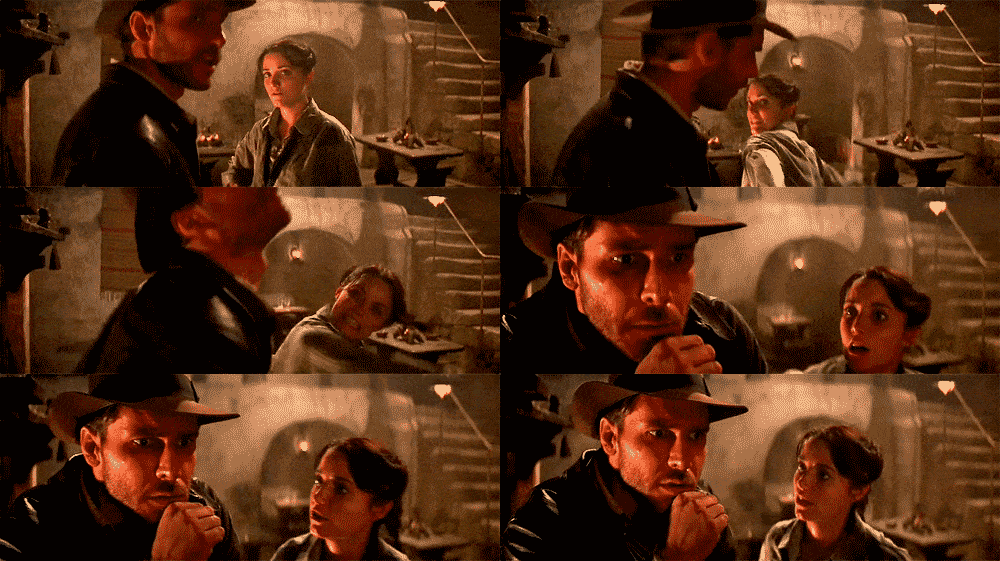
This first example is fairly straightforward, and I’m certainly not suggesting Spielberg invented the technique. However, these two shots perfectly illustrate his ability to tell a story without a single line of dialogue.
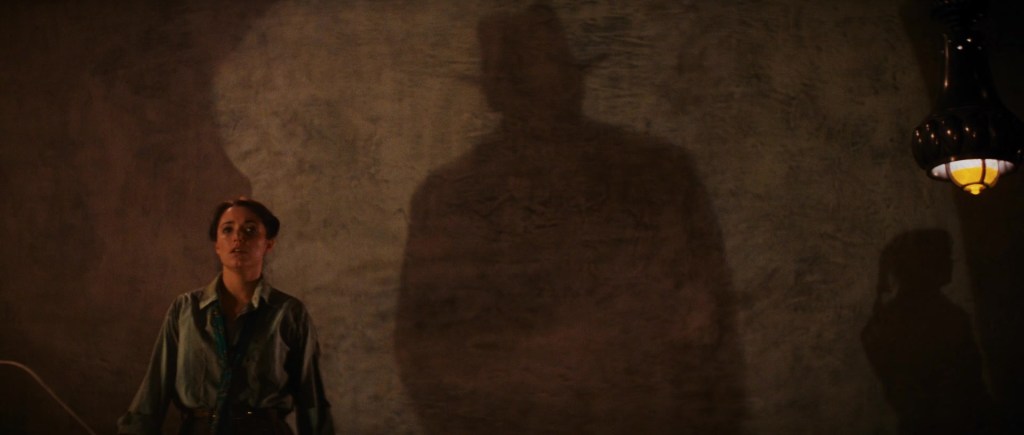
When Marion first learns that Indy is back in her life, his shadow dominates the frame, looming over her as a visual reminder of the past ten years and the emotional baggage that comes with it. Yet as the scene progresses, Spielberg slowly pushes the camera toward Marion. Indy never enters the frame, nor does the shadow disappear entirely. Instead, it gradually becomes smaller and less imposing as Marion fills more of the screen.
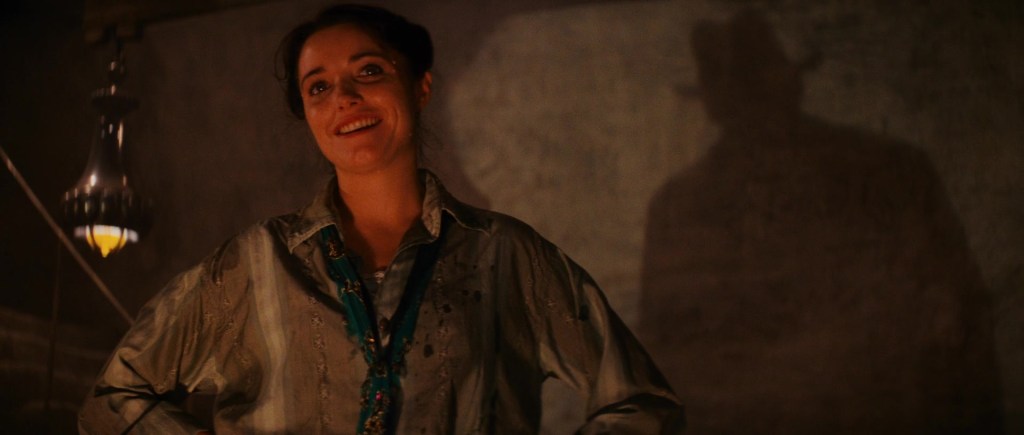
It’s a subtle visual cue, but an effective one. For years, Indy has cast a long shadow over Marion’s life. By the end of the scene, however, she refuses to let that shadow define her. Spielberg could have conveyed all of this through exposition and dialogue. Instead, he trusts the audience to understand it through composition and camera movement alone.
THE SPIELBERG FACE
No discussion of Spielberg’s directing style would be complete without mentioning the famous “Spielberg Face.” It’s a simple technique, really: place the camera close to a character and allow the audience to experience a moment of awe, shock, wonder, or disbelief through their reaction.
Raiders of the Lost Ark contains several examples, but one of my favorites occurs in the Cairo marketplace. After realizing Marion has been kidnapped, Indy is suddenly confronted with a seemingly endless sea of baskets being carried through the crowd. Spielberg pushes the camera right into Harrison Ford’s face as Indy desperately tries to process the impossible task before him. We don’t need anyone to explain what he’s thinking. His expression tells us everything we need to know.
It’s a small moment, but it’s classic Spielberg. Rather than showing us the problem first and the reaction second, he often lets the reaction become the story.
BLOCKING AND STAGING
One of Spielberg’s greatest strengths as a director is his ability to make dialogue-heavy scenes visually interesting. Lesser filmmakers might simply point the camera at two actors and let them exchange information. Spielberg is constantly thinking about where his characters are positioned within the frame, how they move through a scene, and where he wants the audience’s attention focused at any given moment. When it all comes together, it’s a beautiful dance between the director, the cinematographer, the actors, the set, and the props.
Raiders contains several examples of this. The scenes where Indy explains the Ark of the Covenant to Army Intelligence or later discusses the mission with Marcus Brody could easily feel static and exposition-heavy. Instead, Spielberg keeps the scenes moving through careful camera placement, character movement, and visual composition.
The most poignant example, however, comes after Marion’s apparent death. As Indy drowns his sorrows in a Cairo tavern, Belloq invites him to sit down for a drink. Spielberg holds the conversation in a single uninterrupted shot. Belloq sits comfortably in the center of the frame, fully visible and in control, while Indy occupies the foreground, covered in shadows and slightly out of focus—a visual reflection of his fractured state of mind. Rather than cutting back and forth between close-ups, Spielberg forces us to focus on the dialogue, the actors’ subtle expressions, and the uncomfortable realization that Belloq may understand Indy better than anyone else in the film.
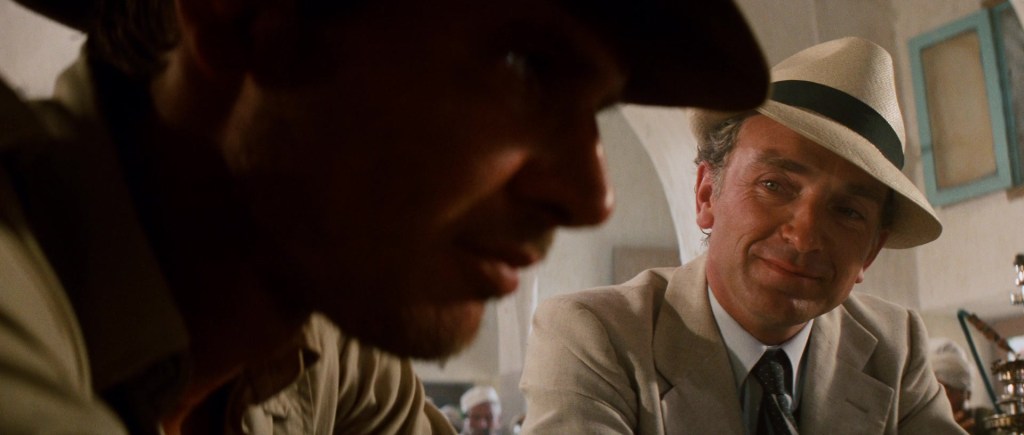
It’s a masterclass in restraint. The scene generates tension not through action or spectacle, but through performance, composition, and the growing realization that Belloq might be right. For perhaps the first time in the film, Indy feels dangerously close to abandoning his moral compass altogether. Belloq isn’t simply describing a rival sitting across the table from him—he’s describing the man Indy could become if he ever stopped caring where the line was.
The Technicals
Raiders of the Lost Ark was nominated for a total of nine Academy Awards—technically eight, plus a Special Achievement Award, which was essentially the Academy’s way of saying, “We didn’t know where else to put this.” However you choose to count it, the film walked away with five Oscars.
However, I’m not here today to proselytize for the Academy of Motion Picture Arts and Sciences. I’m still a little bitter that Lawrence Kasdan wasn’t even nominated for Best Original Screenplay. But I digress…
What I’m really here to do is highlight a few of my favorite technical achievements and hand out some completely unofficial awards of my own. This is where I’ll call out standout action sequences, set pieces, fights, quotes, and whatever other oddities happen to catch my attention. In other words, this category is going to be played very fast and loose.
Or, as Indy would say…
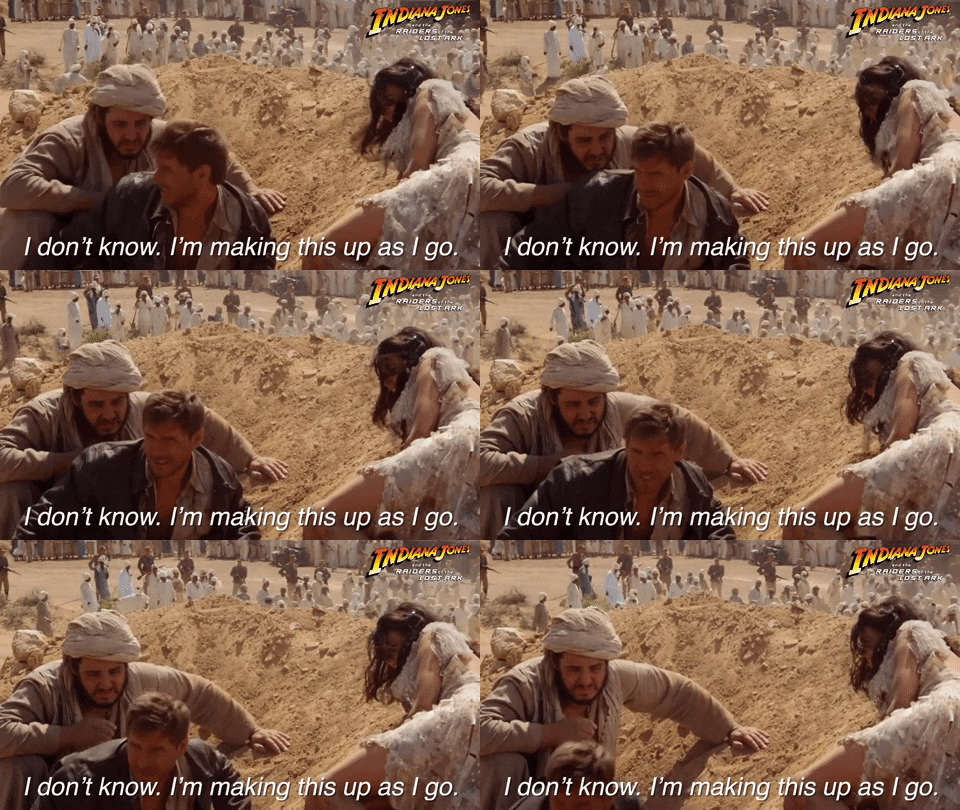
Let’s get to it.
BEST QUOTE
It’s difficult to pick just one quote from Raiders of the Lost Ark, but if you put a gun to my head, it’s this one:
Marion: You’re not the man I knew ten years ago.
Indiana: It’s not the years, honey, it’s the mileage.
The story behind the line makes it even better. The scene aboard the Bantu Wind was filmed late in production after Harrison Ford had already endured a considerable amount of running, jumping, falling, punching, and being punched. The line wasn’t in the script. Ford simply came up with it on the spot, drawing from his own experience making the film. As far as ad-libs go, that’s a pretty good one.
BEST FIGHT
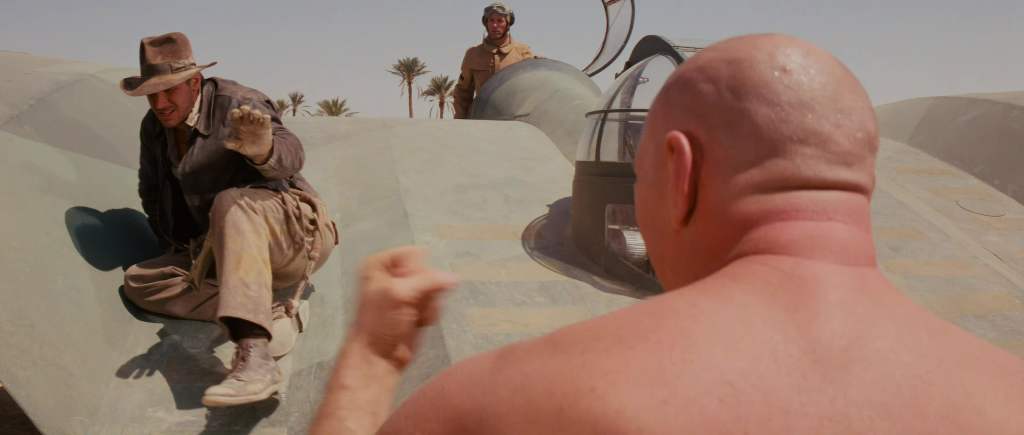
The Flying Wing sequence demonstrates exactly why Michael Kahn earned his first Academy Award. What begins as a simple attempt to board a plane and recover the Ark quickly spirals out of control. Indy finds himself fighting the German Mechanic at what seem like impossible odds, Marion becomes trapped in the cockpit, fuel begins spilling onto the ground, and Nazi soldiers arrive. And just when it appears the Mechanic might finally overwhelm Indy, the spinning propeller eliminates the threat in spectacular fashion.
Kahn masterfully cuts between each escalating problem, ratcheting up the tension with every edit. By the end, the audience isn’t just wondering whether Indy can win the fight—they’re wondering if anyone is getting out of this alive. It’s a perfect example of how Raiders turns a failed attempt at being sneaky into one of the film’s most memorable action sequences. Just another day at the office for Michael Kahn and his well-deserved golden statue.
BEST ACTION SEQUENCE
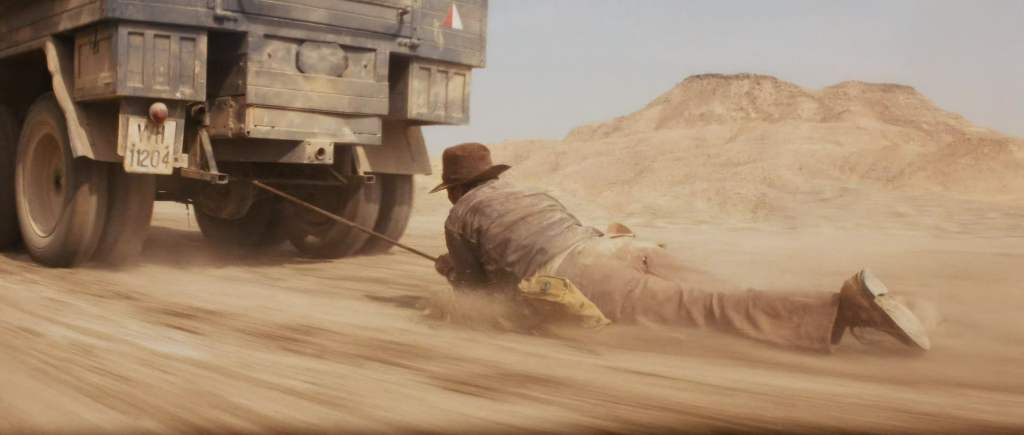
We all know it’s the truck chase. If you’ve somehow arrived at a different conclusion, I can only assume you accidentally watched the wrong movie.
BEST SINGLE FRAME
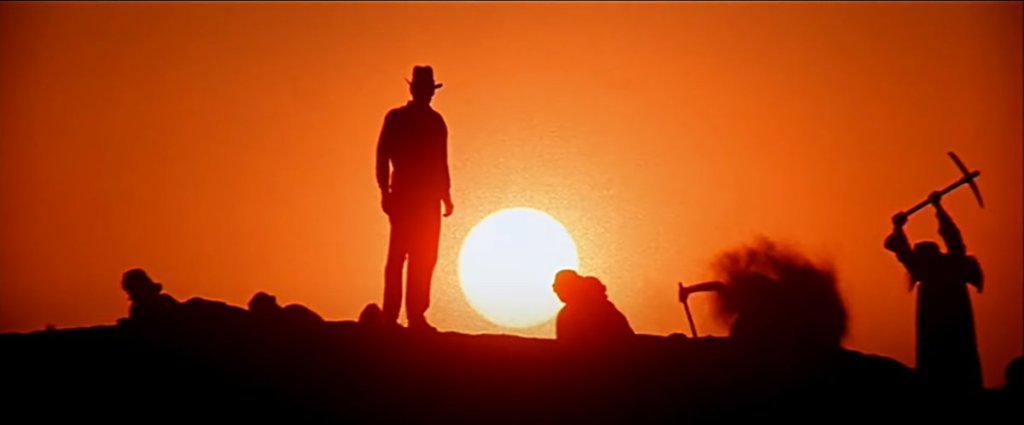
Raiders of the Lost Ark contains dozens of iconic images, but few are as breathtaking as the sun setting over the Well of Souls excavation. Sometimes the most impressive visual effect is a talented cinematographer, a beautiful location, and perfect timing.
THE MOMENT MY WIFE FORGOT I WAS IN THE ROOM
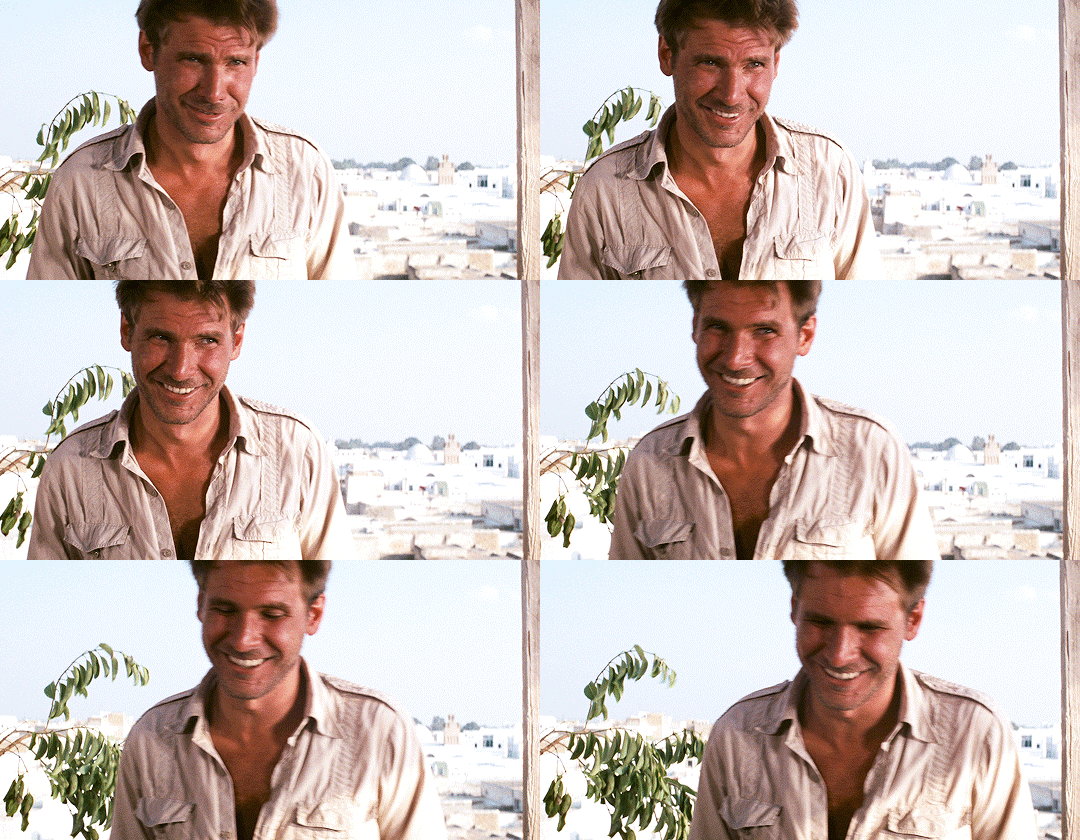
This one really speaks for itself. If you’re not sure why, you may already be dead inside.
THE LOST ART OF MATTE PAINTING
Before CGI, filmmakers relied on matte paintings to create scale, and Raiders of the Lost Ark has several—easy enough to spot now, but only because I know where to look. Michael Pangrazio was one of the greats. His work on Star Wars, Raiders, Temple of Doom, and dozens of other films helped define the era before digital effects pushed traditional matte painting aside in the 1990s.
His warehouse shot in Raiders took three months to paint on glass and was placed directly in front of the camera to extend the set. It’s still considered one of the most effective matte paintings ever put on film.
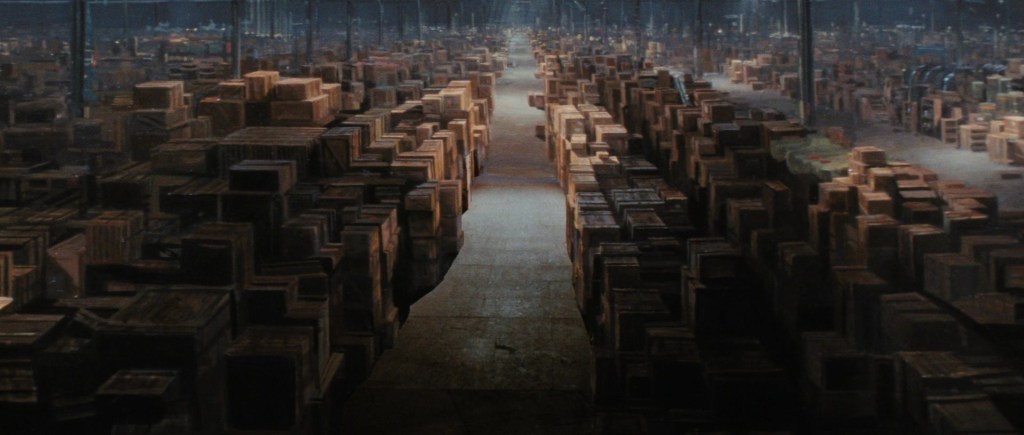
The only real giveaway is the crisp edge on either side of the center aisle—the narrow strip where they had to film the worker rolling the crated Ark into that endless maze of boxes, never to be seen again. Sometimes the old ways still work best.
THE GOOSEBUMPS AWARD
Let’s be honest: we’re watching sunlight pass through a staff and illuminate a tiny model city. Yet somehow John Williams makes it feel like the hand of God just reached down and told Indy exactly where the Well of Souls is located.
The Field Notes
Before we begin: Not every observation neatly fits into a category. Sometimes it’s a single thought that refuses to leave me alone; other times it’s a collection of questions, insights, and rabbit holes that found their way into my notebook while revisiting the film.
MARION CHANGES EVERYTHING
One of the most enduring fan theories surrounding Raiders of the Lost Ark is that Indiana Jones has no impact on the outcome of the story. Had Indy never become involved, the Nazis still would have located the Ark of the Covenant, opened it, and been destroyed by its supernatural power.
While there’s certainly some truth to that argument, I think it overlooks one important detail: Marion Ravenwood.
If Indy never returns to her life, Marion’s fate becomes considerably less certain. Had Major Toht been the first to arrive in Nepal, it’s hard to imagine their encounter ending peacefully. Marion likely would have resisted, fought back, and potentially paid for it with her life. Even if she somehow survived that initial encounter, she may have attempted to leverage what she knew about the headpiece to stay alive, ultimately placing herself on the island when the Ark was opened.
In that sense, Indiana Jones may not save the world in Raiders of the Lost Ark—the Ark takes care of that on its own—but he does save Marion. Perhaps that’s the real impact he has on the story. The adventure begins as a quest for an artifact, but by the end of it, Indy has repaired a damaged relationship and ensured that someone he cares about lives to see another day.
THE BELLOQ CHRONICALS
The older I get, the more fascinated I become with the movie that doesn’t exist: the one where René Belloq is the hero. Imagine following a brilliant French archaeologist over the course of a trilogy—back when studios occasionally stopped at three movies instead of trying to squeeze twelve seasons and a streaming spinoff out of everything. Over time, Belloq slowly compromises his principles, chases bigger discoveries, accepts larger paydays, and eventually finds himself working alongside the Nazis.
By the time Raiders begins, the tragedy isn’t that Belloq becomes a villain. It’s that he probably didn’t start out as one. I’ve spent enough time thinking about this that I’ve already outlined the first movie and named the rest of the trilogy. I may have also had a little too much fun, or too much time on my hands, creating a few movie posters for Belloq.
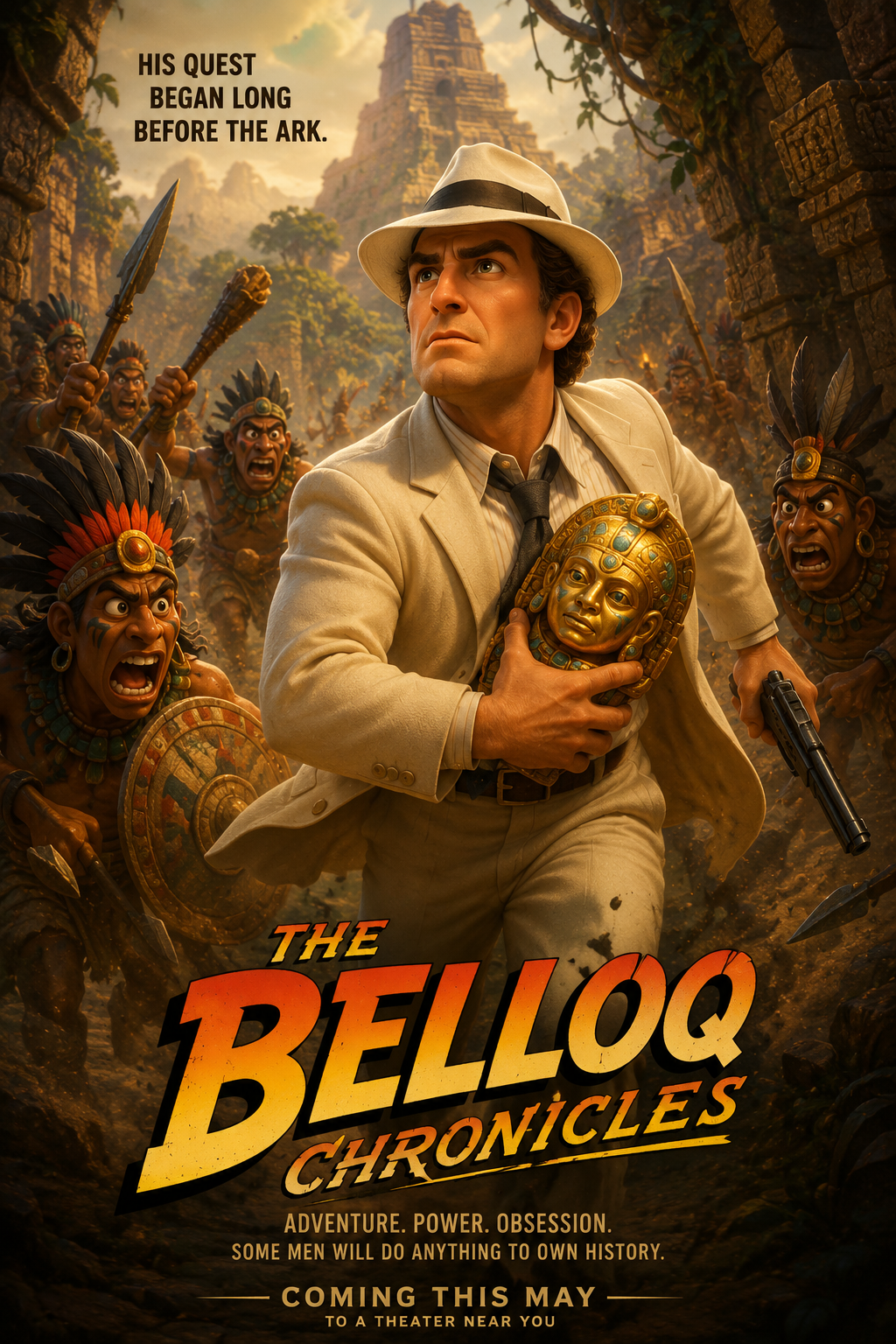
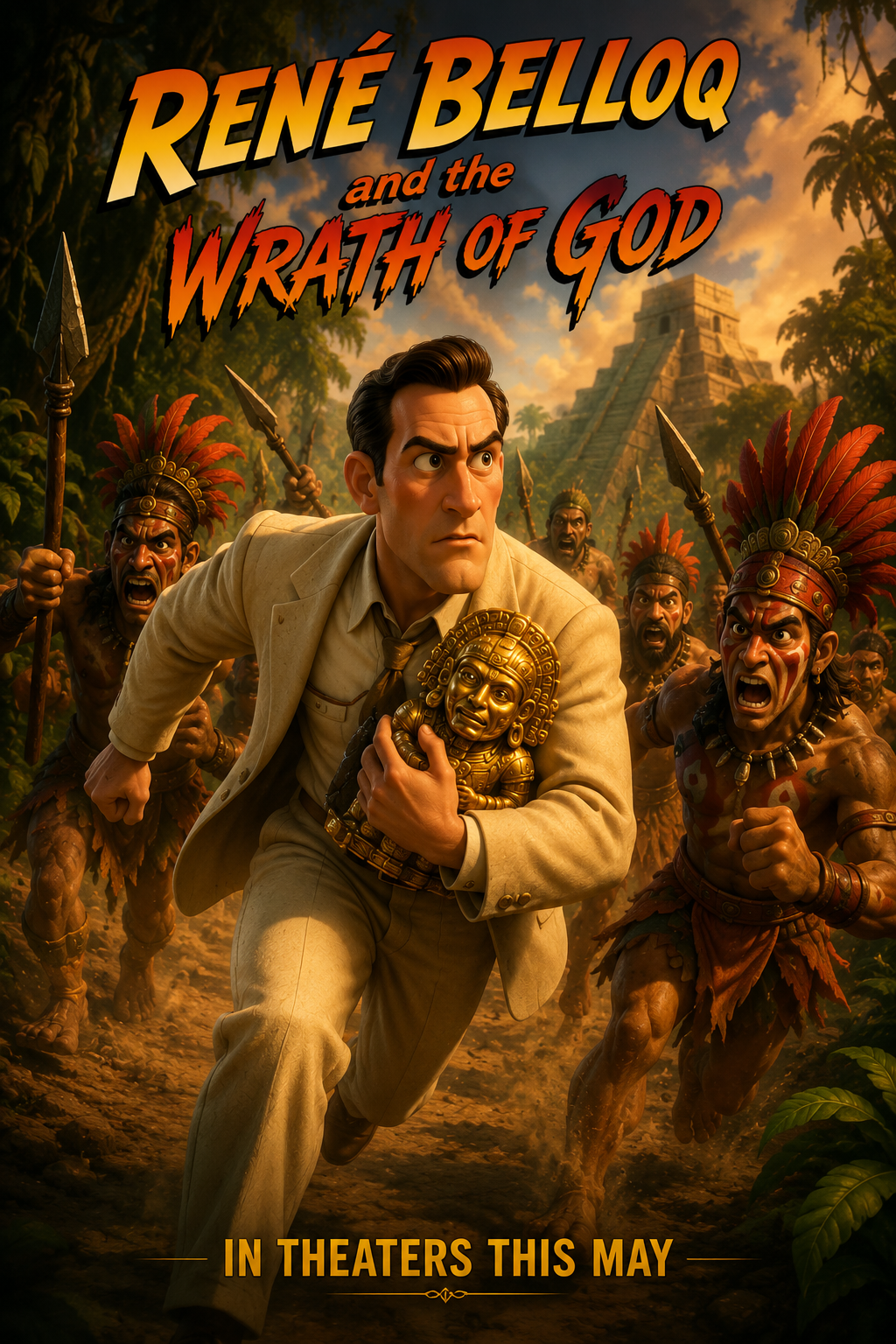
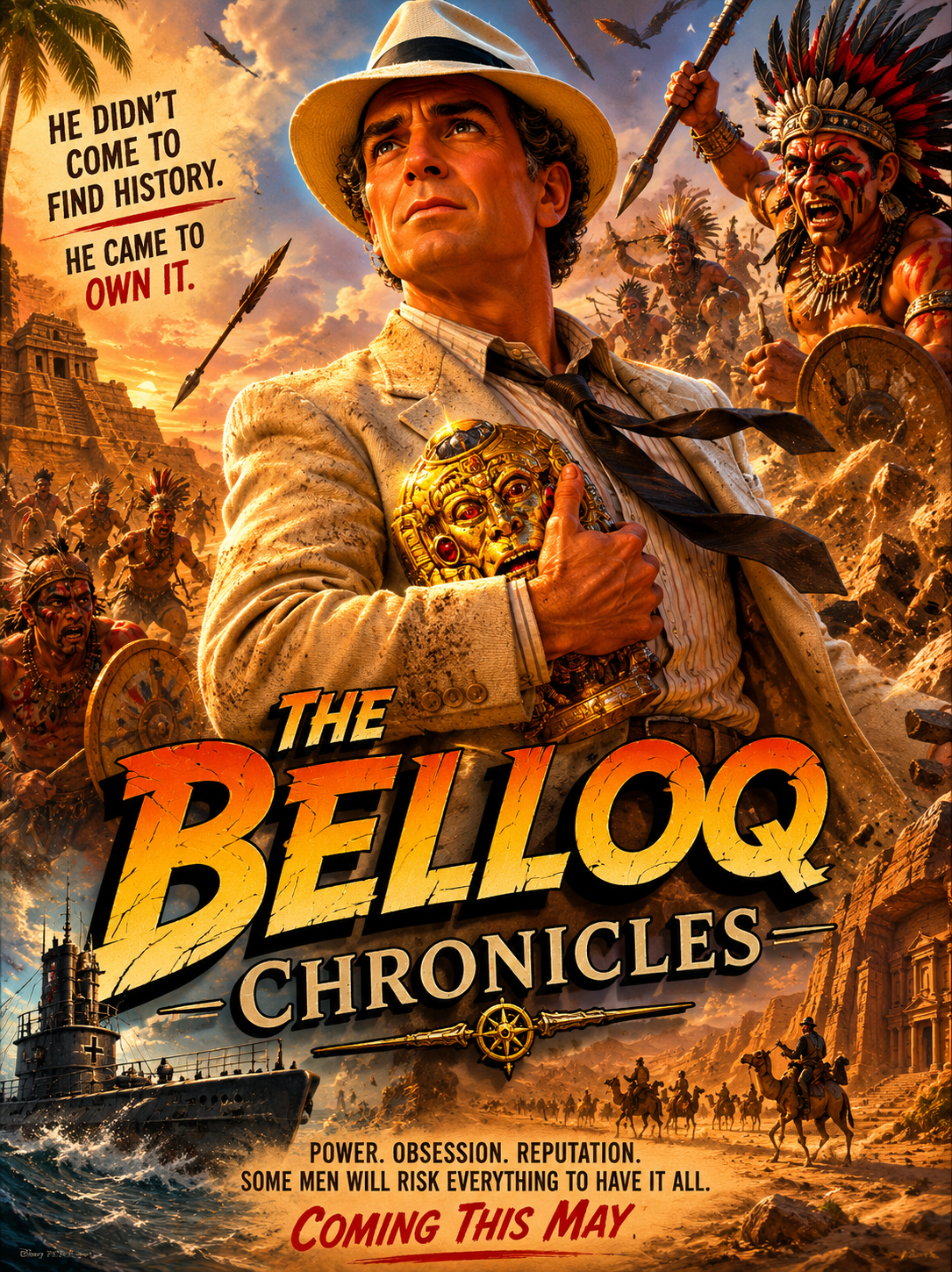
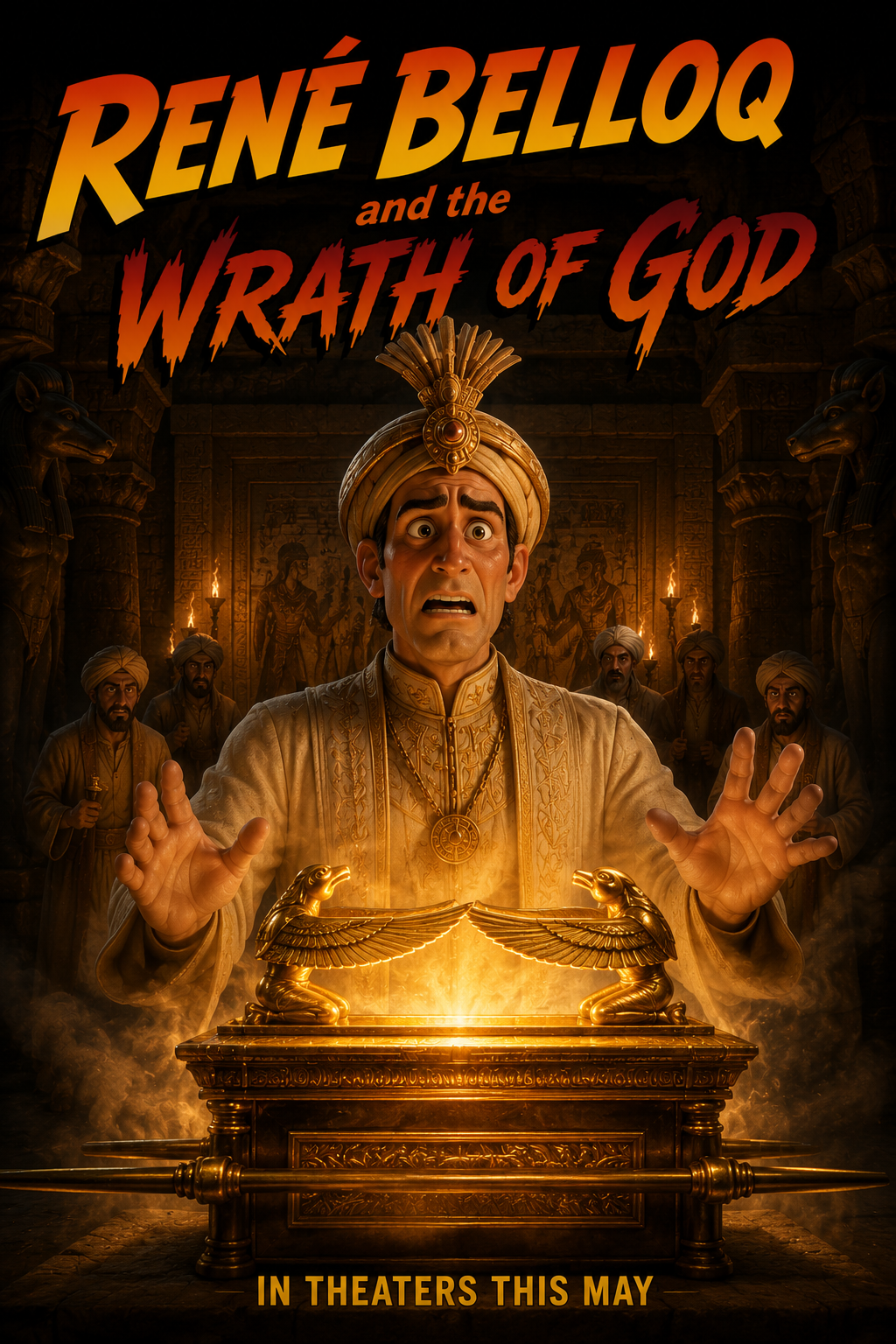
In my best movie-trailer voice: “The Belloq Chronicles. Coming this May to a theater near you.”
THE BEST NAZI SPY IN THE FILM
At some point, Raiders casually introduces a monkey that appears to be working for the Nazis and then expects us to simply move on with our lives.
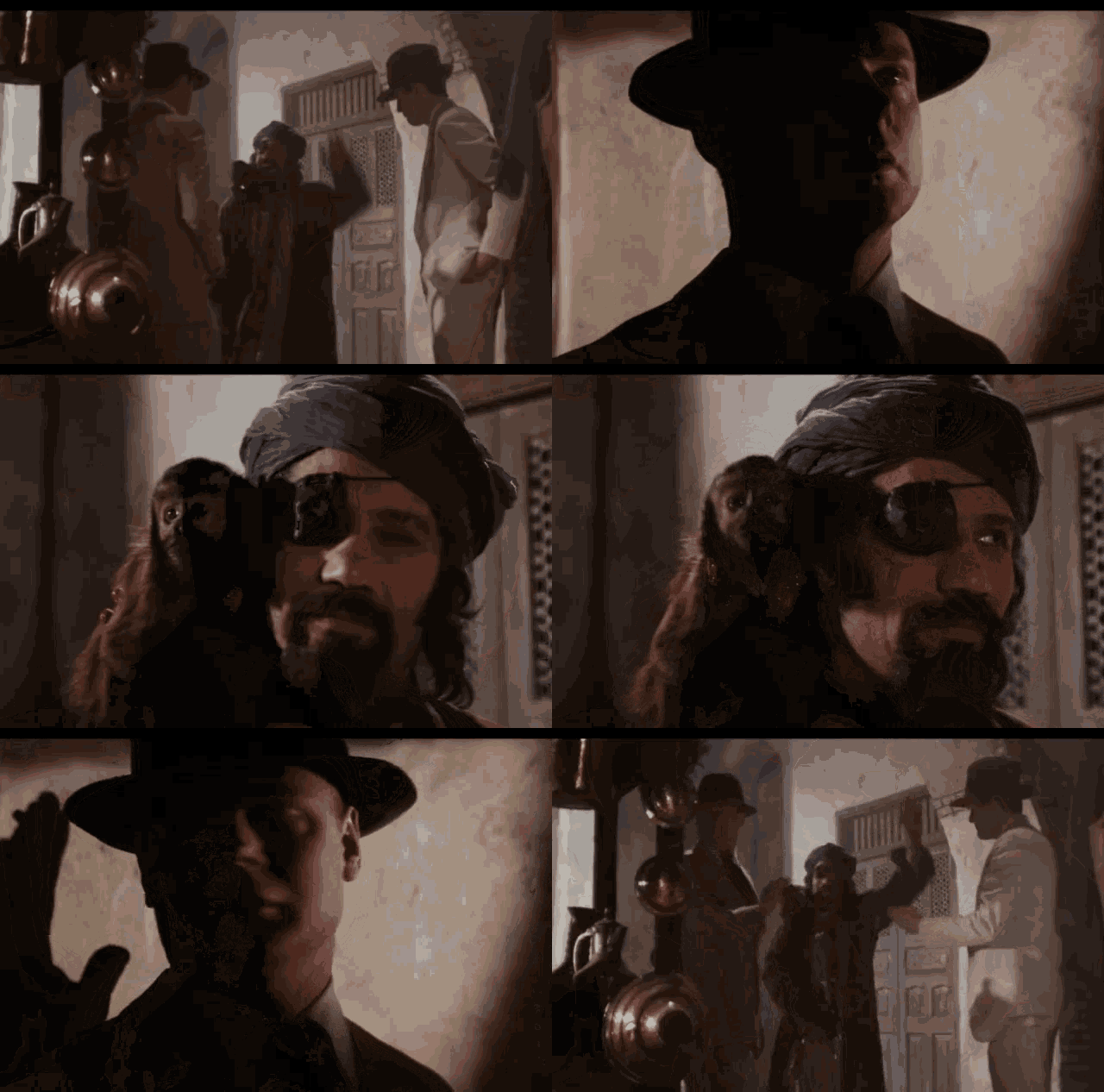
LEAP OF FAITH
Alternate Field Note (born from a chemically enhanced thought experiment): At some point, my brain wandered into a Quantum Leap episode where Sam Beckett leaps into Indiana Jones just before arriving in Nepal, only to learn his mission is to save Marion Ravenwood and make sure the Nazis get the medallion. Al informs Sam, under instructions from Ziggy, that if the Nazis get the medallion, everything else will resolve itself without Indiana’s involvement.
Naturally, Sam botches it, fails to convince Marion to hand over the medallion, and ends up trapped as Indiana Jones for the remainder of the film. The Nazis still all die at the end, and Sam finally leaps while still tied to the post beside Marion on the island.
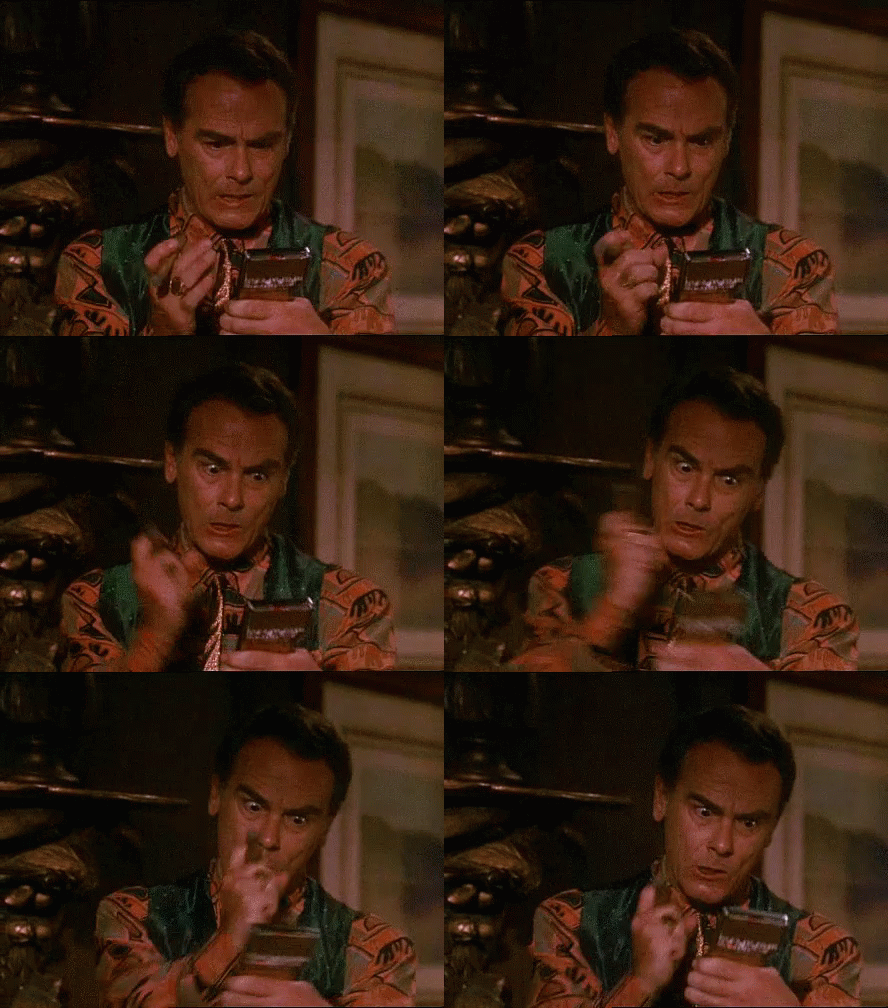
Which, honestly, sounds like a pretty great episode. The title practically writes itself. Where Sam winds up next, who knows… but let’s hope it’s not in a small Indian village called Mayapore.
At this point, I should probably put the notebook down and go take a nap.
The Artifact Room
BEST SCENE PIVOT DUE TO DYSENTERY
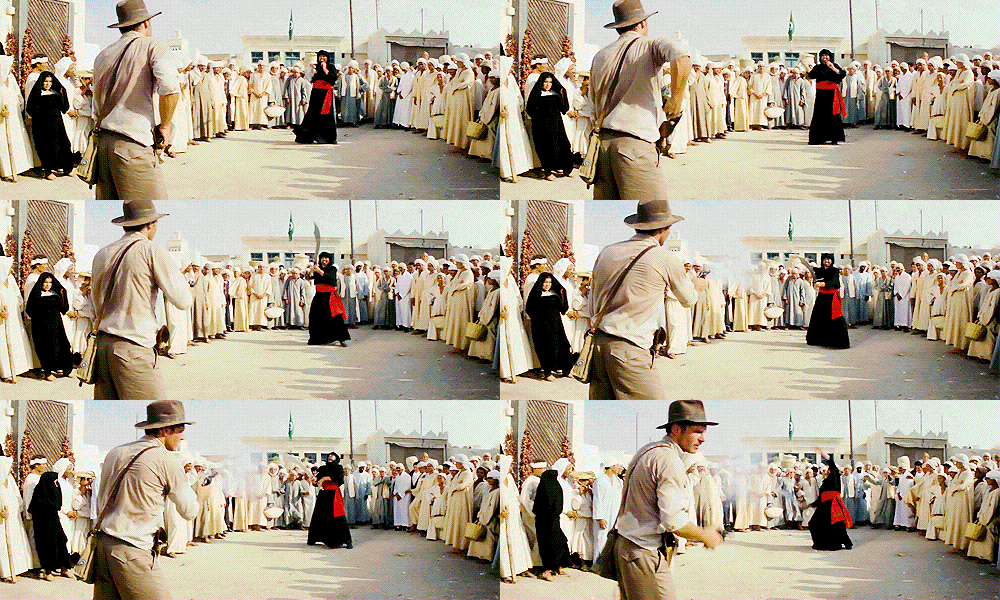
Most people know the story by now, but for those who don’t, the scene was originally planned as an elaborate sword fight. Harrison Ford, however, was suffering from dysentery and wasn’t exactly enthusiastic about spending the day performing an extended choreographed duel. Instead, he suggested that Indy simply shoot the swordsman. A few crew members overheard the idea and immediately burst out laughing. Spielberg recognized they were onto something, quickly revised the scene, and in the process created one of the funniest and most iconic moments in the entire franchise.
THE BORROWED U-BOAT
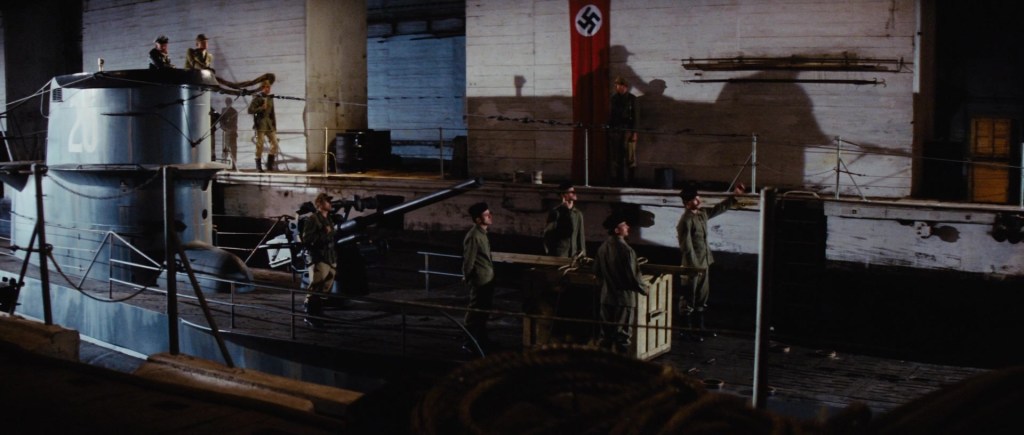
The submarine used in Raiders was actually borrowed from Wolfgang Petersen’s Das Boot, which is exactly the kind of movie trivia I love. More importantly, it made financial sense. After 1941 failed to live up to expectations, Spielberg was eager to prove he could deliver a large-scale adventure without going over budget or behind schedule. As it turns out, borrowing a Nazi U-boat is a pretty good way to save a little money.
THE SPECIAL ACHIEVER AWARD

Just as he did on Star Wars, sound designer Ben Burtt built an entirely original library for the film’s soundscape. Indy’s signature gunshot comes from an unprocessed live recording of a .30‑30 Winchester rifle, and those gloriously exaggerated punches were created by Burtt smacking a pile of leather jackets and baseball gloves with a baseball bat. Honestly, that uncontested Oscar win starts to feel pretty well‑earned.
THE “ACTUALLY, PUT THAT BACK IN” AWARD
Another story that some people know—but not the whole story—is the famous cobra shot in Raiders of the Lost Ark. Most fans have heard that Harrison Ford was separated from the snake by a pane of glass when Indy drops into the Well of Souls. Frequent viewers love pointing out the reflection to friends, especially first‑timers.
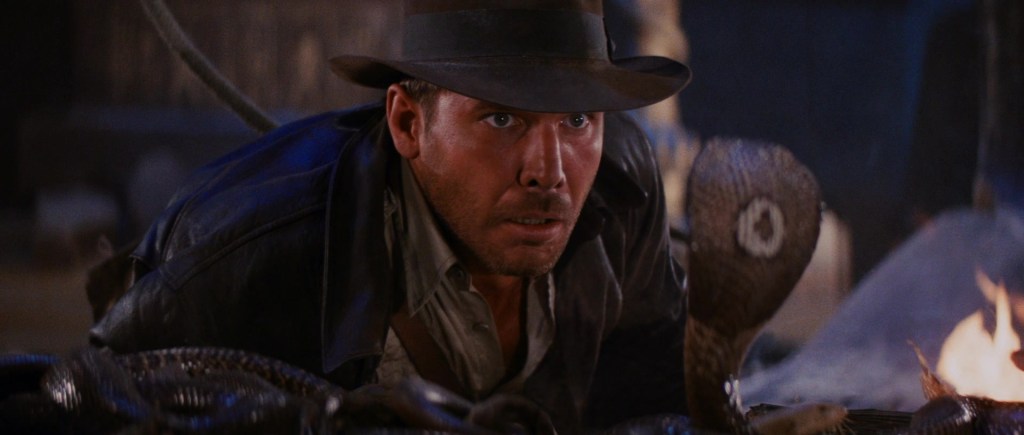
What many don’t know is that Spielberg had that reflection digitally erased during the first major remaster of the Indiana Jones films for DVD in the early 2000s. Back when there were only three movies and we all still called it The Indiana Jones Trilogy.
Because that digital cleanup wiped away a bit of the original practical‑effects charm, Spielberg eventually regretted the change. When the films were later remastered for Blu‑ray and then 4K, the digital removal was undone, and the theatrical shot—with the glass and its faint reflection—was restored.
Spielberg did something similar, but far more extreme, for the 20th‑anniversary release of E.T. the Extra‑Terrestrial. He replaced the guns carried by federal agents with walkie‑talkies and even created a CGI “digital puppet” version of E.T. to tweak some of his movements.
Much like the Raiders fix, Spielberg quickly realized he’d made a mistake. He publicly admitted that the changes “robbed people who loved E.T. of their memories,” and he emphasized that films are historical artifacts that shouldn’t be reshaped to fit modern sensibilities. For the 30th‑anniversary release, he reversed every digital alteration. The 2002 version was pulled, and every edition available today—4K, Blu‑ray, streaming—reflects the original 1982 film.
I know this section ran longer than I intended, but it feels important to mention. The Indiana Jones films—especially the first four—were collaborations between Spielberg and George Lucas, and Lucas has a long history of revising and re‑revising his Star Wars films. As a result, we’re likely stuck with the Special Editions as the “official” versions of the original trilogy, with little hope of ever getting pristine, unaltered physical releases from 1977, 1980, and 1983.
Anyway, tangent over. But all of this circles back to the same point: films aren’t drafts to be endlessly tinkered with. They’re artifacts of the moment they were made—fingerprints of the era, the artists, and the audience who first embraced them. And as a certain fedora‑wearing archaeologist likes to remind us, some things belong in a museum.
Closing The Journal
Raiders of the Lost Ark stands as the apex of action-adventure cinema—a film that didn’t just pay homage to the Saturday-morning serials that inspired it, but elevated them into something ingenious, stylish, and unmistakably modern (at least for 1981). It blends humor, romance, thrills, and spectacle with such effortless precision that it never once feels like it’s overplaying its hand. The movie is pure entertainment, fully aware of its pulp roots yet executed with such craftsmanship that you believe, without hesitation, that it’s every bit as good as its reputation.
Part of that enduring magic comes from how the film handles its supernatural and occult elements. Instead of leaning on them for cheap shocks, it underplays them throughout, letting the mystery simmer until the finale delivers a payoff that feels both earned and inevitable. That restraint is a big reason the ending still hits like a thunderbolt.
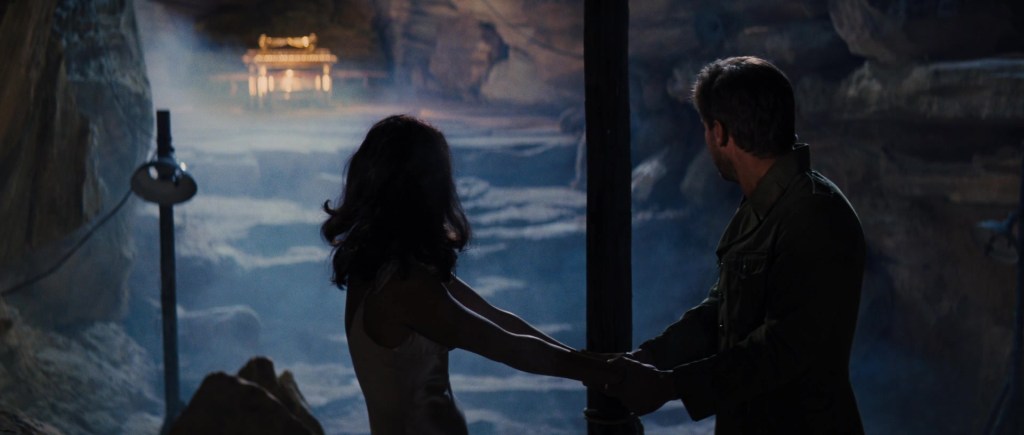
At the center of it all is Indiana Jones—the quintessential reluctant hero. He doesn’t chase destiny or glory; he simply steps up when he’s pushed, doing the right thing even when it costs him. And he’s not the typical square-jawed savior either. His decision not to immediately rescue Marion, knowing it would jeopardize the mission, is one of the clearest examples of how the film resists cliché. Raiders may be filled with larger-than-life characters, biblical artifacts, and supernatural forces, but its hero remains surprisingly human.
And then there’s the personal side—the way Raiders embeds itself in memory. It still hits me with the same sense of wonder it did the “first” time I saw it—whenever that actually was. I have no concrete memory of that inaugural viewing, which feels on-brand for a kid who definitely wasn’t old enough to catch it in theaters. My sister, however, will happily recount how she went with my parents at age eleven and was emotionally scarred by the face-melting finale. Meanwhile, I was probably at home mastering the art of being too young to process anything more intense than Sesame Street.

What I do remember is that Raiders was basically a permanent fixture of my childhood. Maybe my first viewing came from a Wherehouse Video rental, but we also had a taped copy from its network premiere in September 1986—and two commercial breaks from that recording are etched into my memory with the permanence of actual scenes. One cuts in just after Marion declares she’s Indy’s new partner as her bar burns in the Nepalese night; the other arrives right after Sallah’s “bad dates” warning, the dead monkey on the floor framed by that ceiling fan spinning ominously overhead.
They were such perfectly timed transitions for a TV broadcast that, to this day, I half-expect those commercials to appear whenever I rewatch the movie—like the film is forever intertwined with the way I first experienced it, as if my childhood version is still running in parallel just out of frame. Only with less profanity.
It’s almost surreal now to think of a summer blockbuster still playing in theaters by Christmas, but that was the 1980s—a different era, a different moviegoing culture, and a testament to just how deeply Raiders captured the public imagination.
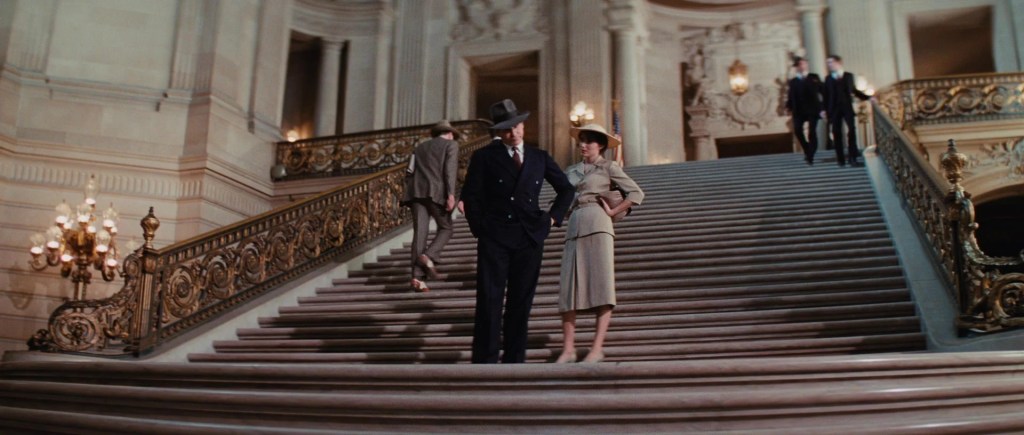
It also cemented the legacies of the creative forces behind it: Harrison Ford as a bona fide movie star, Steven Spielberg as Hollywood’s boy-wonder director who could seemingly do no wrong, and George Lucas as the visionary world-builder whose entertainment empire was only beginning to take shape. Together, they created a film that remains the gold standard of its genre—an adventure that hasn’t aged a day because it was built with the kind of clarity, energy, and imagination that never goes out of style.


Leave a Reply