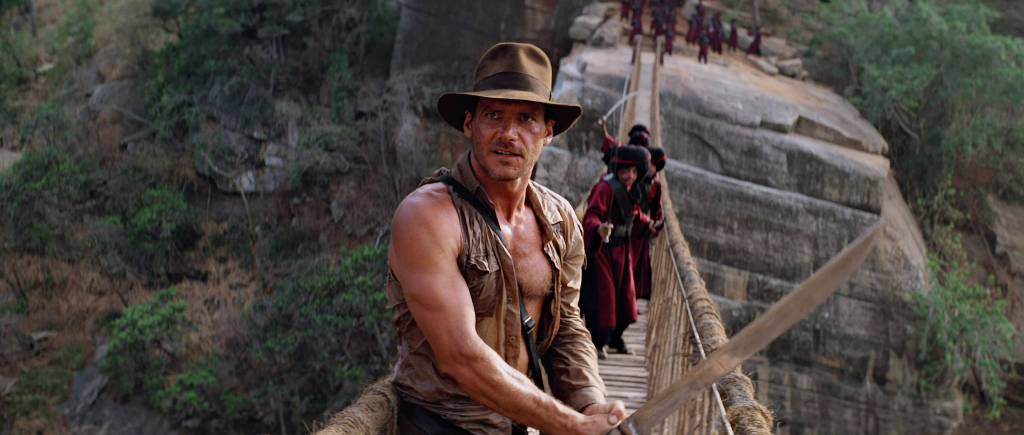
“You’re gonna get killed chasing after your damn fortune and glory!”
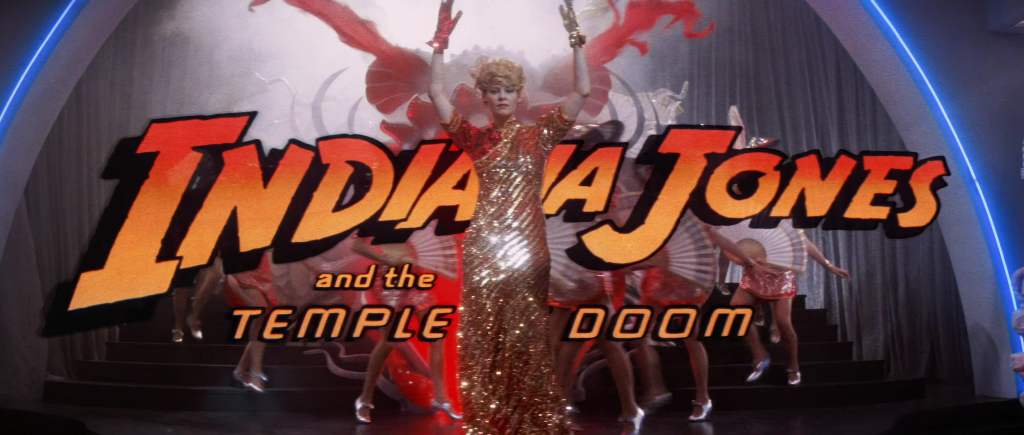
Directed by Steven Spielberg
Produced by Robert Watts
Written by Willard Huyck, Gloria Katz
Story by George Lucas
Release Date: May 23, 1984
Running Time: 118 Minutes
THE COLD OPEN
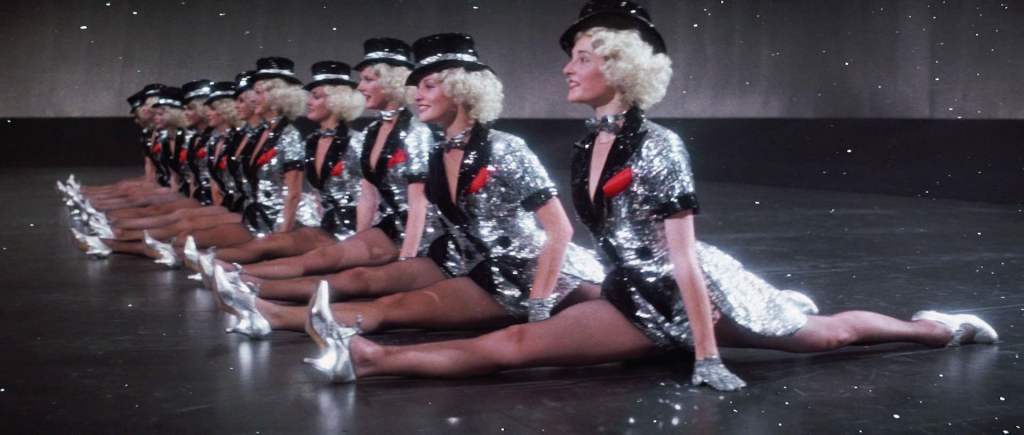
As the Paramount mountain crossfades into the mountain featured on a giant gong, the opening musical number, “Anything Goes,” kicks off at a swanky night club. The opening credits for Indiana Jones and the Temple of Doom pay direct homage to the vibrant, lavish Busby Berkeley-style musical extravaganzas of the 1930s and ’40s. If you don’t know who Busby Berkeley is, look him up. Consider it a little film history side quest.
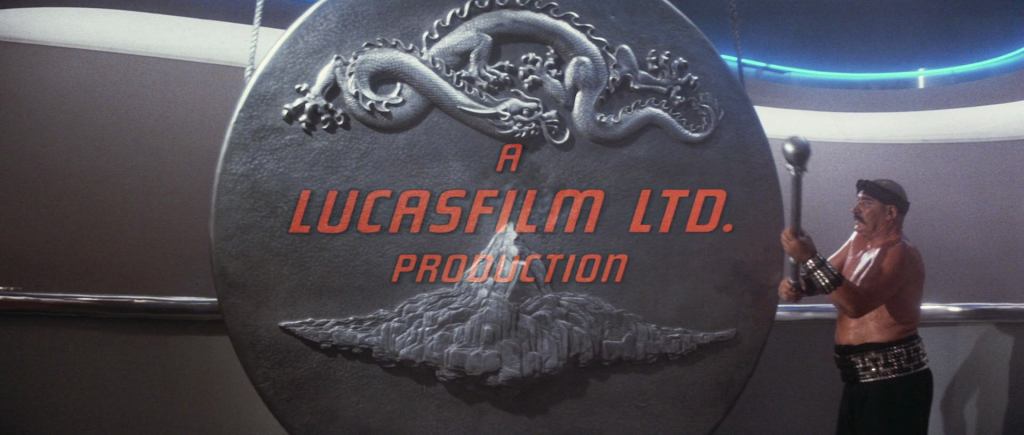
But the cold open doesn’t really begin until the credits end.
We’re in Shanghai, 1935. Indiana’s globe-trotting search for the Ark of the Covenant is still a year away, and instead of trekking through jungles or digging through ruins, we find him at Club Obi-Wan (the most overtly on-the-nose yet somehow subtle Star Wars reference, because you’ll miss it if you blink), dressed to the nines in a white dinner jacket that feels pulled straight out of Goldfinger. It’s probably the clearest James Bond homage in the entire series.
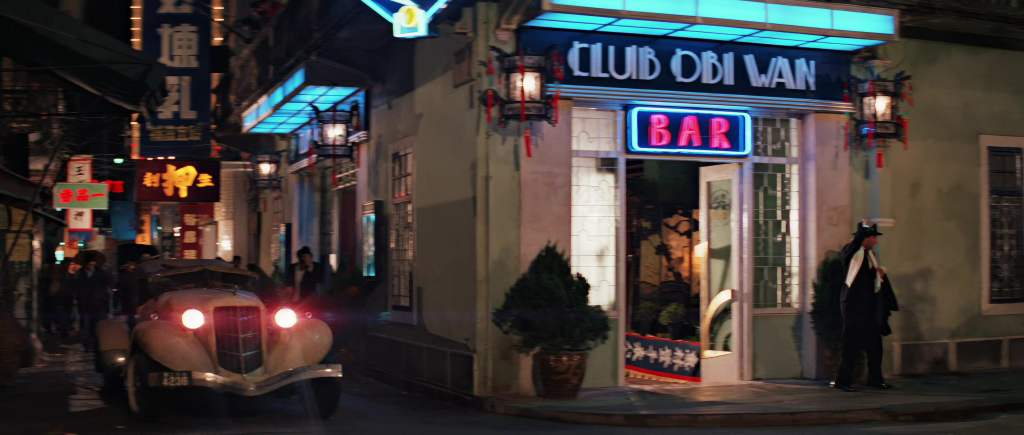
The scene starts simply enough: a relic for a diamond, with Indy making the exchange with Shanghai Triad crime boss Lao Che. Naturally, it turns into a double cross. Even that exchange has style—rather than handing over the diamond, it’s spun across a lazy Susan. A gun is drawn, Lao has the upper hand. Indy grabs Willie, now he has the upper hand. But Indy’s been poisoned, which swings the advantage right back to Lao.
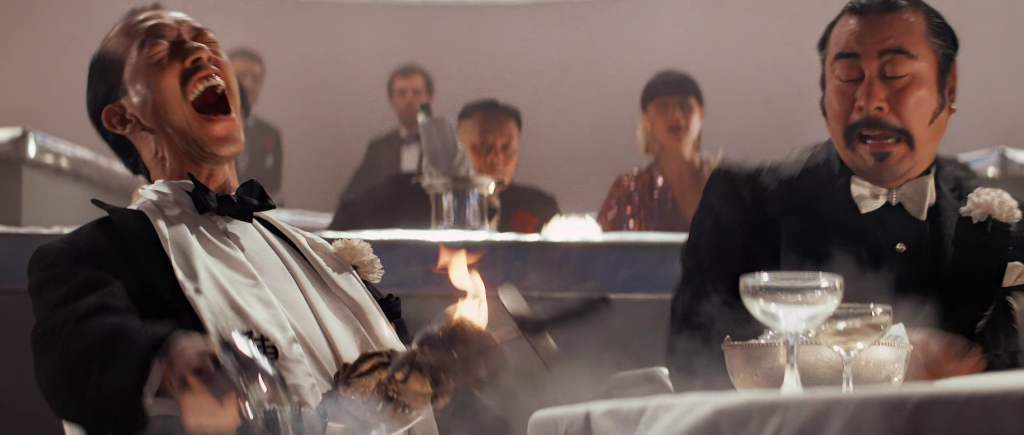
And then the Bond fantasy collapses into pure Indiana Jones chaos. Once the diamond and antidote go skittering across the dance floor, all hell breaks loose. Indy and Willie scramble after them on their hands and knees as patrons kick both further out of reach at every turn. Balloons, a giant gong, a flaming kebab, a tommy gun—it’s inventive, violent, chaotic, and laced with sharp comedy.
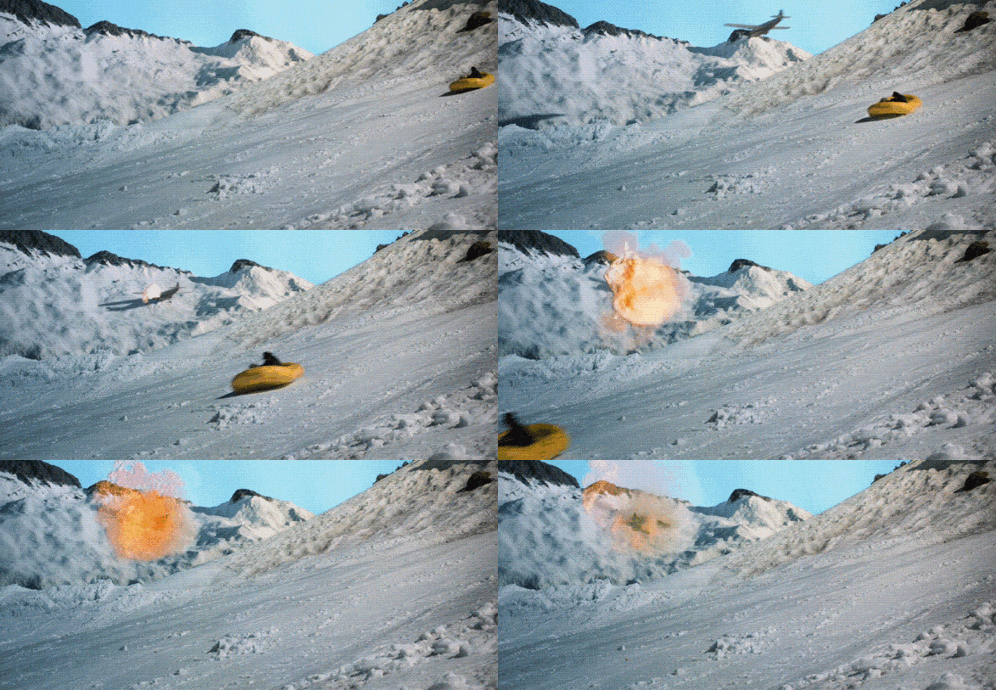
But even after they escape, they’re still not out. A quick car chase gets them to a plane, where Indy thinks he’s finally in the clear—until we see Lao Che’s name on the side. It’s hard to say exactly where the cold open ends, but if I had to put my finger on it, it’s probably when they jump out of the plane on the raft. From there, the movie rolls straight into one of the most gloriously ridiculous, implausible white-water escapes in the entire series. Then again, this is Indiana Jones, not the real world.
As cold opens go, even though it’s most akin to a Bond Cold Open, it’s still not my favorite, but it definitely works. Clocking in at around 15 minutes, it never overstays its welcome and, before you can catch your breath, dumps Indy, Short Round, and one extremely unwilling participant (that would be Willie Scott, in case you’re somehow still wondering) right into the rest of the adventure.
THE STORY
Why 1935? Is this a prequel? Also, what’s a prequel? These are questions that likely weren’t really being asked much when Indiana Jones and the Temple of Doom hit theaters in 1984—at least not to the best of my knowledge and my sketchy internet archaeology for this post. My gut tells me this bit of backstory belongs in The Artifact Room, but it fits better here since it directly informs why this story exists in the first place. The story goes something like this:
George Lucas reportedly didn’t want to use Nazis as the villains two movies in a row. And honestly, that makes sense. If Indy was constantly punching Nazis every time out, the series risks becoming less about adventure and discovery and more about a recurring war against a single evil. That narrows the world. By setting this story a year earlier, Lucas and Steven Spielberg keep Indy unpredictable—less a soldier in a larger conflict and more what he works best as: a globe-trotting adventurer stumbling into trouble wherever history, myth, and bad people happen to collide.
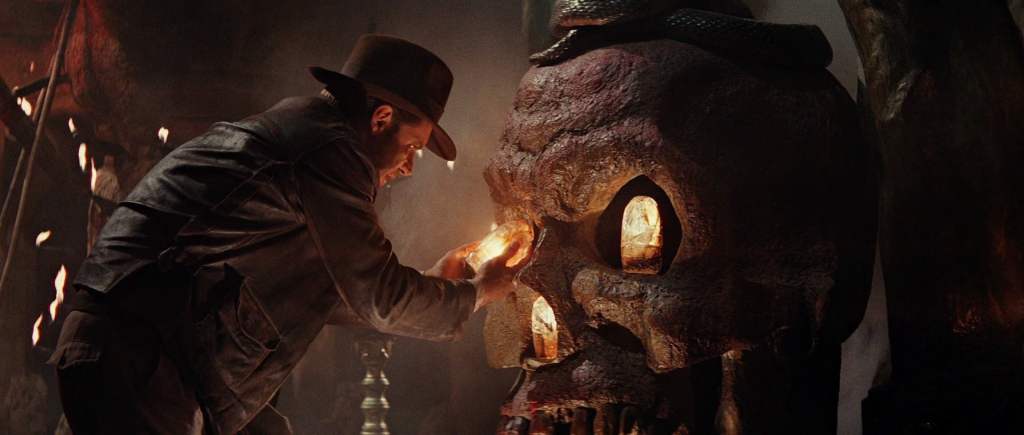
So, with all that being said, the story is pretty straightforward. What starts as Indy crash-landing into a remote Indian village quickly turns into a hunt for a stolen sacred stone and a group of missing children. That trail leads straight to Pankot Palace, where things get darker, weirder, and far more horrifying than anyone expected. Hearts get ripped out of chests, people unwillingly drink blood, magic rocks drive the plot, and an overlong mine cart chase unfolds before everything is ultimately resolved by Indy cutting a suspension rope bridge. It’s ridiculous, but then again, so was Raiders. At the end of the day, it’s all just another day in the life of world-renowned archaeologist Indiana Jones.
THE VILLAINS
Here’s where we hit our first malleable category. Mola Ram, the true villain of the movie, doesn’t make his first appearance until nearly an hour in, and the Heavy in Temple of Doom—conveniently credited only as Chief Guard—doesn’t really earn a separate category of his own. Not in the traditional James Bond-to-Indiana Jones parallel I’ve been drawing, anyway.
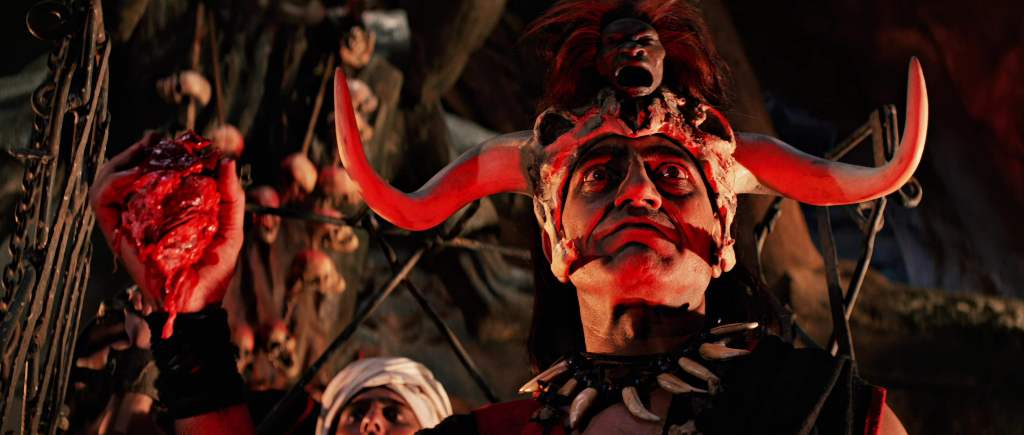
Mola Ram is a religious zealot in the most extreme sense of the word. Portrayed by Amrish Puri, he’s the high priest of the Thuggee cult, worshippers of the Hindu goddess Kali Ma. His extravagant rituals and human sacrifices feel a bit over-the-top—and even a little comedic—at least in hindsight, but I’m sure Mola Ram was genuinely terrifying to audiences in 1984, especially to the kids tagging along with their parents to see the latest Indiana Jones movie.
Mola Ram delivers just enough exposition in his first encounter with Indy that it never feels like the movie is force-feeding you the plot. But once you start pulling at the threads of his logic—why enslaved children are digging through catacombs for the other two Sankara Stones, this movie’s MacGuffin much like the Ark was in Raiders—the whole thing starts to unravel a bit.
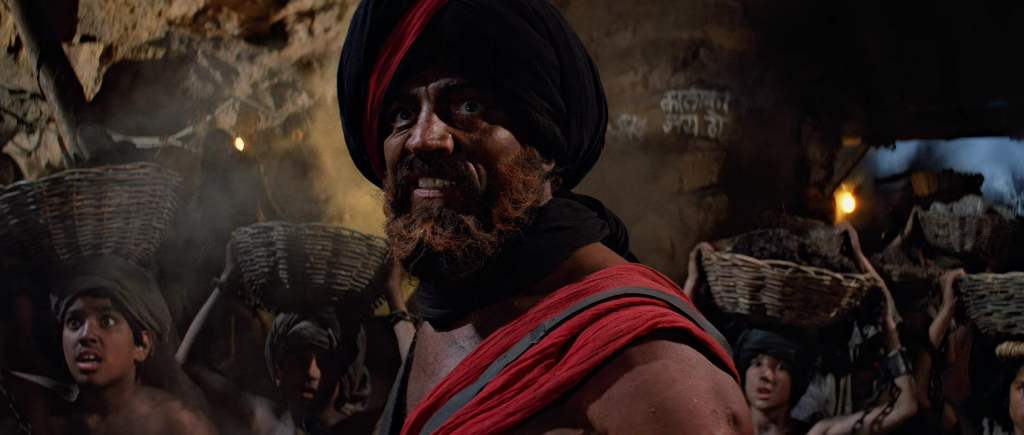
Chief Guard, along with the rest of the Thuggee enforcers, serves as this movie’s Heavy. There are plenty of them, all acting at the pleasure of Mola Ram, but Chief Guard is easily the most physically imposing and the biggest direct threat to Indy.
But Chief Guard is only part of the problem. Between the adolescent Maharaja of Pankot, Prime Minister Chattar Lal, and just about everyone else under the Black Sleep of Kali Ma, Indy spends most of this movie trapped in a place where nearly everyone who should be helping is doing Mola Ram’s bidding instead.
THE SIDEKICK
Here’s our second malleable category. I skipped this one for Sallah in Raiders of the Lost Ark because, as much as I love him, Sallah is more of an associate—a trusted friend who helps Indy along the way—but he’s not with him for the whole ride. Maybe I’ll revisit that when we get to Indiana Jones and the Last Crusade. Maybe I won’t. Why? Because this is my blog, not yours.
That brings us to Short Round. Played by Ke Huy Quan in his feature film debut, he was plucked from obscurity and dropped straight into the spotlight with third billing in a Steven Spielberg movie. That alone is impressive. What makes it remarkable, though, is that he doesn’t just keep up with Harrison Ford—he becomes one of the most important parts of the film.
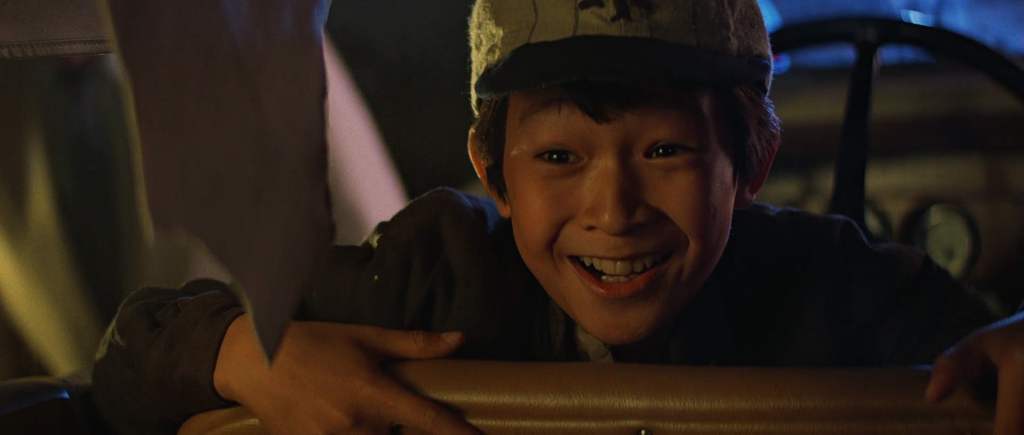
Short Round is arguably the emotional spine of the film—he’s basically Indy’s conscience. He has the most openly affectionate relationship with Indy in the original trilogy, keeps the movie grounded whenever Willie spirals into chaos, and proves Indy was capable of being a protector—maybe even a father—years before dealing with his own father issues directly. More than once, when things fall apart, Short Round is the one pulling Indy back from the brink. And in a story this dark, his comic relief is absolutely necessary.
THE LOVE INTEREST
I feel like this category should be more aptly titled The Problem With Willie Scott, but I’m not planning on writing about Willie Scott in two separate sections. That feels redundant, so everything I have to say about her lives here.
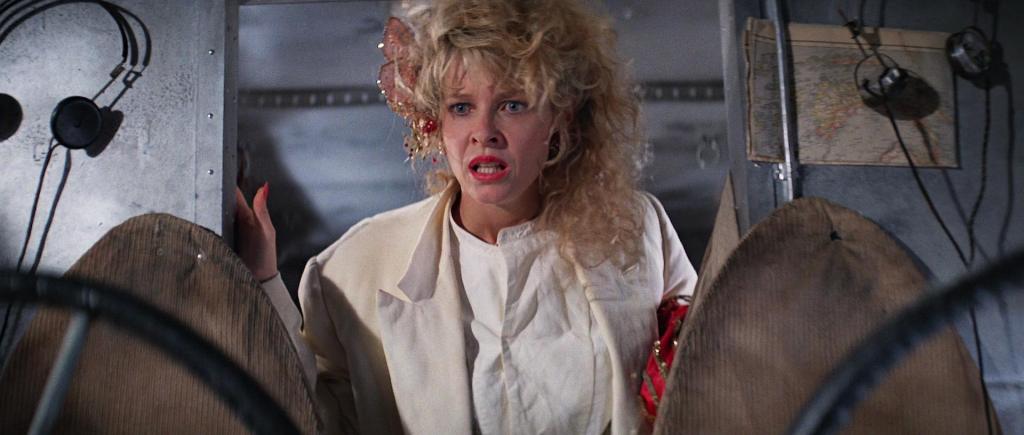
Kate Capshaw plays Willie Scott, an American singer (and actress?) who gets thrust into Indy’s latest mess simply because she walked over to Lao Che’s table after her mediocre performance at Club Obi-Wan. And that’s probably the most important thing to remember about Willie: she never wanted any part of this. Unlike Indy or Short Round, she didn’t choose adventure. She got dragged into it.
That’s what makes Willie such a divisive character. After I told my friend Travis—the same one who suggested I start this whole JONESing series—that I subjected myself to back-to-back viewings of Temple of Doom and that’s a lot of Willie Scott, his response was simple: “I hate her. But I love that movie.”
And honestly? That might be the most accurate summary of Willie Scott there is.
She’s spoiled, self-centered, loud, and constantly reacting to everything around her with screaming, shrieking, or complete disgust. But honestly? Most normal people would probably react the exact same way if they got dropped into bug tunnels, blood rituals, and monkey brains. Willie is relatable in the worst possible way because she reacts like an actual person instead of a pulp hero.
The biggest problem, though, is that she’s everything Marion Ravenwood wasn’t. She doesn’t challenge Indy. She doesn’t match him beat for beat. And coming right after Marion, that contrast is impossible to ignore. But on these last two back-to-back viewings, I found myself noticing her constant screaming less and less. I’m not sure if that means I’m getting older, more patient, or just slowly losing my mind, but it’s true.
THE FEDORA REPORT
THE DARK SIDE OF INDIANA JONES
Indiana Jones and the Temple of Doom introduces some of the darkest themes in the entire series, and in doing so, it also puts Indy’s internal desire for fortune and glory on full display—and briefly amplifies it. We have to keep reminding ourselves that this story is essentially his prologue (at least to those who are only familiar with the movies).
At the start of the film, Indy is basically a mercenary for hire, working directly for Lao Che, an infamous crime lord. He’s tracked down Nurhachi’s ashes (which I’m sure could have been its own full Indiana Jones adventure—whether it would’ve been as good as Temple of Doom is another story entirely), and now he’s looking to cash in. That doesn’t exactly sound like the Indiana Jones we know and love. That sounds like an Indiana Jones motivated by a payday.
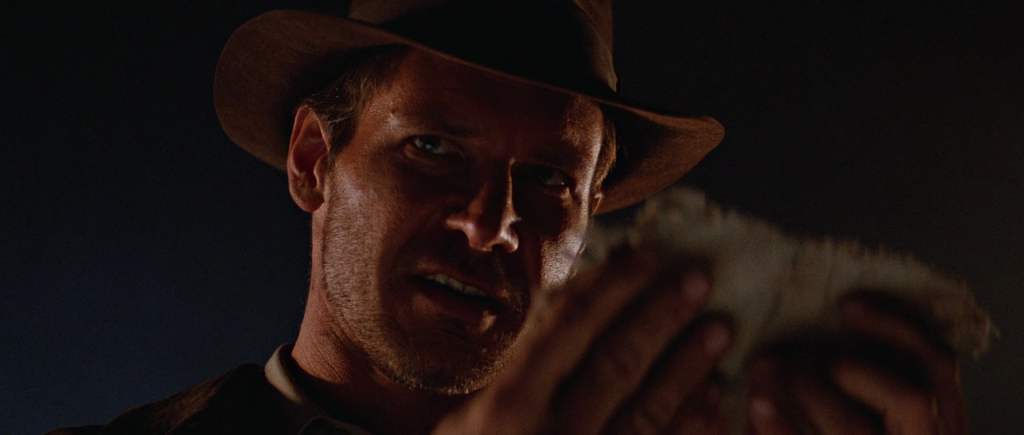
That motivation follows him all the way to the remote village of Mayapore. And it does make you wonder: if Indy had walked away from Shanghai with Lao Che’s diamond, would he have been nearly as invested in the mystery of Pankot Palace? We’ll never know, and I’ve already wandered off the trail enough here. Time to course correct.
Just outside the village, Indy and Short Round talk about the Sankara Stones. Short Round asks what Sankara means, and Indy gives him the answer that defines his entire arc in this movie:
“Fortune and glory, kid. Fortune and glory.”
That’s the mission. Even if he wants to help the missing children, he’s still chasing something for himself. That motivation pushes him deeper into the palace, through booby traps, hidden tunnels, and enough bugs to make anybody reconsider archaeology as a profession. But when he finally retrieves the three Sankara Stones from the altar of Kali Ma, his first instinct is to leave. Then he hears the suffering children in the distance, and something shifts.
At least temporarily.
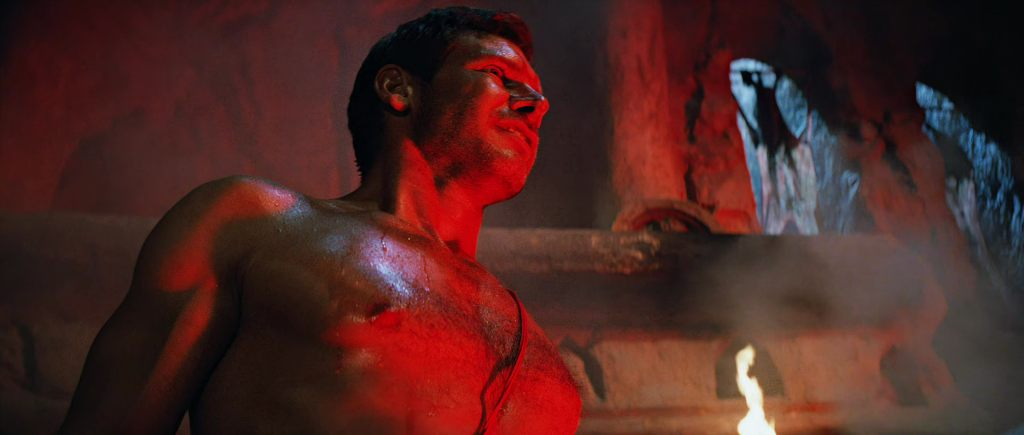
Because once he’s captured and forced to drink the Blood of Kali, Indy falls under the Black Sleep, and whatever darkness was already in him gets dragged right to the surface. No fortune. No glory. Just power, cruelty, and domination. For a brief stretch, we’re watching the worst version of Indiana Jones. He’s basically turned into Belloq without the accent and the wine collection.
And by that point, it feels like all is lost.
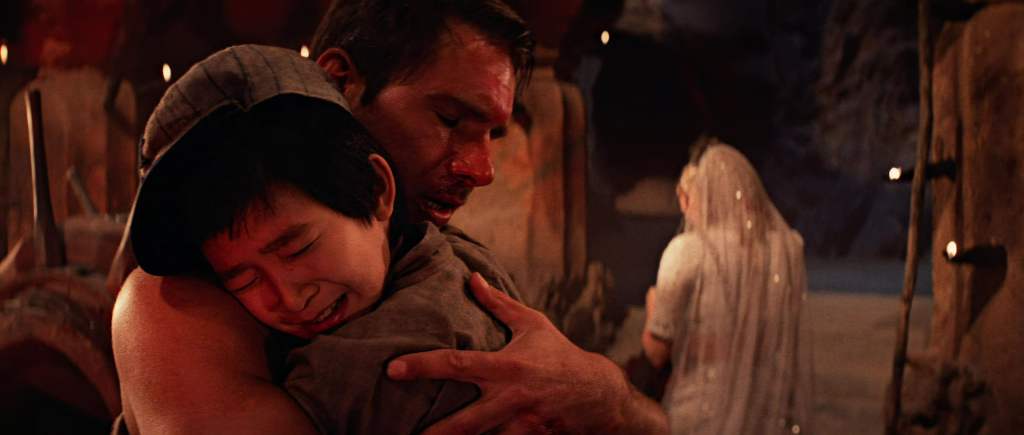
But once Short Round snaps him out of it—quite literally with fire—something changes. The spell breaks, and so does the hold fortune and glory had over him. The real Indiana Jones finally arrives inside the literal Temple of Doom—because subtlety was never really this movie’s thing. Indy’s moral compass was always there, but somewhere along the way it got damaged, and here it nearly breaks completely before Short Round helps set it right again. From that point on, the mission isn’t about treasure anymore. It’s about freeing the children, getting everybody out alive, and—if he has to—stopping Mola Ram. Reluctantly, of course. That’s just who Indy is.
THE MADAGASCAR MISUNDERSTANDING
We all know that Indiana Jones has had—world-renowned reputation be damned—a bit of a checkered past. Consider the following exchange:
Chattar Lal: Dr Jones, we’re all vulnerable to vicious rumor. I seem to remember that in Honduras you were accused of being a grave robber rather than an archaeologist.
Indiana Jones: Well, the newspapers greatly exaggerated the incident.
Chattar Lal: And wasn’t it the Sultana Madagascar who threatened to cut your head off if you ever returned to his country?
Indiana Jones: No, it wasn’t my head.
Chattar Lal: Then your hands, perhaps?
Indiana Jones: No, it wasn’t my hands… it was my…
[looks downward]
Indiana Jones: … misunderstanding.
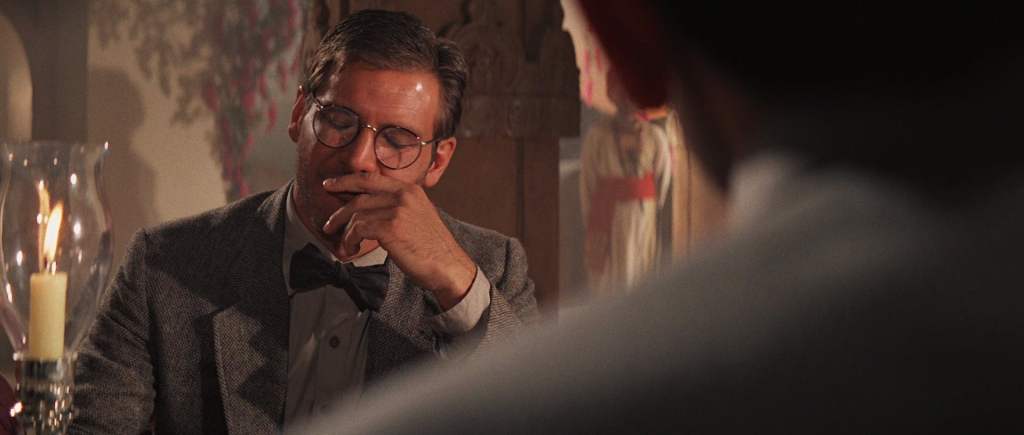
It’s clear that everyone in these upper circles knows exactly who Indiana Jones is, and they all know he doesn’t always play by the rules. He’s a respected archaeologist, sure, but he’s also a grave robber, a smuggler, a hustler, and apparently a man who’s gotten himself into more than one compromising position. Whatever happened in Madagascar—and there’s clearly a story there—is enough to tell us that Indy’s past is far messier than his reputation lets on.
And honestly, that’s part of what makes him interesting. It makes his motives a little murkier, his charm a little more dangerous, and draws an even stronger line between him and James Bond. They’re both adventurers, both ladies’ men, and both willing to bend the rules. The difference is Bond works for the Crown. Indy works for Indy.
SPIELBERG’S FINGERPRINTS
SHOOTING STARS
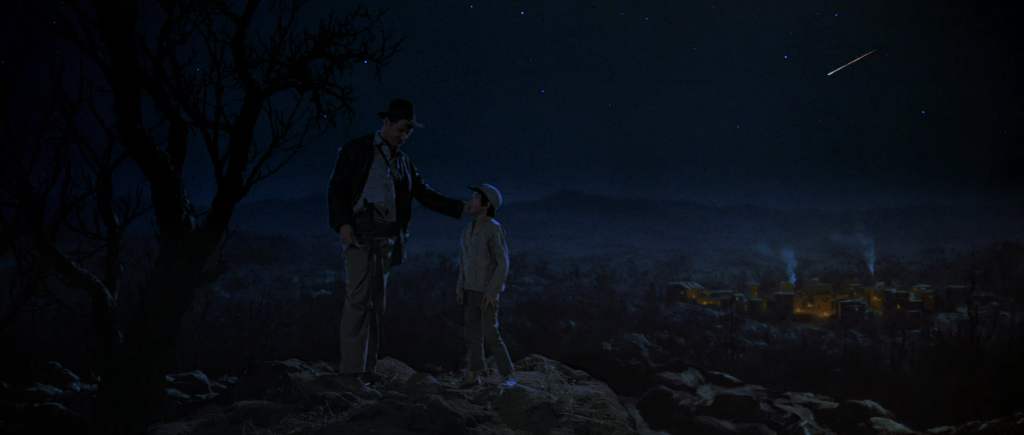
This one is pretty straightforward. Steven Spielberg loved sneaking shooting stars into his movies, especially in his earlier work. It’s one of those small visual flourishes that doesn’t mean much to the story, but it’s unmistakably Spielberg once you start spotting them. Here, he drops one into the night sky during Indy and Short Round’s conversation about the Sankara Stones—right in the middle of a scene that quietly lays out the entire emotional and thematic foundation of the movie.
THE BIG SPECTACLE
This is Spielberg showing his hand right out of the gate. The Busby Berkeley homage isn’t just there for style—and there’s plenty of style—it’s there to tell you immediately that Temple of Doom is going to be bigger, louder, weirder, and far more chaotic than Raiders of the Lost Ark. He opens it like an old Hollywood musical, pivots into a James Bond picture, and then drops all of that into the usual Indiana Jones chaos. That’s a lot of tonal shifting for one opening sequence, but Spielberg somehow keeps it from flying off the rails. That comes later.
THE SHORT ROUND EFFECT
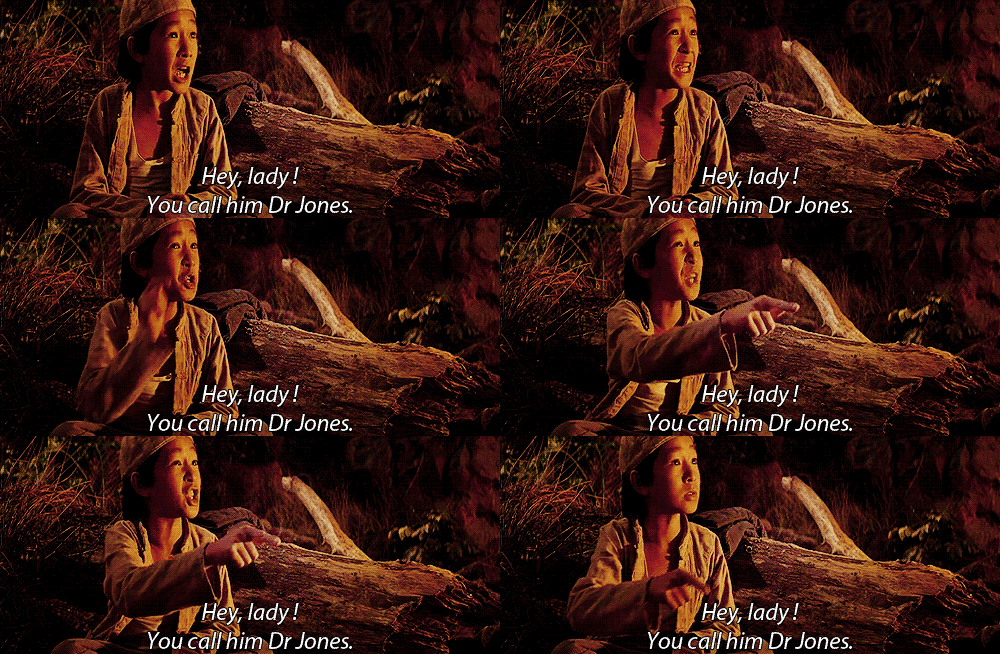
Another unmistakable Spielberg fingerprint is his ability to inject heart into the middle of all this chaos through a child character as charming as Short Round. Maybe it was the residual momentum from E.T. the Extra-Terrestrial, maybe Spielberg has just always had a knack for it, but he’s consistently been great at casting kids who feel natural on screen. That gives Temple of Doom a sense of realism and emotional grounding (and humor) that the movie desperately needs, especially considering how dark and unrelentingly weird everything else gets.
THE TECHNICALS
BEST QUOTE
This one was a bit of a struggle. Maybe it’s the script. Maybe there wasn’t as much improvisation. Maybe Temple of Doom just isn’t as quotable as Raiders of the Lost Ark. There are definitely a few lines everybody remembers—“No time for love, Dr. Jones!” immediately comes to mind—but the brief exchange at the climax has always stuck with me the most:
Willie: Is he nuts?
Short Round: He no nuts, he’s crazy!
Indiana Jones: Mola Ram! Prepare to meet Kali… in HELL!
This little exchange sums up the absurdity and sheer insanity of everything Indy, Short Round, and Willie have been through. By this point, there’s only one way out of what feels like a no-win situation: cut the rope bridge.
BEST FIGHT
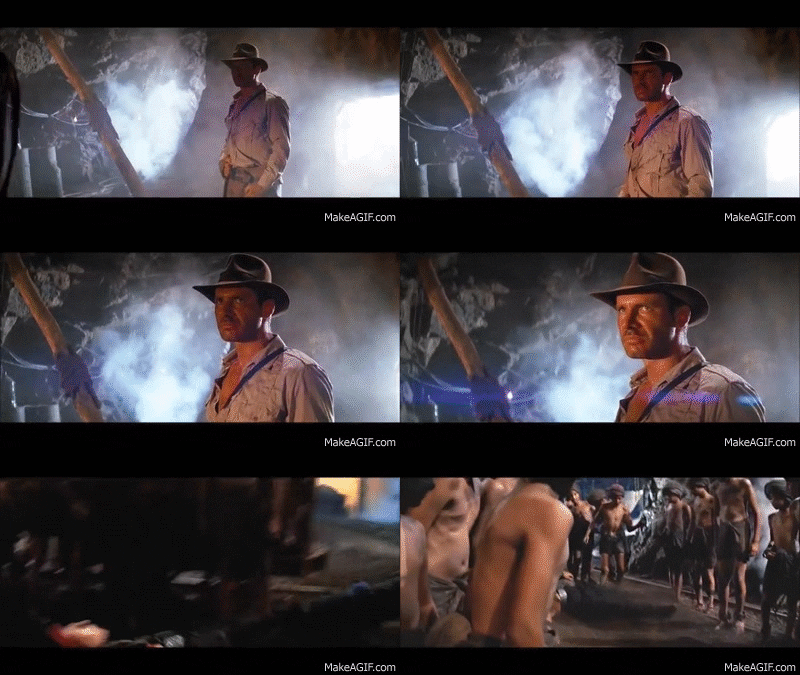
Sometimes less is more. Give me a strong push-in on Indy looking fierce, followed by one clean punch that drops a Thuggee enforcer and sends him sliding unconscious between all the enslaved children, and I’m in every single time.
BEST ACTION SEQUENCE
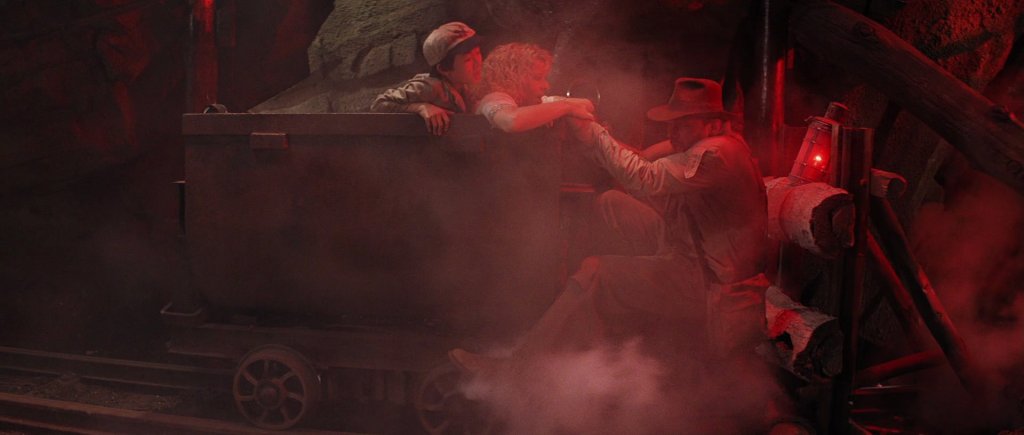
We all know it’s the mine cart chase. However… if you gave me a few hours—or more likely a few days—in an editing bay, I’d probably tighten it up a bit. Why? Because after multiple viewings over the years, it starts to feel a little too long, leans too hard into some of the humor, and makes the seams in the visual effects a little easier to spot. It gets dangerously close to going completely off the rails. I know, it’s a bad pun, but I honestly didn’t know how else to say it.
BEST SINGLE FRAME
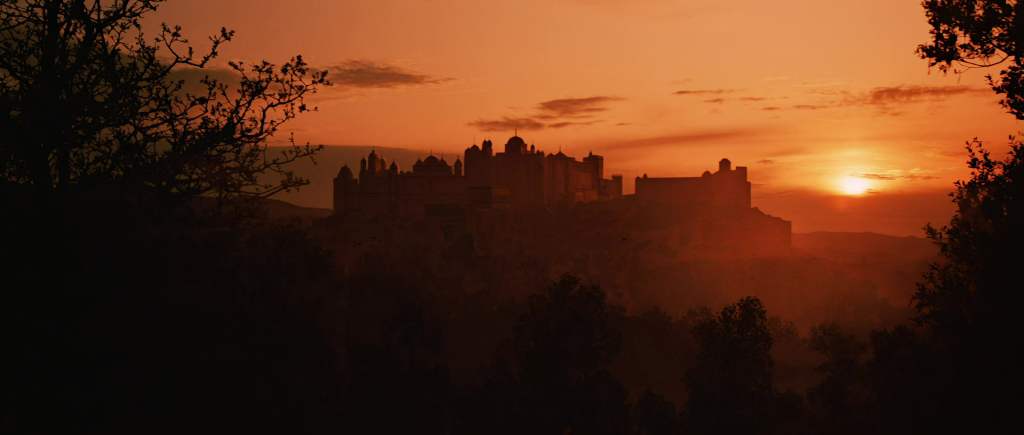
Some would say there’s a lot of red imagery in this film. And those people would be right. But right before everyone gets thoroughly disgusted by snake surprise and chilled monkey brains, when day gives way to night at Pankot Palace, Douglas Slocombe is once again doing some of his best work. The palace is surrounded by this dreamy, rich orange glow just before the sun disappears behind the mountains. It may be all smoke, mirrors, and Hollywood trickery, but I don’t care. It looks absolutely lovely.
THE MOMENT MY WIFE FORGOT I WAS IN THE ROOM
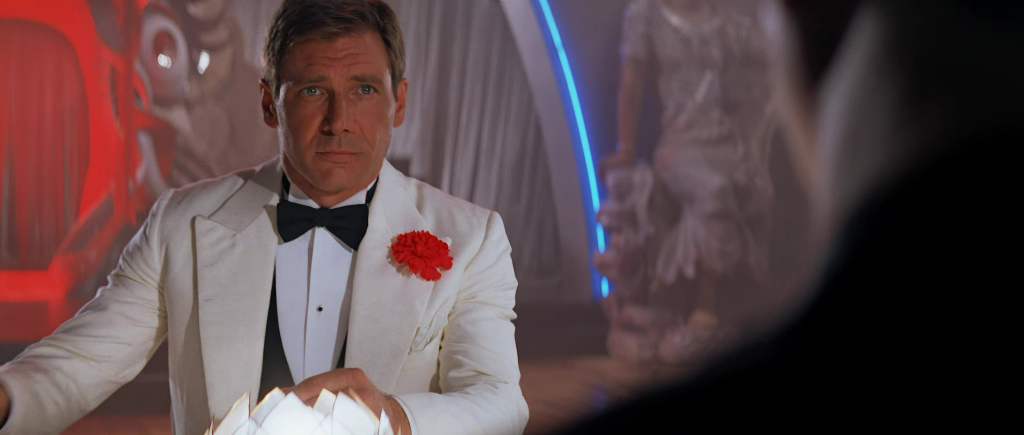
“He is very pretty in Club Obi-Wan,” were, as best as I can recall, her exact words when I asked if she wanted me to restart the movie after she realized I’d started Temple of Doom without her.
THE TEMPLE TRAMA AWARD
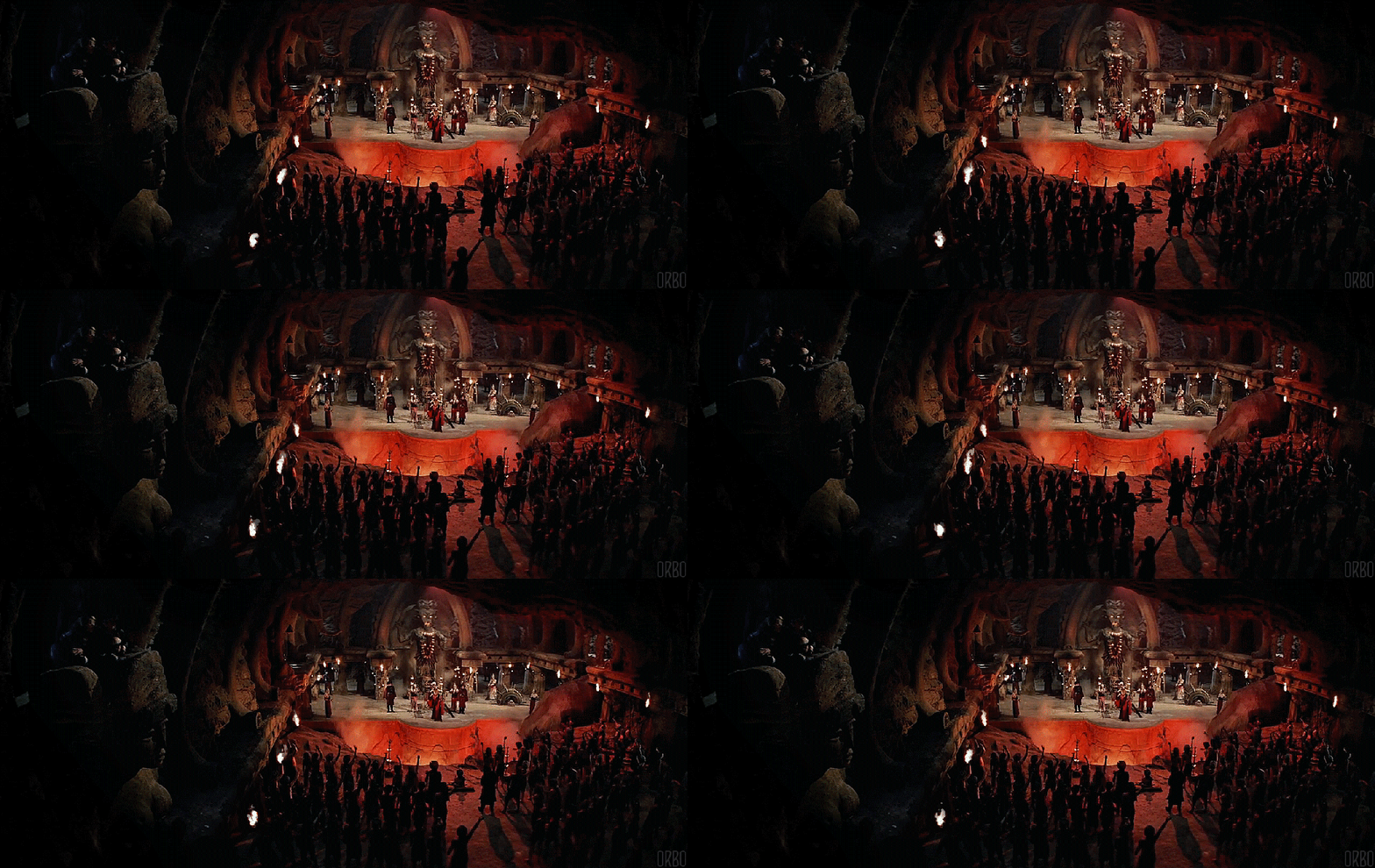
Lisa reminded me that this exact wide shot of the temple freaked her out as a kid. Honestly? I get it.
THE FIELD NOTES
THIS HAS AGED… POORLY
It’s impossible to revisit Temple of Doom without acknowledging how hard it leans into a Westernized fantasy version of India. Some of that is baked into the pulp DNA of the series, and some of it just hasn’t aged particularly well. Where that line starts and stops is probably worth talking about.
“I’m going home to Missouri, where they never ever feed you snake before ripping your heart out and lowering you into hot pits.“
The depiction of India in Temple of Doom caught a lot of criticism and even earned the film a temporary ban there. The biggest target was the food, with dishes like baby snakes, eyeball soup, beetles, and chilled monkey brains being passed off as Indian cuisine—none of which are even remotely authentic. The only meal in the movie that comes anywhere close to reality is the simple spread waiting for them when they first arrive in Mayapore.
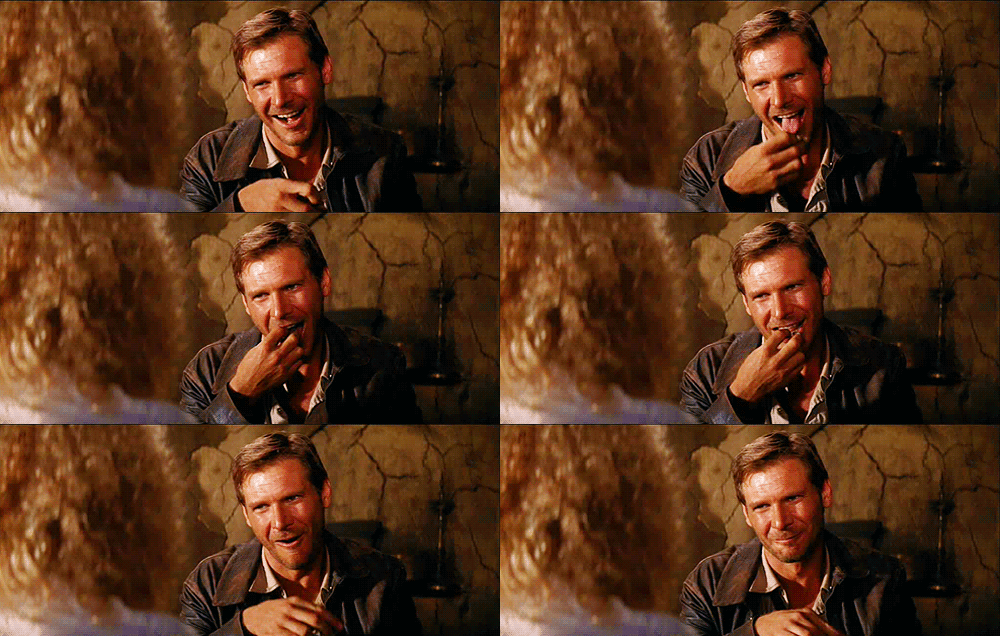
And the food was just the beginning. George Lucas and the screenwriters also cram in black magic, voodoo-adjacent rituals, and sacrificial imagery that have little to no basis in actual Indian culture or religion. A little research probably could’ve corrected a lot of that. But then again, Lucas and Steven Spielberg were both in pretty rough places personally when making this movie, which I’ll address further in The Artifact Room.
ONE HELL OF A LONG NIGHT
What’s unusual about Temple of Doom is that roughly 85% of it takes place over the course of one day—and one very long, very eventful night. Once they arrive at Pankot Palace, everything from the secret passages, the underground temple, the child slavery, the mine cart chase, and the rope bridge showdown all unfolds in what feels like one exhausting stretch of chaos. Most Indy adventures feel like globe-trotting serials. Temple of Doom feels like one long, escalating nightmare.
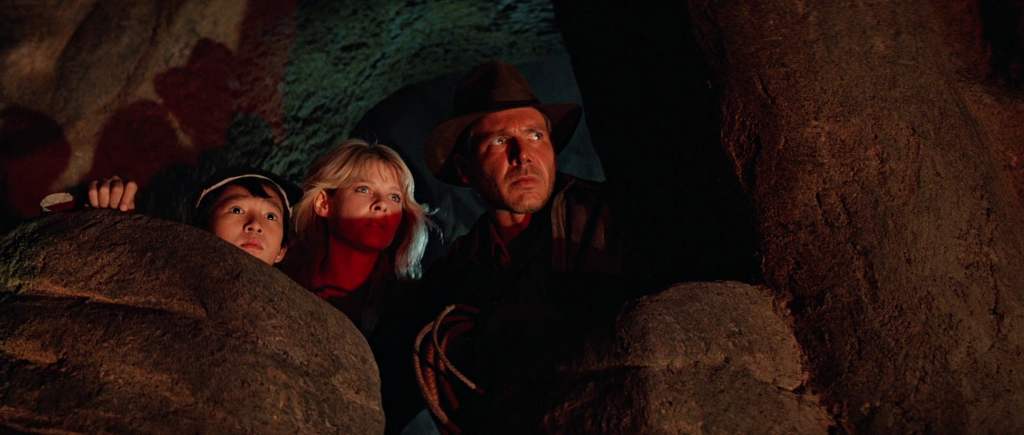
BEST FINGER POINTING PERFORMANCE
Harrison Ford does a lot of finger-point acting in his movies. It’s one of those weird little things you don’t notice until you do, and then suddenly it’s everywhere. Sometimes it’s subtle. Sometimes it’s urgent. Sometimes it’s pure dad energy.
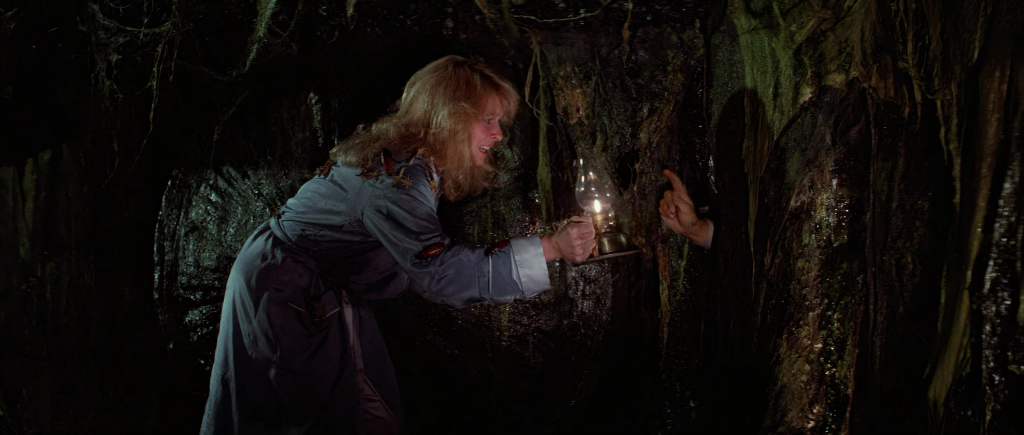
But in Temple of Doom, his right hand deserves its own special recognition. The hand even gets its own mild jump scare. In the spike room sequence, with only his hand sticking through a hole in the stone wall, Indy somehow delivers maximum finger-point intensity while yelling at Willie to find the other switch on her right. It’s all hand. No face. No body language. Just pure finger acting doing all the heavy lifting. (And I have to thank my wife for pointing this out when we watched it together the other night.)
INDY LOGIC: PRACTICAL PUNCHING
Indy Logic is where asking too many questions usually ruins the fun. But we’re gonna do it anyway.
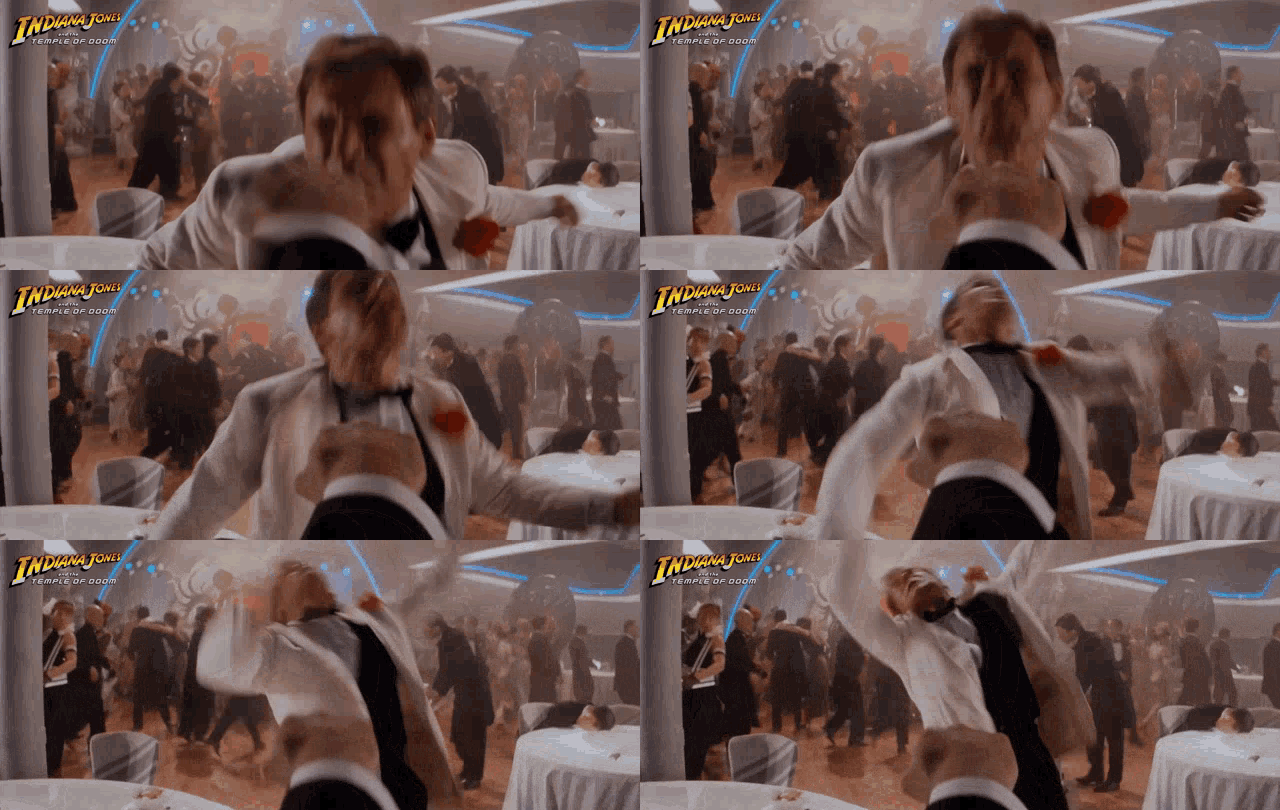
Did Indy ever teach some kind of self-defense course at Marshall College? It’s the 1930s, and I can’t imagine Marshall College offering Practical Punching 101 as an elective. And considering Indy has a habit of telegraphing his punches, where exactly did he learn to fight like that? Was he scrapping his way through digs? Getting into bar fights across Europe and Asia? Probably. Was he bullied as a kid because his father was hardly ever around, forcing him to learn how to defend himself early? Somewhere along the way, Indy clearly picked all of this up the hard way.
INDY LOGIC: THE VOODOO DOLL
How exactly did the Thuggee enforcers already have a fully formed Indiana Jones voodoo doll ready to go the very same night he wandered into the temple? Not just shaped like him, but dressed like him too. Fedora included. That’s either some incredibly efficient evil planning, or Mola Ram had one of those made the second Indy checked into Pankot Palace.
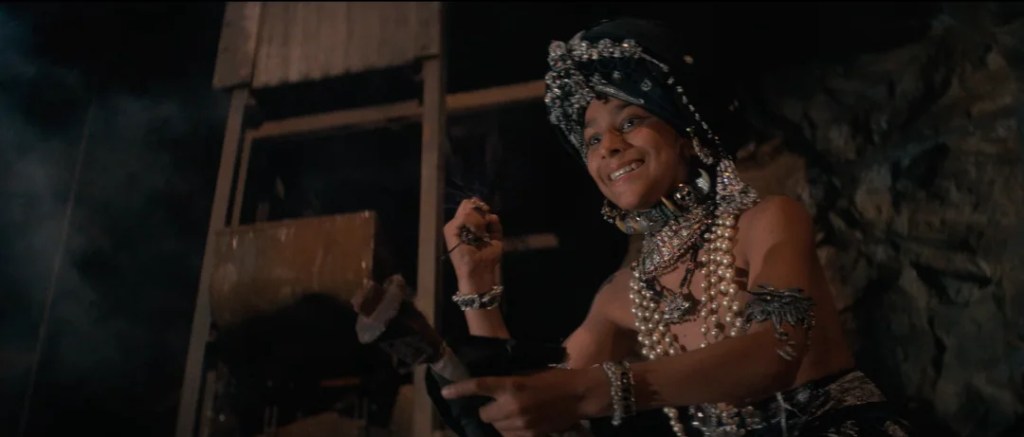
INDY LOGIC: SHORT ROUND
There are so many unanswered questions when it comes to Short Round. How exactly did Indy meet him? Why is his name Short Round? Is he actually from America, or was he Indy’s local contact while working in Shanghai? How long have they known each other? And at what point did Indy accidentally become this kid’s pseudo-surrogate father?
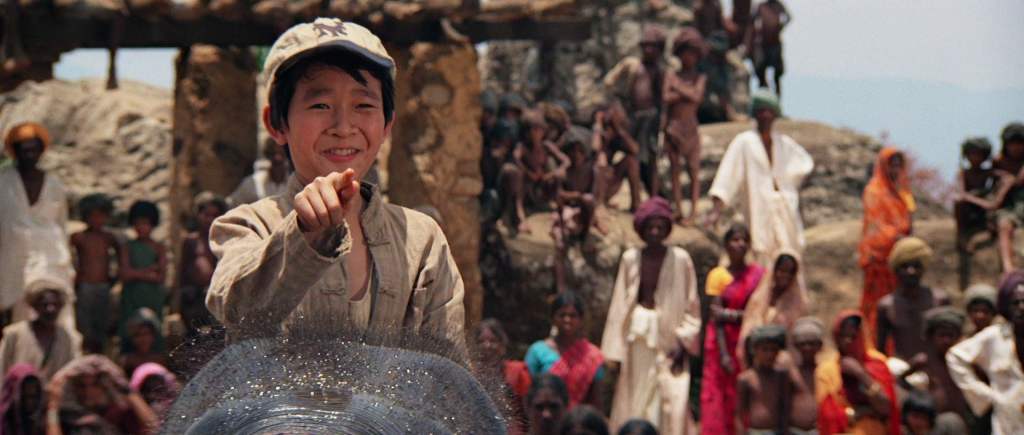
Because let’s be honest—these two don’t act like they’ve known each other for a week. There’s history there. Trust. Routine. Short Round drives the getaway car, speaks for Indy when needed, and knows exactly when to save his life. That kind of chemistry doesn’t happen overnight. Which makes the biggest unanswered question of all: if they’re this close… where the hell did Short Round go after this?
BEST CALLBACK OF THE NIGHT
During Indy’s fight with the Chief Guard, while the Maharaja keeps jabbing a long pin into the voodoo doll, Indy starts reacting like his back gave out mid-fight. I muttered, “Oww… my sciatica,” and without missing a beat, my wife came back with:
“It’s not the mileage, it’s the years.”
THE ARTIFACT ROOM
INDY’S CONSISTENT THREAT
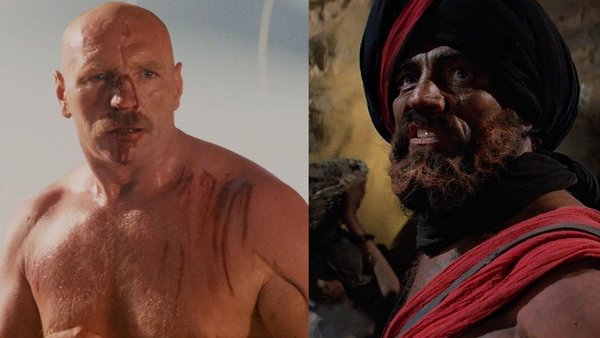
My favorite piece of Temple of Doom trivia that lives rent-free in my head is that Pat Roach—here playing Chief Guard—is the same actor who played the gigantic bald German Mechanic in Raiders of the Lost Ark. Apparently, Pat Roach’s job in this series was simply to make Indy’s life harder.
THE “WE NEED ANOTHER RATING” AWARD
Most people know this story, but for those who don’t, here’s the short version. After the releases of Indiana Jones and the Temple of Doom and Gremlins—both somehow carrying a PG rating—millions of parents took their kids to see them and walked out somewhere between horrified and furious. Turns out heart-ripping sacrifices, nightmare fuel, and microwave-exploding gremlins were pushing the limits of what “parental guidance” used to mean.
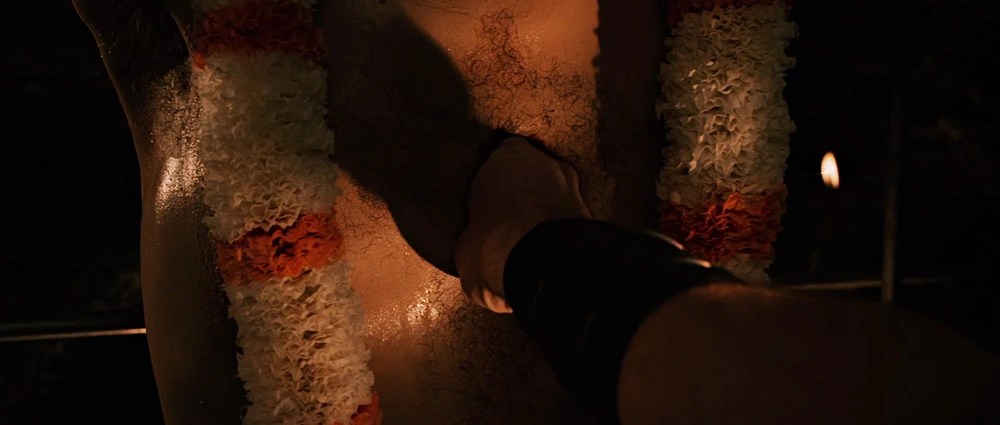
At the time, Steven Spielberg was one of the most powerful filmmakers in Hollywood, and he used that pull to contact Jack Valenti, then president of the MPAA. Spielberg argued that too many movies were falling into a cinematic no-man’s-land—too intense for PG, but not extreme enough for an R. He suggested a middle ground, and the MPAA agreed. That middle ground became PG-13. That’s how much clout Spielberg had in 1984.
Newly Unearthed Observation: During our last watch, Lisa asked if I’d walk across the rope bridge in the final fight scene. I emphatically replied, “Absolutely not,” which felt even more justified when I learned the actual bridge was suspended a couple hundred feet across a gorge in Sri Lanka. Acrophobic Steven Spielberg wouldn’t walk across it either and had to drive a mile and a half to reach the other side, while Harrison Ford would run across it at full speed. So I guess there’s at least one trait I share with Spielberg.
HEARTS OF DARKNESS
I like to imagine this is more or less how George and Steven first came up with Indiana Jones and the Temple of Doom:
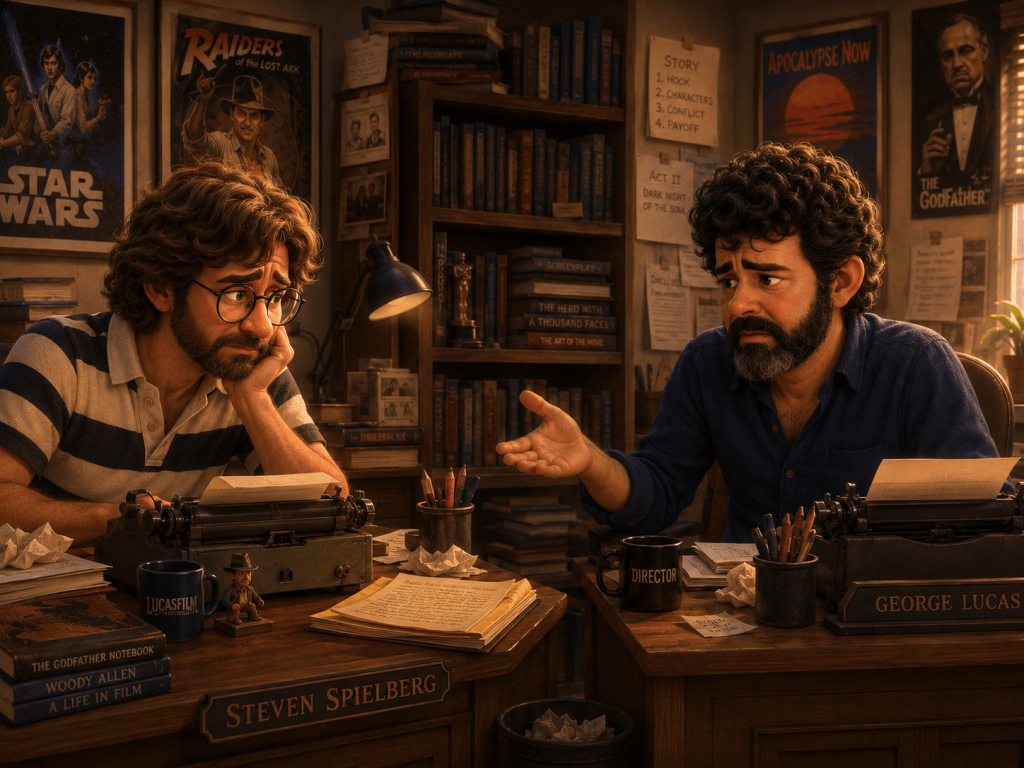
“I’m going through some shit right now, George,” Steven said, practically exhaling all of his relationship problems into the room like cigarette smoke.
George sat there for a moment, quiet, realizing he wasn’t exactly in much better shape himself.
“So am I, Steven. Marcia and I split.”
Steven winced. “Damn. Sorry to hear that.”
He pulled off his glasses, rubbed his eyes, and ran a hand through his hair like a man who had not slept much in weeks.
George shrugged.
“It’s alright. We’ll survive.”
A beat passed. The kind of beat where two men at low points in their lives are either about to unpack their feelings… or make a movie.
George leaned forward and said, “Do you know what a prequel is?”
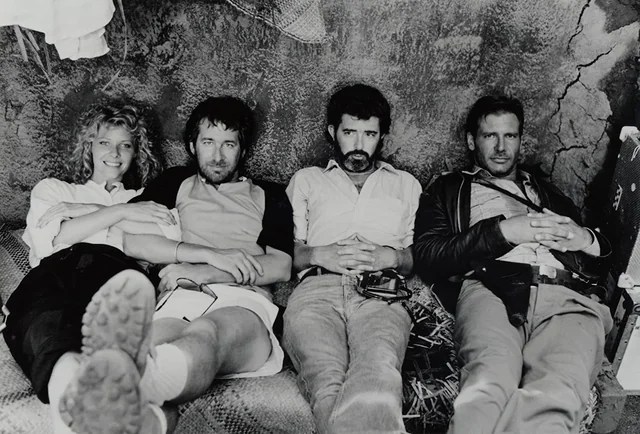
The plan was for Lucas and Spielberg to team back up with Lawrence Kasdan, but when Lucas handed him a 20-page treatment titled Indiana Jones and the Temple of Death, Kasdan wanted no part of it. He reportedly found the story too dark, too ugly, and far meaner in spirit than what came before. And honestly? He wasn’t wrong.
Kasdan recognized what was happening before anybody else probably did: Lucas and Spielberg were both working through the collapse of their respective relationships, and a lot of that darkness bled straight into the story. Instead of working out their demons privately, they put them on screen for the rest of us to watch.
That probably explains why Temple of Doom was never on heavy rotation in my house. Actually, it wasn’t on any rotation in my house. I’m fairly certain I didn’t see it until high school—either after renting it myself or catching it during a sleepover at a friend’s house. There’s no core memory attached to my first viewing, which says a lot considering how often Raiders of the Lost Ark was playing.
If I went over to my parents’ house right now and asked them the last time they watched Temple of Doom, I imagine the answer would be something like: “Is that the one where that one guy rips another man’s heart out of his chest? Oh, we didn’t much care for that one, dear. Probably back in the ‘80s when we rented it from the video store.”
WHEN WORLDS COLLIDE
To save money, some of the interiors of Pankot Palace were simply redressed from the sets used for Kamal Khan’s palace in Octopussy, which had been filmed the previous year at Pinewood Studios. While there are plenty of James Bond nods and homages sprinkled throughout the first three Indiana Jones films, Temple of Doom probably has the most connective tissue between the two franchises—at least until they literally cast Bond himself as Indy’s father in Indiana Jones and the Last Crusade.
CLOSING THE JOURNAL
In all honesty, I don’t dislike Indiana Jones and the Temple of Doom as much as some might think after reading through all of this. I just don’t have the same nostalgic connection to it that I do with Raiders of the Lost Ark or the soon-to-be-discussed Indiana Jones and the Last Crusade. Back when it was just a trilogy—and believe me, we all thought it was staying a trilogy—Temple of Doom always felt like the odd one out. Darker, meaner, more sinister, and not nearly as fun. Honestly, that still feels true. But when I rank all five films in my head, Temple lands squarely in the middle. Not the best, but far from the worst.
I could nitpick the writing, some of the dialogue (especially Willie’s), the thinner action compared to the other films, or how some of the special effects don’t quite hold up as well as they once did. But most of those complaints only exist because I’m holding it up against Raiders and Last Crusade, which is admittedly an unfair fight for just about any movie. This is definitely not Spielberg at his best, but even with all its flaws, Temple of Doom is still a highly entertaining watch. If it wasn’t, I wouldn’t keep coming back to it—even if not nearly as often as the others.
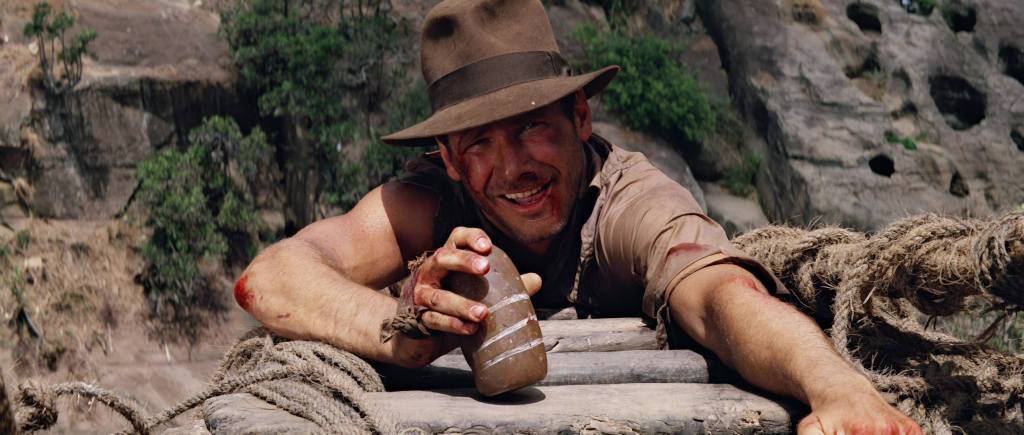
At the end of the day, Temple of Doom is much more than just a serviceable entry in the franchise. Looking at it as a prequel gives Indy a stronger arc, especially if we treat this as the beginning of his adventures—even if the expanded universe would argue otherwise. It’s where fortune and glory begin to lose their grip, and where his moral compass starts to find true north. And while I’ll always prefer my Indy punching Nazis in the face, Thuggee enforcers are an acceptable substitute.


Leave a Reply