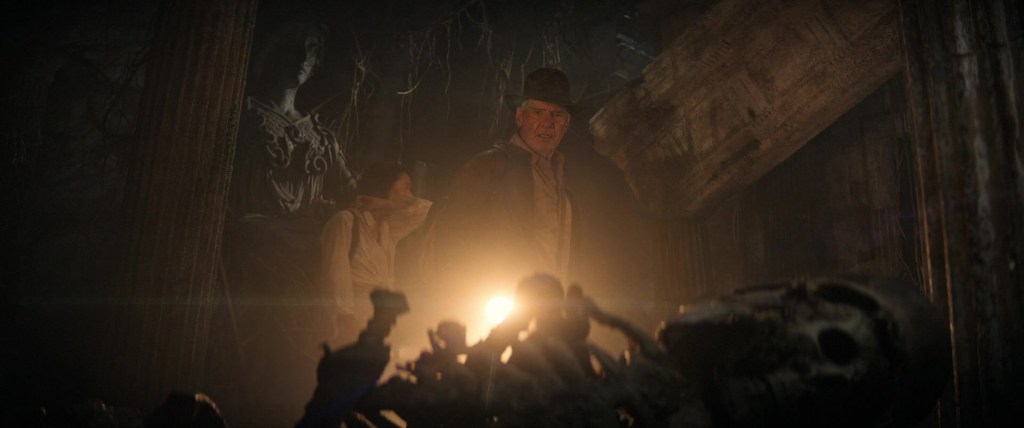
“Nobody memorizes every page of their dead father’s notebooks for the money.”
Directed by James Mangold
Produced by Kathleen Kennedy, Frank Marshall, Simon Emanuel
Written by Jez Butterworth, John-Henry Butterworth, David Koepp, James Mangold
Release Date: June 30, 2023
Running Time: 154 Minutes
I thought I had already written the ending to this series years ago. Apparently neither Indiana Jones nor I were quite finished yet. And if you’re wondering what happened to the Paramount logo sight gag—or why—I promise we’ll get there, because I apparently can’t stop beating that dead horse in this post.
THE COLD OPEN
The film opens in 1944 with Indiana Jones infiltrating a Nazi-occupied castle in the French Alps alongside Basil Shaw—because apparently every decade of Indy’s life comes with a new archaeologist friend we’ve never heard of before. Why Nazis and World War II again? Because nothing helps drive the story quite like weaponizing nostalgia with a heaping spoonful of familiar iconography to make the medicine go down.
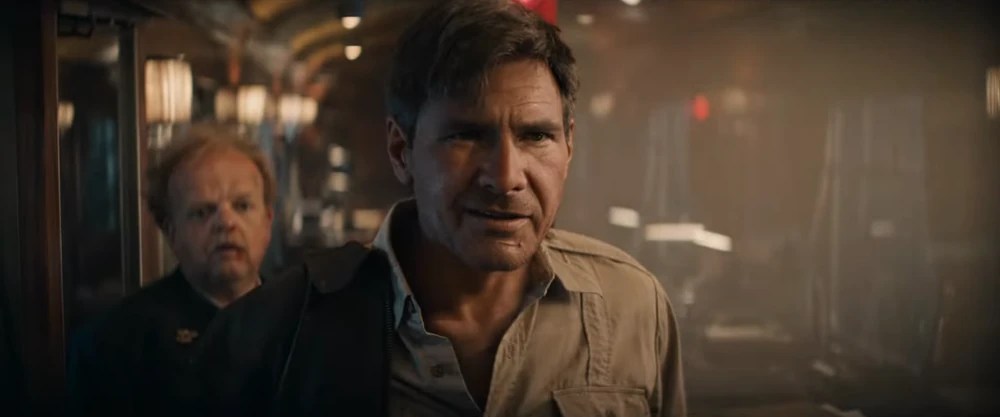
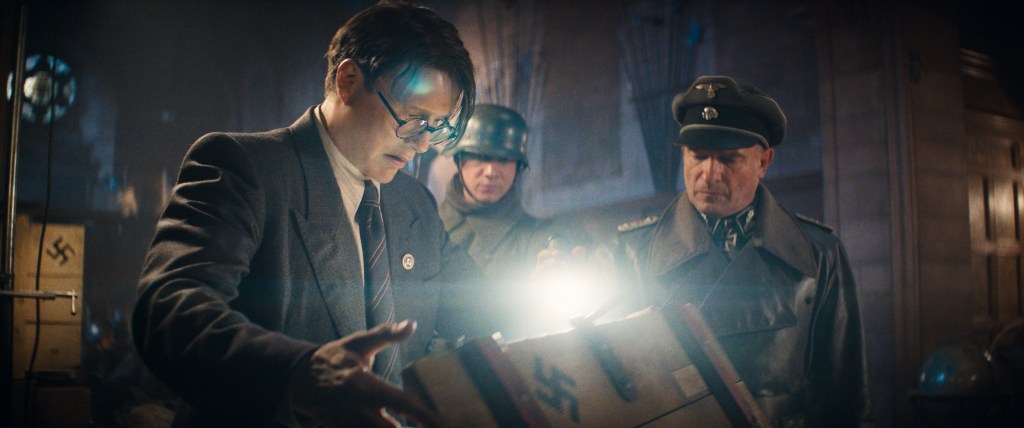
This time, they’re after the Lance of Longinus, the spear said to have pierced Christ on the cross, currently in Nazi possession alongside a warehouse full of stolen artifacts. Because that’s what Nazis do in their off-hours: hoard biblical relics that may or may not carry enough supernatural juice to wipe out an entire battalion.
FYI: Also buried within those stolen artifacts is this movie’s McGuffin.
The rest plays like classic Indiana Jones: a narrow escape from execution, a frantic fight aboard a moving train, and a desperate attempt to keep the Dial out of Nazi hands before Indy and Basil take an unscheduled dive into a river.
Just like Crystal Skull, this is less of a cold open and more the first twenty minutes of the movie disguised as one. It almost works as a standalone World War II adventure—which, honestly, would’ve made a pretty entertaining short film all by itself—but that’s not what this is.
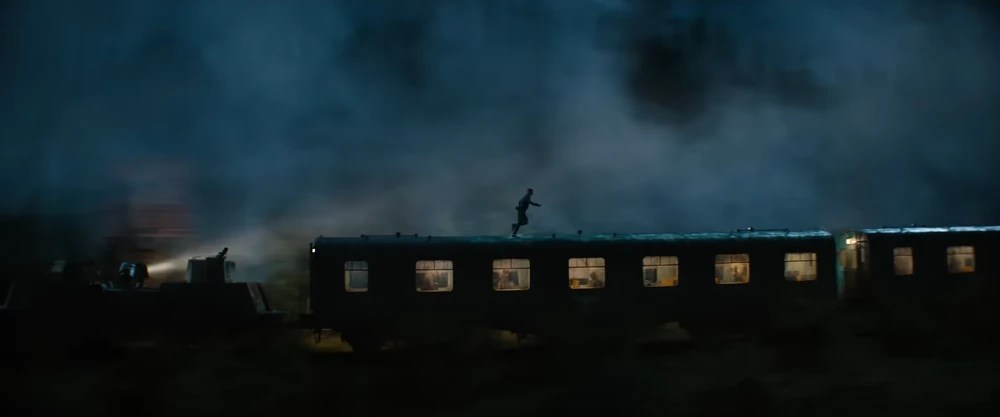
In reality, it’s the film’s prologue.
And that distinction matters. A cold open throws you into the action before the story begins. A prologue is the story. This one may look and feel like vintage Indiana Jones, but it’s really laying the track for everything that follows.
That’s also where the weaponized nostalgia works best. This sequence feels like a long-lost Indiana Jones short film Steven Spielberg somehow shot while vacationing with Harrison Ford somewhere in Europe in the early 1990s—with full access to three separate production crews and a traveling editor, because apparently that’s just what the Hollywood elite do while spending the holidays in the French Alps.
Does this sequence exist because the story needs it, or because the audience does? Probably a little of both. If the digitally de-aged Harrison Ford—and his decidedly non-de-aged voice—hadn’t occasionally nudged me into the uncanny valley, I might’ve believed Lucasfilm had quietly unearthed some long-lost footage from 1992.
And maybe that’s the whole point. Before the film can show us who Indiana Jones has become, it first has to remind us who he used to be. Was any of that absolutely necessary? Probably not. Am I glad it’s there anyway? Absolutely.
THE STORY
It’s the Summer of ’69, and while we’re not all standing around singing about the best days of our lives like Bryan Adams, it’s been twelve years since Indy’s last documented adventure in Peru—and roughly fifteen for us, if you’ve been keeping score.
America has put a man on the moon, the world has moved on, and so has this franchise. There’s no Steven Spielberg behind the camera, no George Lucas story guiding the map, no traditional romance, Indy is pushing eighty, this is the chapter we all know is the final one… and, because apparently we’ve reached this point in the timeline, time travel.
All Indiana Jones wants to do is survive one last semester without being woken up by the loud neighbors down the hall before teaching what feels like one of his final lectures ahead of retirement.
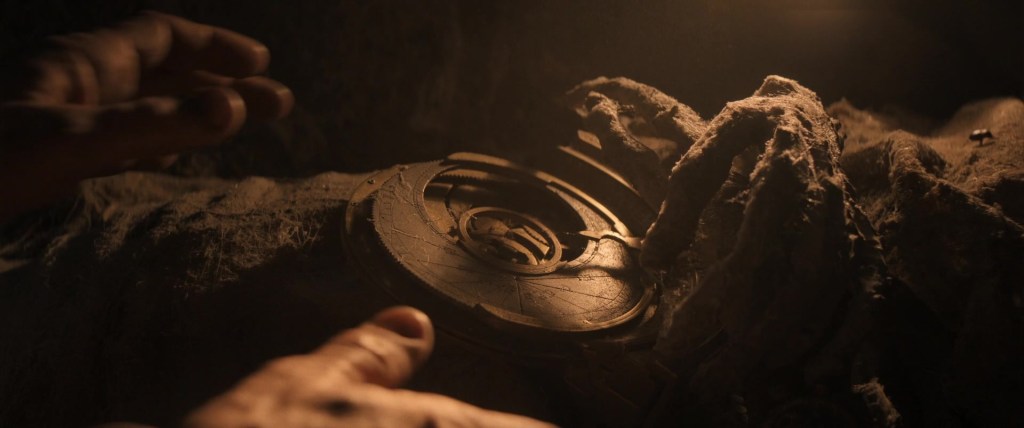
After a small retirement gathering, he’s unexpectedly approached by his estranged goddaughter, Helena Shaw—part historian, part con artist, part human chaos event—whom he hasn’t seen in eighteen years. Helena’s chasing her late father’s lifelong obsession: the Antikythera, one half of Archimedes’ Dial, a device rumored to locate fissures in time itself.
From there, Indy’s retirement plans go straight to hell.
Before Indy can fully process Helena’s return, he’s framed for murder, hunted by the CIA, pursued by former Nazis, and dragged into a globe-trotting chase that leads to Tangier, Sicily, and beyond—all in pursuit of a MacGuffin that might be less about changing history and more about escaping it.
THE VILLAIN
Most of the audience probably won’t think twice about the Apollo 11 Moon Landing ticker-tape parade taking place in New York when Indy’s latest adventure begins, but it matters. Mads Mikkelsen plays Dr. Jürgen Voller—currently going by Professor Schmidt of Alabama University—an astrophysicist recruited by NASA to help get America to the moon. He’s also in New York to meet with the President during the Apollo festivities.
And what did a lot of NASA’s rocket scientists have in common back then? Former Nazis. Because apparently helping America win the Space Race was the closest thing the twentieth century had to a get-out-of-jail-free card. Voller was one of them.
But Voller’s story really begins in the French Alps in 1944, where he first crossed paths with Indy and Basil Shaw over the Antikythera. He’s been obsessed with it ever since—not because he wants to understand it, but because he wants to weaponize it. Then again, I suppose the Nazi apple never really falls far from the tree.
Mathematics works. As it conquered space, it will conquer time.
For twenty-five years, Voller has replayed history in his head, calculating every mistake Germany made since 1939 with one goal in mind: go back, kill Hitler, and win the war correctly this time. That’s what makes him so unsettling.
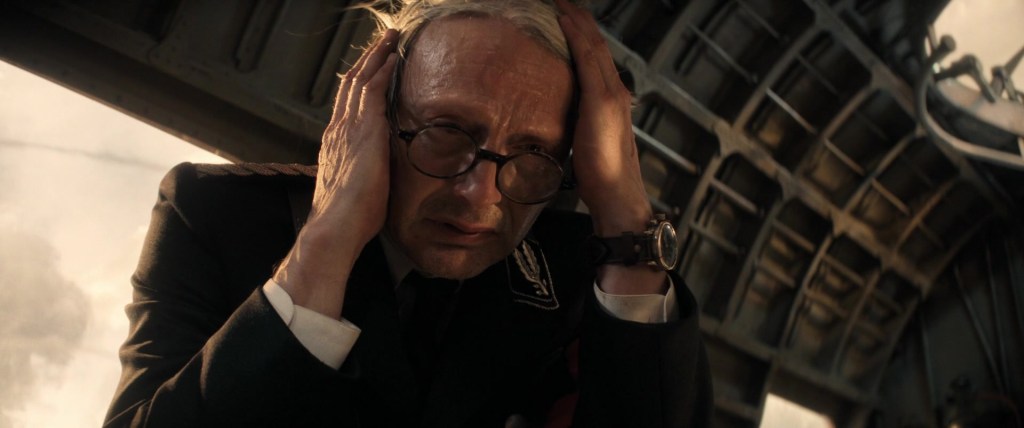
Indiana Jones has always been driven by obsession too, but his has always been about preserving history. Voller wants to rewrite it. That’s the difference. One believes history should be protected. The other believes it should be corrected.
And somehow, while obsessing over how to save the Third Reich, he still found time to help America put a man on the moon. Talk about multitasking.
THE HEAVIES
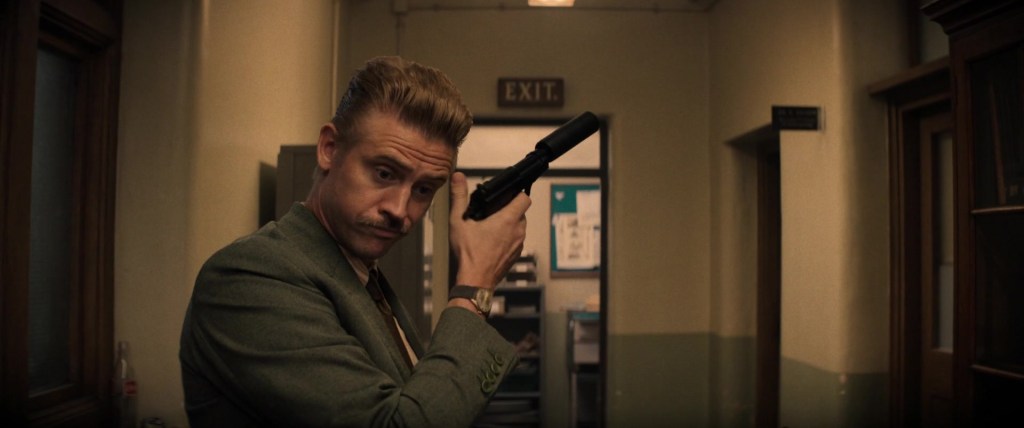
This film has two heavies: Klaber and Hauke. Boyd Holbrook (who we can safely assume came along to play another deliciously playful bad guy for James Mangold after their time together on Logan) plays Klaber, Voller’s greasy-haired bulldog of a henchman—a trigger-happy bruiser whose main job seems to be chasing Indy across continents, getting punched in the face for his troubles, and apparently teaching himself German from a pocket phrasebook during his downtime. Nothing says “dedicated neo-Nazi” quite like cramming for your German vocabulary quiz between car chases.
Hauke, played by Olivier Richters, is Voller’s mountain of muscle. What he lacks in dialogue he more than makes up for in sheer size, serving as the film’s walking reminder that Indy isn’t thirty-five anymore. Hell, not even sixty-five, for that matter.
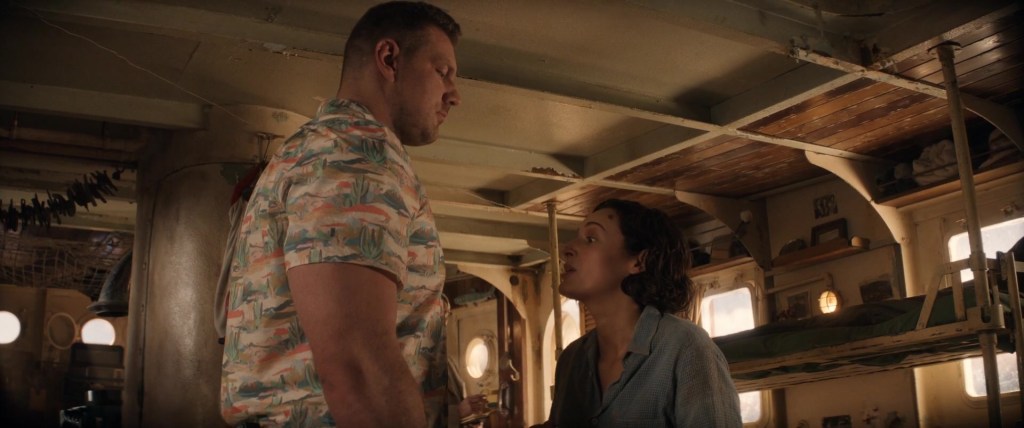
Both of these heavies serve their purpose, and serve it well. The only downside is that both of their deaths feel a bit anticlimactic, but they’re still at least a few notches above Dovchenko in Crystal Skull, which, admittedly, is a pretty low bar to clear.
THE COMPANION
I’m not entirely sure Helena Shaw was the best choice—or my choice, to be more precise—to be Indy’s companion, but here we are anyway.

That’s not me discrediting Phoebe Waller-Bridge’s performance, or even the character itself, but it does feel like Helena exists with one eye on the future—as if Lucasfilm was quietly testing the waters for whether this flavor of adventure could continue without Indiana Jones. If you liked Indiana Jones, then you’ll love Helena Shaw! She’s a sharp-tongued, independent woman of the late 1960s who doesn’t take shit from anyone. A rogue, a hustler, a gambler, and just enough of a loose cannon to keep everyone else on edge.
And she’s also Indy’s goddaughter. What’s not to love?
But if I’m being honest—and I can’t imagine I’m alone here—I think hundreds, if not thousands, of fans were secretly hoping, wishing, and praying for the return of Short Round instead.
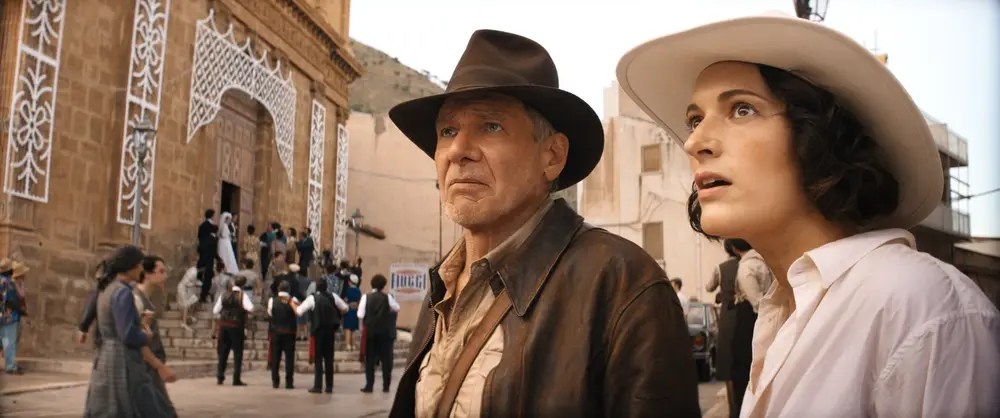
Still, Helena serves an important purpose. She gives Indy perspective. She’s younger, reckless, and driven by the same kind of obsession that consumed her father. A hobby historian turned full-time chaos agent, Helena is fueled by just enough greed to be dangerous—but also enough heart to know when it’s time to make the right call, even if it takes her two-thirds of the film and a little push from her godfather to get there.
THE FEDORA REPORT
THE YEARS, THE MILEAGE & THE REPAIRS
We don’t know exactly what Indiana Jones has been up to these past twelve years, but we do know this: for at least the last year, he’s been grieving. And we’re seeing him at his absolute lowest.
He’s drinking. A lot.
The first sign things aren’t great isn’t just that he’s pouring whiskey into a freshly brewed cup of instant coffee—it’s how much whiskey he’s pouring. And the fact that it’s eight in the morning. On a workday. Before teaching class at Hunter College. That tells you everything.
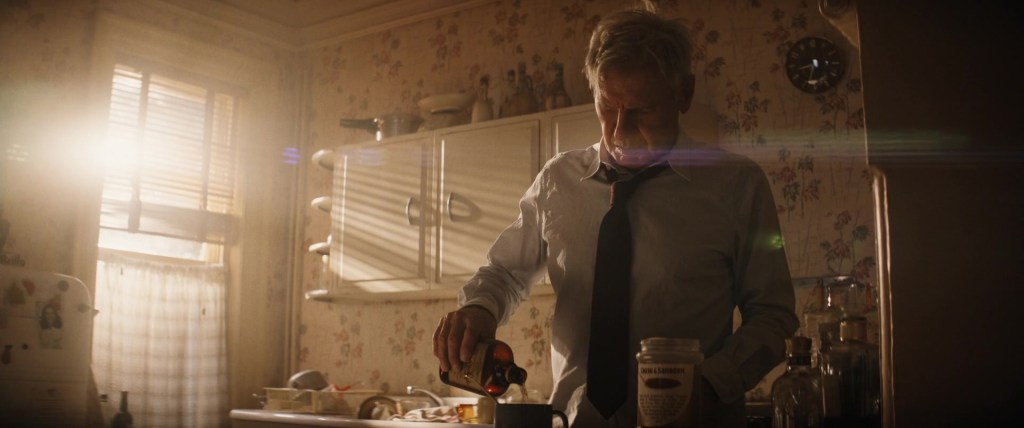
Somewhere along the way, Indy left Marshall College, traded it for a tiny New York apartment, loud neighbors, and a retirement he doesn’t seem remotely interested in. And I think that’s the saddest part. Not that Indy got old—we all knew that day was coming—but that he became directionless. Hollowed out. A man who hands his retirement gift to a homeless stranger because it means nothing to him anymore.
It’s only after Helena crashes back into his life—and Voller’s goons, aided by perhaps the most incompetent CIA detail in cinematic history, frame him for murder—that Indy is finally forced to move again.
And then there’s Sallah. Not to save him. Not really. Just to remind him who he used to be.
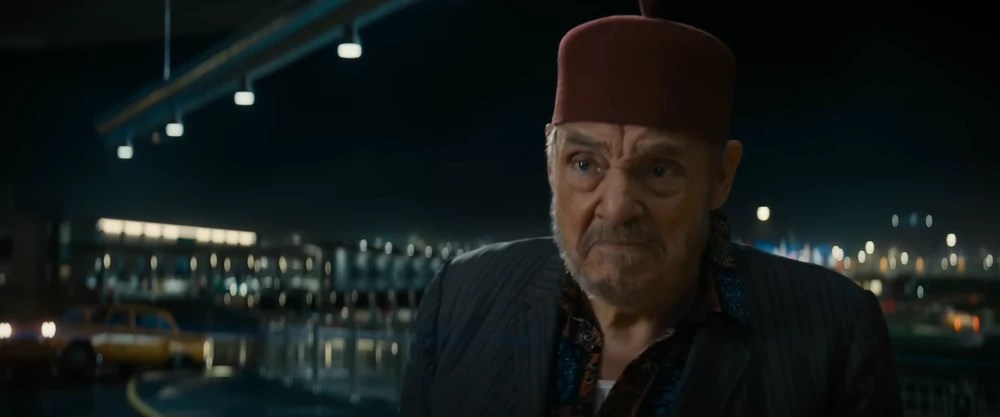
And maybe that’s what Dial of Destiny is really about. Not one last adventure, but whether there was still enough of Indiana Jones left to want one.
That idea comes into focus when Helena casually asks what anyone would ask if time travel suddenly became possible:
Helena: What if you could go back in time? What would you do? Witness the Trojan War? Check in on Cleopatra?
Indiana Jones: I’d stop my son from enlisting.
Helena: Did he sign up to please you?
Indiana Jones: No, he signed up to piss me off.
Helena: How would you have stopped him?
Indiana Jones: I’d tell him he was gonna die. I’d tell him that his mother would… find no end to her grief, and that his father would be… helpless to console her… and that the loss would put an end to their marriage.
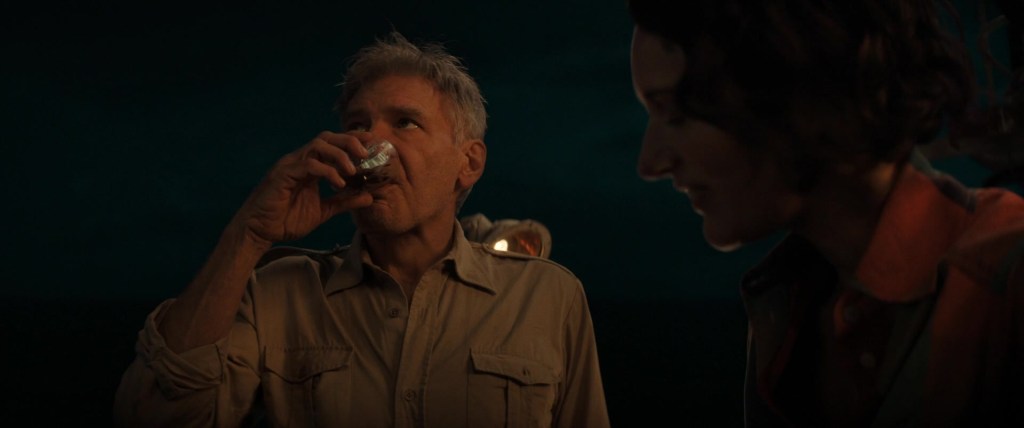
And for perhaps the first time in the entire franchise, Indiana Jones doesn’t think like an archaeologist. He thinks like a father.
While Helena dreams about witnessing history, Indy only wants to change one small moment in his own. Not to rewrite the world. Just to save one person. And maybe, in doing so, save himself.
What makes the scene so powerful is that Indy doesn’t begin with his own grief. He begins with Marion’s. How she’d never recover. How he’d be helpless to console her. How losing Mutt destroyed them. Because it did.
It humanizes a larger-than-life hero we’ve watched survive the Wrath of God, drink the Blood of Kali, outrun death more times than should be mathematically possible, and spend the last four movies trying to get priceless artifacts into museums, only to watch every one slip through his fingers at the finish line.
Which is exactly why the ending works.
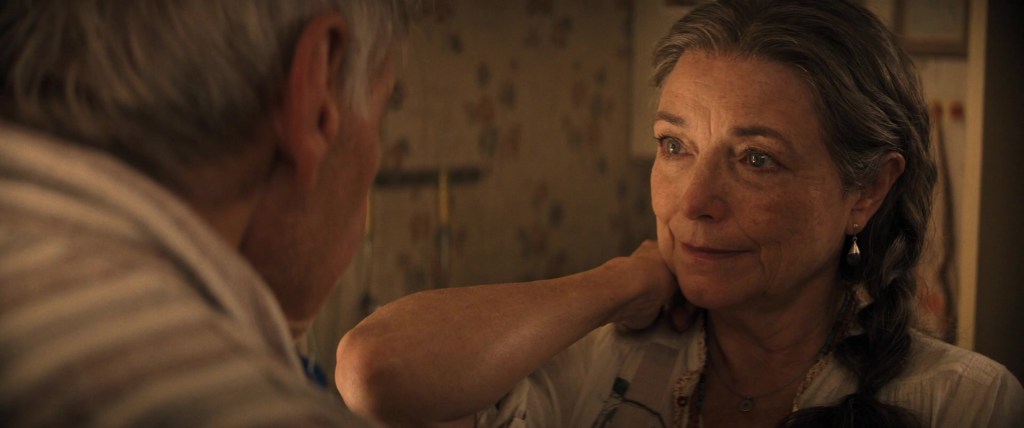
After Indy wakes up back in his apartment in New York City—courtesy of a well-timed sucker punch from his goddaughter and a forced trip back to the present, where modern medicine can probably do something about that gunshot wound—he asks Marion where it doesn’t hurt. The film quietly mirrors their night together aboard the Bantu Wind in Raiders of the Lost Ark—only now the roles are reversed.
Back then, Marion was tending to the physical damage. This time, they’re both tending to something much deeper. For the first time, Indy understands what Marion’s been carrying. But more importantly, he finally knows how to start tending to her wounds.
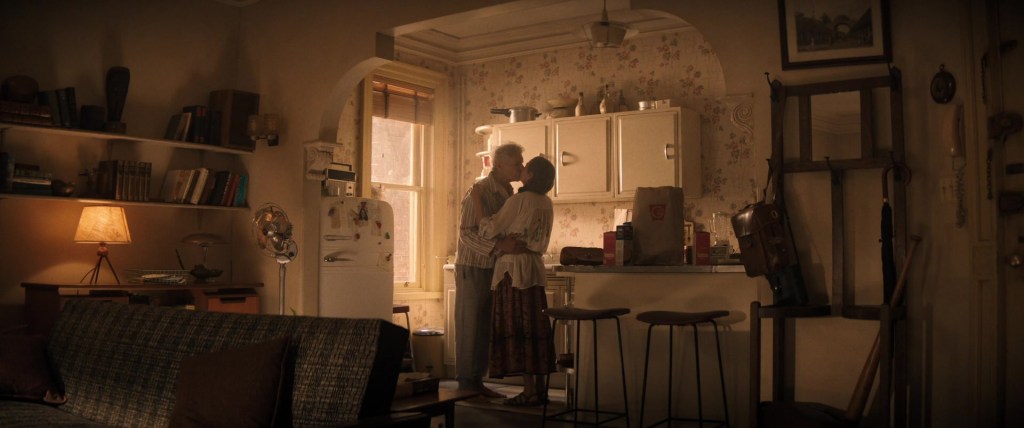
And for the first time, maybe he finally lets her understand what he’s been carrying too. Not separately. Together. And hopefully, that’s how they finally begin to heal.
Alright, that’s enough serious talk. We’ve been carrying around enough emotional baggage for one adventure, so I’m putting it back in the satchel. Let’s get back to punching Nazis, making questionable archaeological choices, and narrowly escaping certain death.
MANGOLD’S MAN-HANDS
A one-time replacement for Spielberg’s Fingerprints. This is where I look at how James Mangold handles the keys to the kingdom—what he borrows, what he changes, and where his own filmmaking instincts leave their grip marks on Indiana Jones.
REFLECTIONS
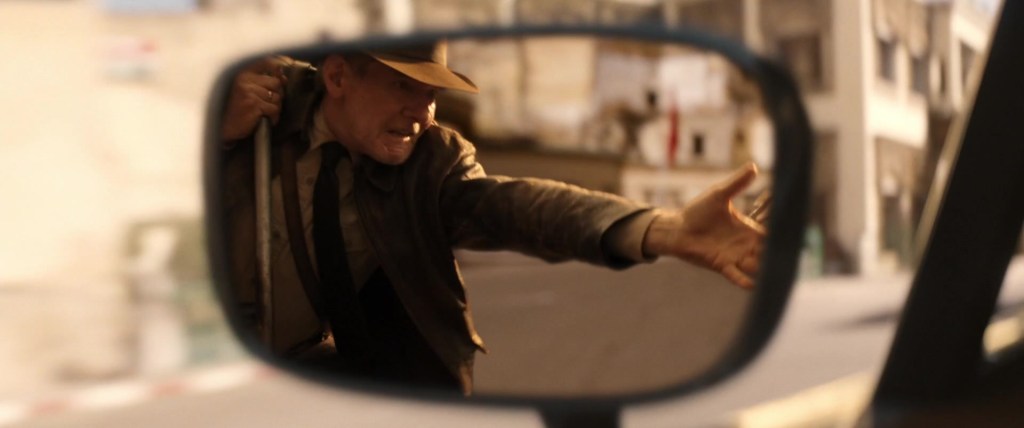
While they don’t linger quite as long as they typically did under Steven Spielberg, it’s fun watching James Mangold work a few of Spielberg’s visual trademarks into the mix and keep that tradition alive. I swear the tuk-tuk chase through Tangier is packed with these little Spielberg facsimiles—quick reaction shots, visual gags, characters constantly moving through chaos—and I don’t hate it.
THE SPIELBERGIAN FACE
I know, I know—it’s not exactly the same. But James Mangold does manage to pull off a couple of classic Spielbergian Face shots, even if they flash by so fast you might miss them while doomscrolling on your phone. One of the best comes right before Indy leaps into the other tuk-tuk to avoid a head-on collision: that quick, wide-eyed beat where the realization hits a split second before the chaos does.
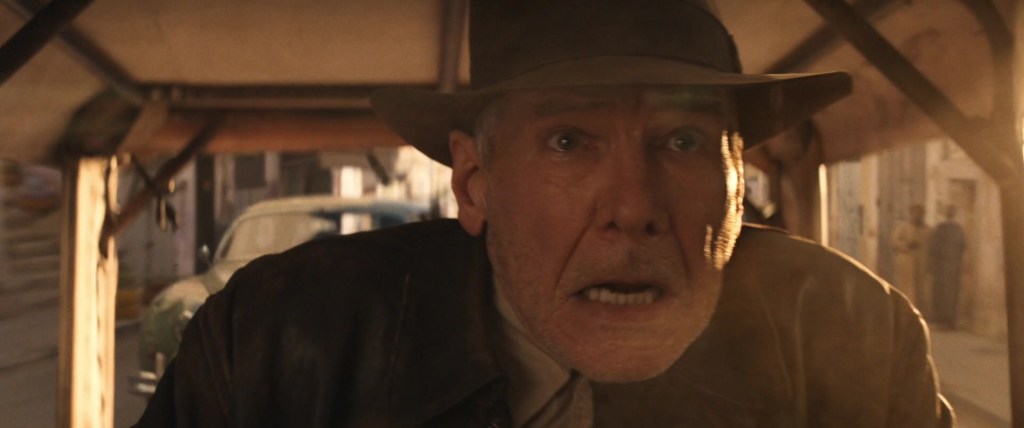
There are probably some clear indicators of James Mangold’s directorial style throughout Indiana Jones and the Dial of Destiny, but I don’t know them the way I know Spielberg’s. So rather than pretend I do, I’m going to stop while I’m ahead and move on to the next category.
THE TECHNICALS
BEST QUOTE / BEST CALL BACK
Helena Shaw: You’re not moving.
Indiana Jones: I’m thinking.
Helena Shaw: About?
Indiana Jones: About what the hell I’m doing up here, 40 feet in the air with crap shoulders… crumbling vertebrae… a plate in one leg, screws in the other.
Helena Shaw: Yeah, I get it. I get it.
Indiana Jones: No, you don’t get it. You’re half my age. You haven’t been forced to drink the blood of Kali.
Helena Shaw: No. Fair enough.
Indiana Jones: Or been tortured with voodoo. And I’m just guessing, but I don’t think you’ve been shot nine times including once by your father.
Helena Shaw: Dad shot you?
What makes this my Best Quote and Best Callback is how it works on two levels at once.
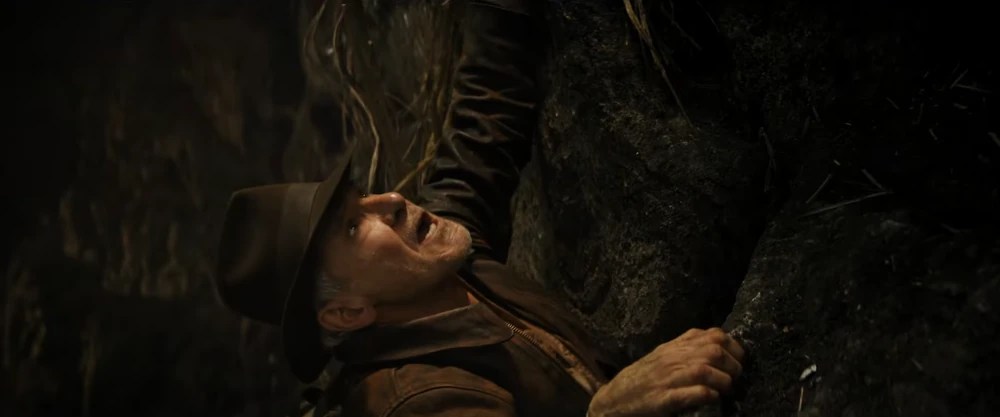
On the surface, it starts as a simple exchange about why Indy is taking so long to climb. His answer begins with the literal mileage his body has accumulated over the years—and by 1969, it really is both the years and the mileage: crap shoulders, crumbling vertebrae, metal in both legs. It’s the most honest physical inventory of damage he’s ever given.
Then Helena tries empathy, and Indy pivots into the strangest résumé imaginable: drinking the Blood of Kali, being tortured with voodoo, and getting shot by her own father.
And just like that, the movie reminds you that all of it happened.
For a franchise that often treated Indiana Jones and the Temple of Doom like the red-headed stepchild of the original trilogy, it was genuinely satisfying to hear Indy finally acknowledge it out loud—not as some throwaway wink to the audience (or a framed picture of Willie Scott sitting in the background that no one could really make out), but as lived experience—another scar he still carries.
Although if anyone at Lucasfilm wants to explain how the same man who drank magic blood and watched hearts get ripped out still told Marcus a year later in Raiders of the Lost Ark that he didn’t believe in magic or superstitious hocus-pocus… that’d be great. Or maybe someone should go back and retcon Raiders so the continuity plays a little better for modern audiences.
Just kidding. Seriously, nobody at Lucasfilm better take that as a suggestion. Please don’t touch Raiders of the Lost Ark. It’s an artifact that belongs in a museum!
BEST FIGHT
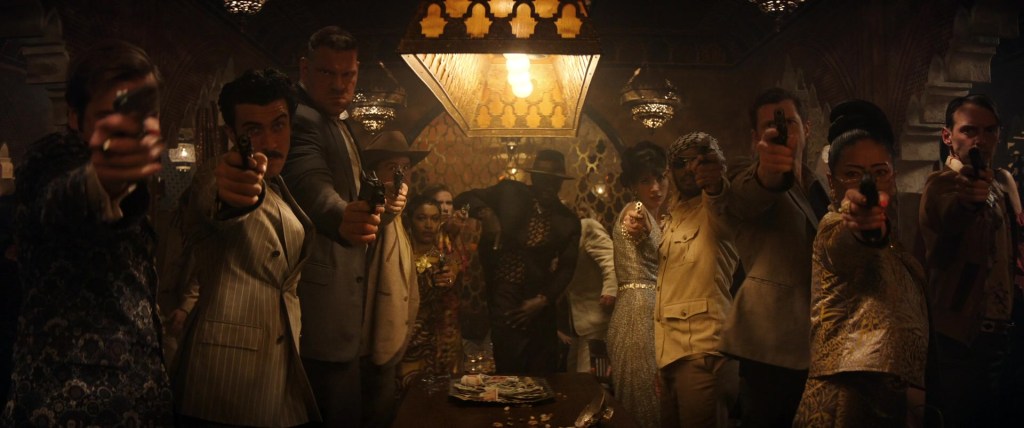
The best fight scene in the film—especially since we’re dealing with an Indy enjoying what might be the final lap of his seventies—is what I can only describe as bringing a whip to a gunfight.
Real archaeologists don’t carry whips. Indy carried one because he’s an action hero, and over time it became his signature weapon. Which is still kind of ridiculous.
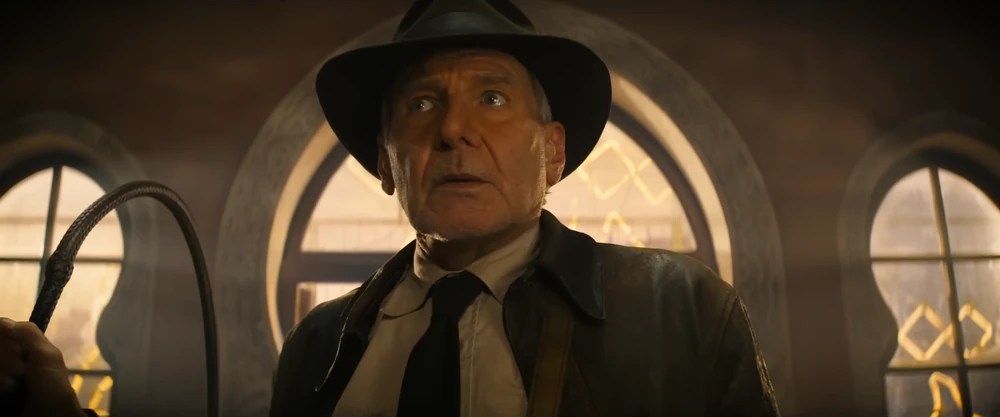
That’s what makes this moment work so well. Indy pulls it out like it’s still going to command the room, only to realize—almost immediately—that it doesn’t. It’s funny, a little sad, and oddly fitting. Not just for Indy, but for the franchise itself, still clinging to the old tricks even as time reminds everyone they don’t hit quite the same anymore.
Plus, watching Indy sucker punch Klaber for what feels like the second or third time in the same sequence is always an added bonus.
BEST ACTION SEQUENCE
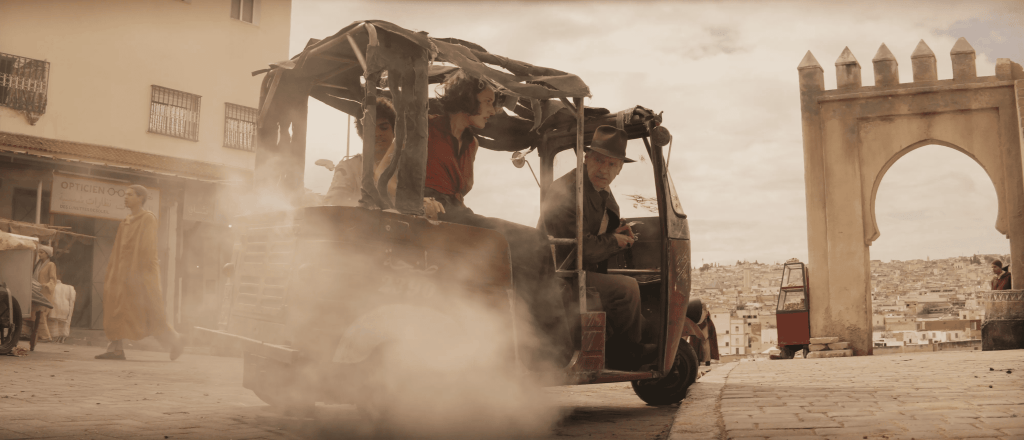
Best Action Sequence is easily the tuk-tuk chase through Tangier. It has the most Spielbergian rhythm of anything in the film—balancing edge-of-your-seat action with just enough slapstick to keep things light without leaning too hard into either. More importantly, it’s one of the few sequences where the blend of CGI, practical effects, and blue screen holds together without showing too much of the stitching.
I seriously considered the train chase from the cold open (or prologue if you’re keeping score), because it carries that same Spielbergian rhythm—especially the moment when the gunner operating the twin cannons is wiped out by British bombers, sending the guns into a wild spray of friendly fire across the train itself as the cars bend around the curve. It’s a fantastic beat. But as good as the de-aged Harrison Ford looks, the illusion still cracks just enough to pull me out of it, and that gives Tangier the edge.
BEST SINGLE FRAME
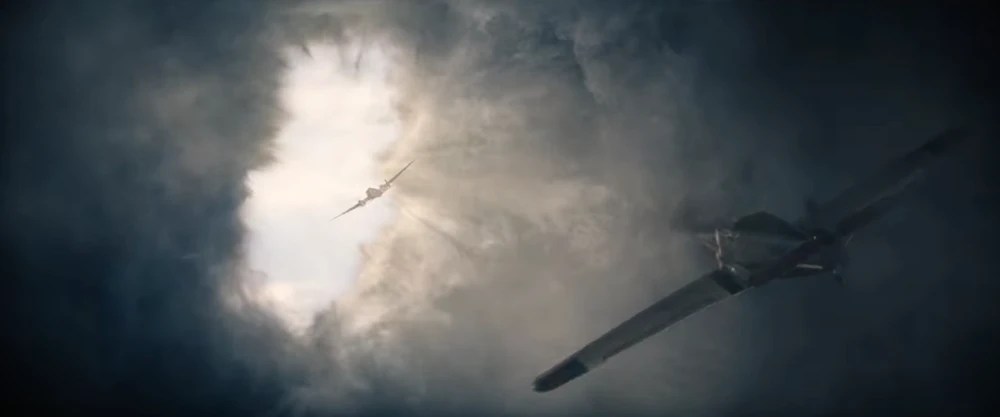
These days it’s all microchip processors, high-end graphics cards, gigabytes of RAM, terabytes of storage, and enough computing power to make the Apollo program look like it was run on a 12 amp vacuum cleaner. (That’s an Apollo 13 joke, in case you thought I was having a stroke.) The odds that even an inkling of this shot was created with practical effects are probably slim to none, but whatever combination of James Mangold, cinematographer Phedon Papamichael, an army of visual effects artists, and an untold number of computers it took to create the image of two airplanes flying through a fissure in time, the end result is nothing short of breathtaking.
This isn’t Spielberg magic. It’s digital magic. But it’s still magic.
THE MOMENT MY WIFE FORGOT I WAS IN THE ROOM
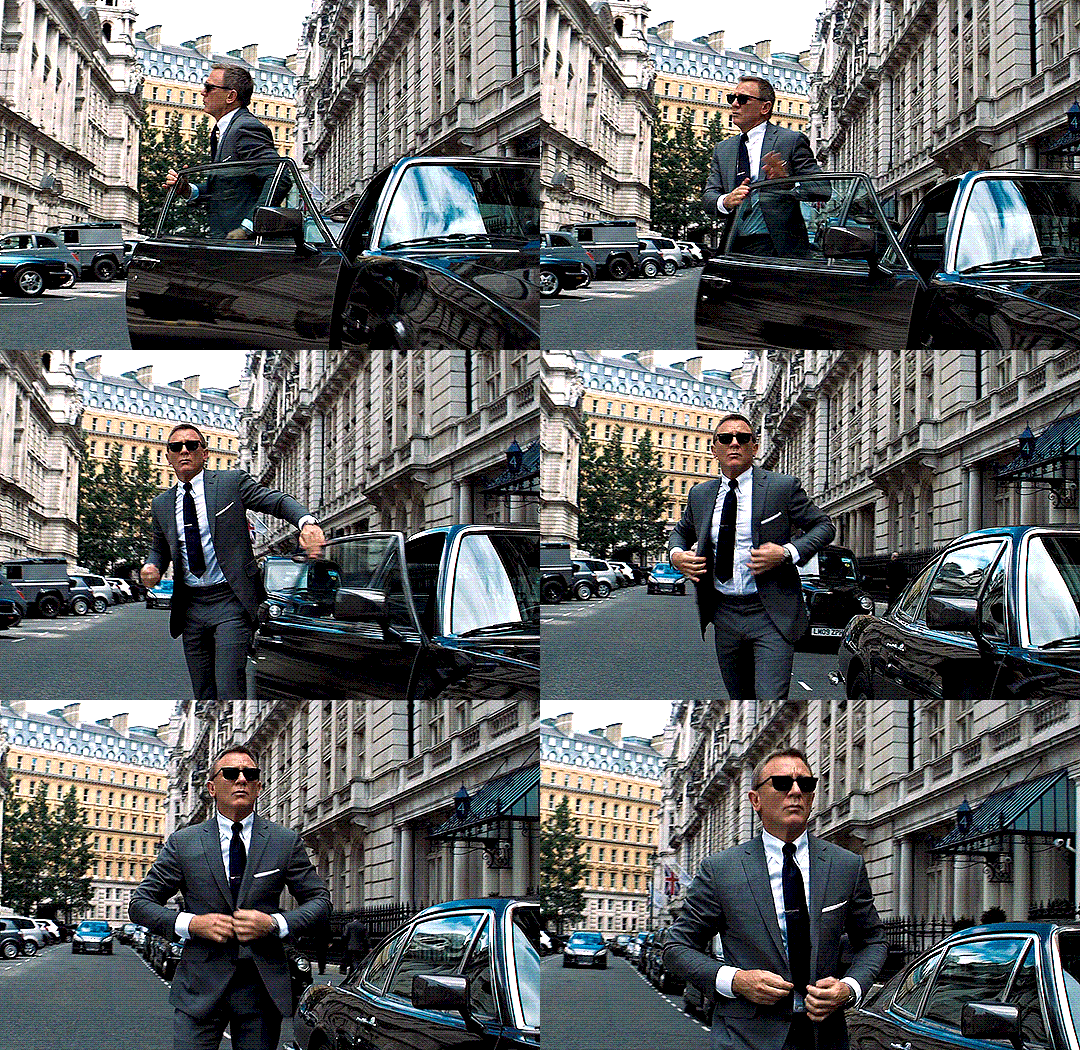
By the mid-2010s, this category probably should’ve been renamed The Moment My Wife Replaced Harrison Ford with Daniel Craig. Which, honestly, feels appropriate considering Ford’s age by this point, and the fact that Craig’s Bond movies are the only Bond films she’ll willingly revisit with me.
Now I finally understand why.
That’s not a knock against Harrison Ford. We still love him in this house. And if you haven’t seen him in Apple TV’s Shrinking, you’re missing some of the funniest and most heartfelt work he’s done in decades. Turns out all it took was getting older for Harrison Ford to become even more Harrison Ford.
THE FIELD NOTES
THE LAST LOST TRANSITION
And in this corner, one horse, beaten to death. Round One. Fight!
Alright, this is probably a bit of a downer way to kick off these Field Notes, but let’s get this out of the way first.
Home video and streaming can be a tricky thing when it comes to distribution, because I could’ve sworn the Paramount Pictures logo wasn’t there when I saw Indiana Jones and the Dial of Destiny in theaters back in 2023. If memory serves, it was just Walt Disney Pictures, then Lucasfilm, and off we went.
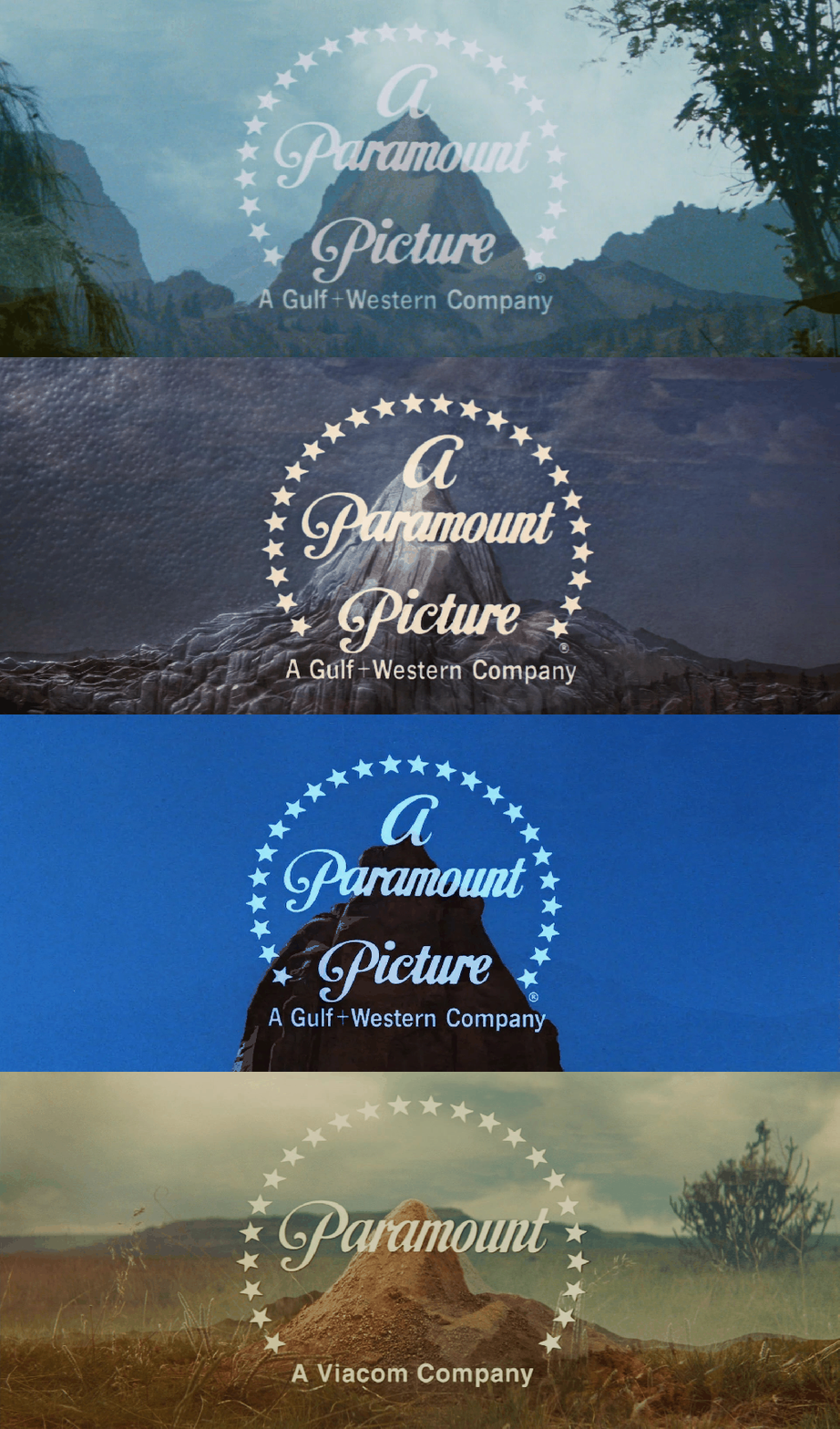
But watching it again on Disney+, there it was—Paramount, awkwardly sandwiched between Disney and Lucasfilm. Which is both interesting and immediately frustrating.
Because that little sight gag—that visual transition from the Paramount mountain into something inside the movie—has been part of Indiana Jones since the beginning. It’s one of those tiny franchise rituals that means absolutely nothing to the story and somehow everything to the experience.
And it aggravates me more than it should that on Indy’s final adventure, the series had one last chance to honor its oldest ritual—and just let it pass by. Maybe that’s the point.
Because Dial of Destiny is the first Indiana Jones movie without Steven Spielberg behind the camera. No George Lucas story credit. No traditional romance. An eighty-year-old Indy. And somehow… time travel. So maybe the missing transition was trying to tell me something before the movie even started.
THE LAST LAST CRUSADE
One of the more fascinating behind-the-scenes decisions was Steven Spielberg stepping down as director and handing the reins over to James Mangold. On paper, that makes sense. A fresh filmmaker. A fresh perspective. A new set of hands on the wheel.
But when your lead protagonist is a septuagenarian—a word I don’t particularly care for and would never use in normal conversation, but felt obligated to look up, make sure I spelled correctly, and then whip out anyway—you have to ask: how many more adventures did anyone realistically think Indiana Jones was going to have after this?
Shouldn’t he be collecting Social Security by now?
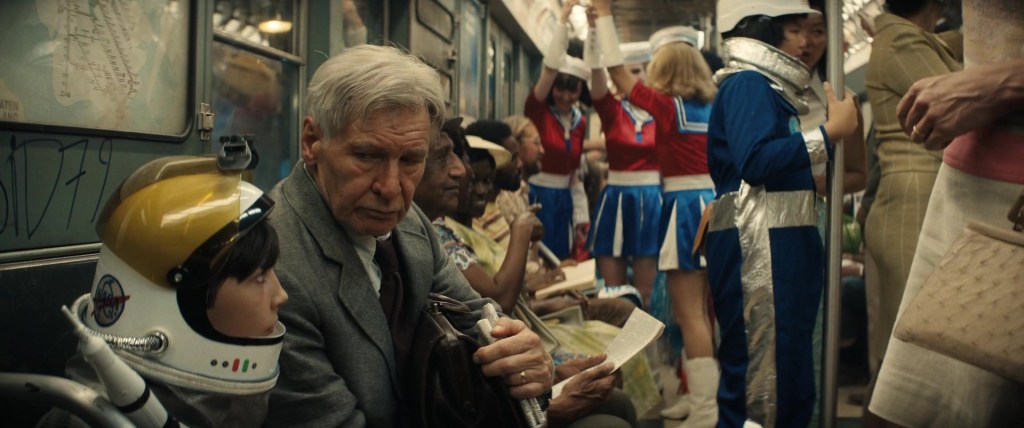
Was there really some secret roadmap where Indy survives this only to hop on the subway next week, pick up his blood pressure meds at Duane Reade, knock out Marion’s honey-do list at the nearest bodega before dinner, and then hope he took the right train home and didn’t somehow end up at Coney Island instead?
INDY LOGIC: ACTS OF GOD
Imagine being the guy whose plane was stolen by Teddy. You go to bed the night before, sleeping in your plane, knowing you’ve got a full docket of tourists to fly across the Mediterranean in the morning. Instead, you wake up to a twelve-year-old hijacking your aircraft, chasing a larger plane covered in swastikas, barreling straight into what you can only assume is some kind of hole in time.
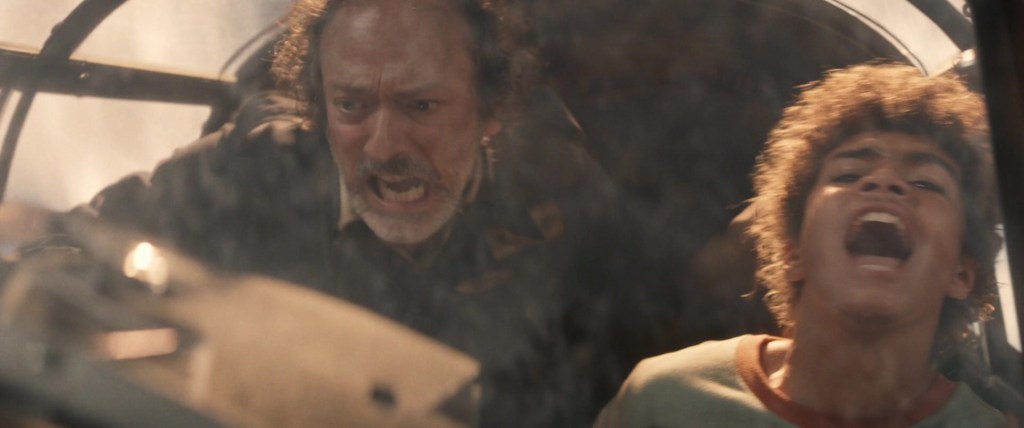
Try explaining that to your insurance company. There’s no paperwork for that.
INDY LOGIC: THE WORLD’S WORST TEAMS MEETING
So… was Indy always meant to travel back in time?
Because that’s what it feels like.
That it was destiny for Indy and Helena to find the Antikythera, so Voller could steal it, so they could follow him, so they could end up exactly where Archimedes always intended them to be. It’s a strange little time loop that makes my brain hurt if I stare at it too long.
And let’s talk about the Antikythera itself for a second. If Archimedes really built this thing with the sole purpose of bringing people back to him specifically, that feels like a pretty serious design flaw. Imagine inventing time travel and your only setting is “Come See Me.”
That’s not a machine. That’s a Microsoft Teams meeting invite scheduled for thirty minutes, only accessible if both parties have Teams installed, and even then you’re still stuck waiting for the host to let you in. And once you’ve joined, that person just wants to spend twenty-five of those minutes trying to sell you an extended warranty for the Antikythera before giving you back the last five. That specific observation comes from personal experience, as I’m sure you can tell.
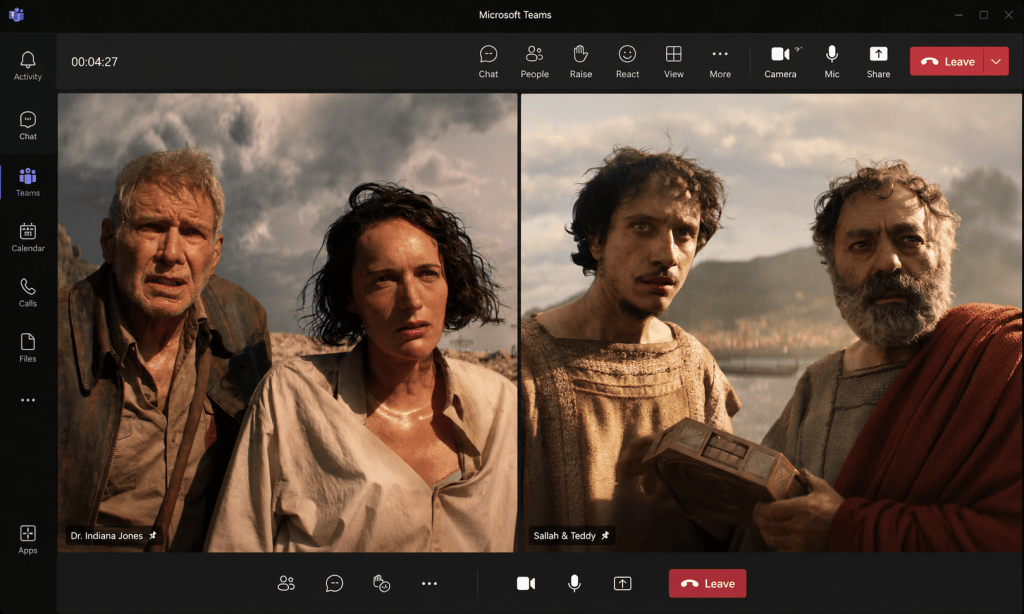
It also neatly completes the loop when Archimedes pulls Voller’s watch off his remains and is wearing that same watch centuries later when Indy and Helena discover his tomb—which, let’s not forget, is marked with a phoenix fitted with propellers.
Meaning that watch only exists in history because it was taken from the future and brought into the past. That’s either brilliant storytelling or the kind of paradox that gets your Microsoft Teams invite stuck in an infinite loading screen.
PART-TIME HISTORIAN, FULL-TIME HUSTLER
I know what you’re thinking. And you’re right. Lord knows I don’t need any additional encouragement to keep going down rabbit holes about whether every supporting character in this franchise also had some kind of adventurous life before throwing a metaphorical wrench into Indy’s daily routine. But once you start down that path, it’s hard to stop.
Thankfully, this is the final entry, and whatever I’m cooking up next probably won’t have the same room for this particular brand of silliness. So here’s what I’ve got.
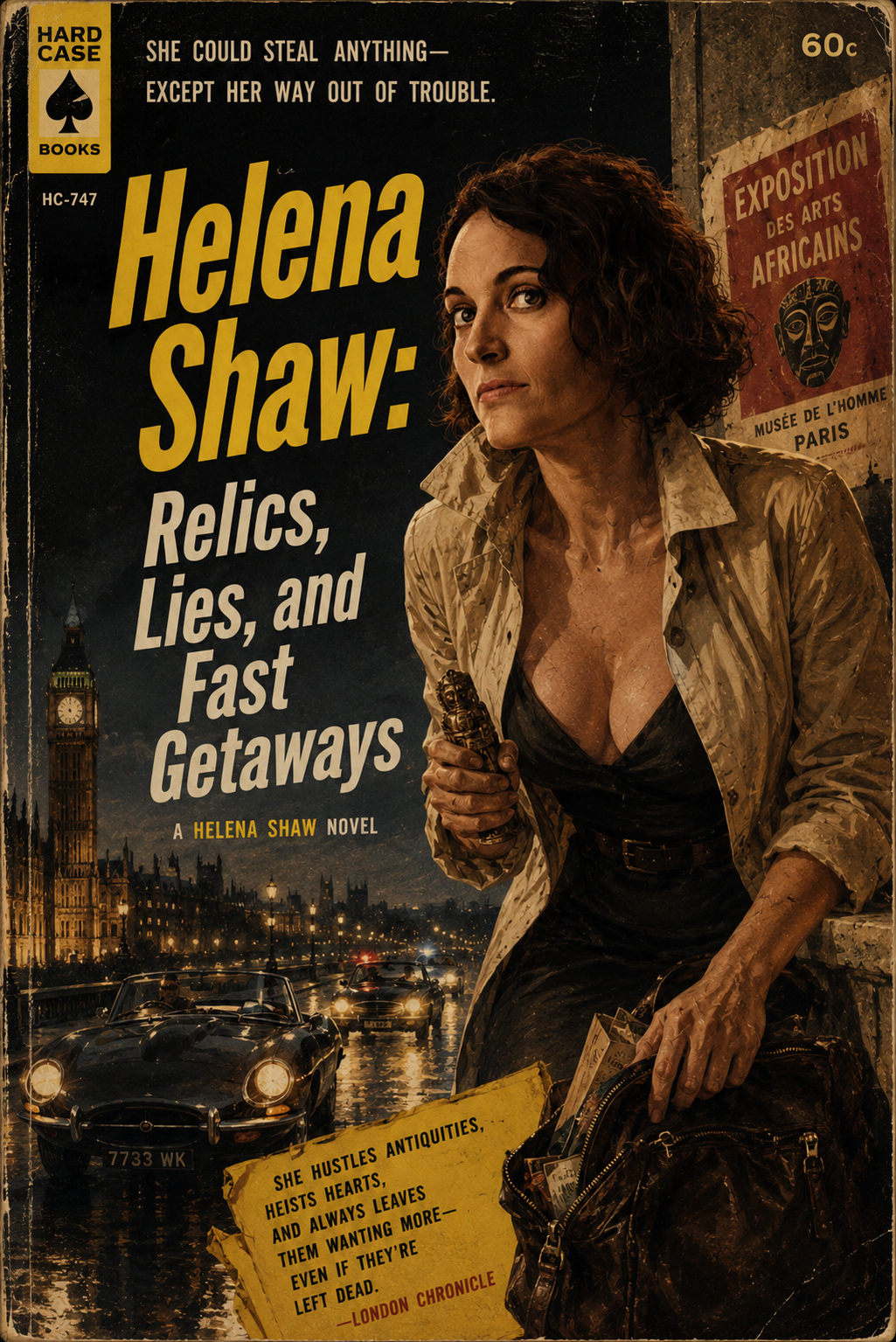
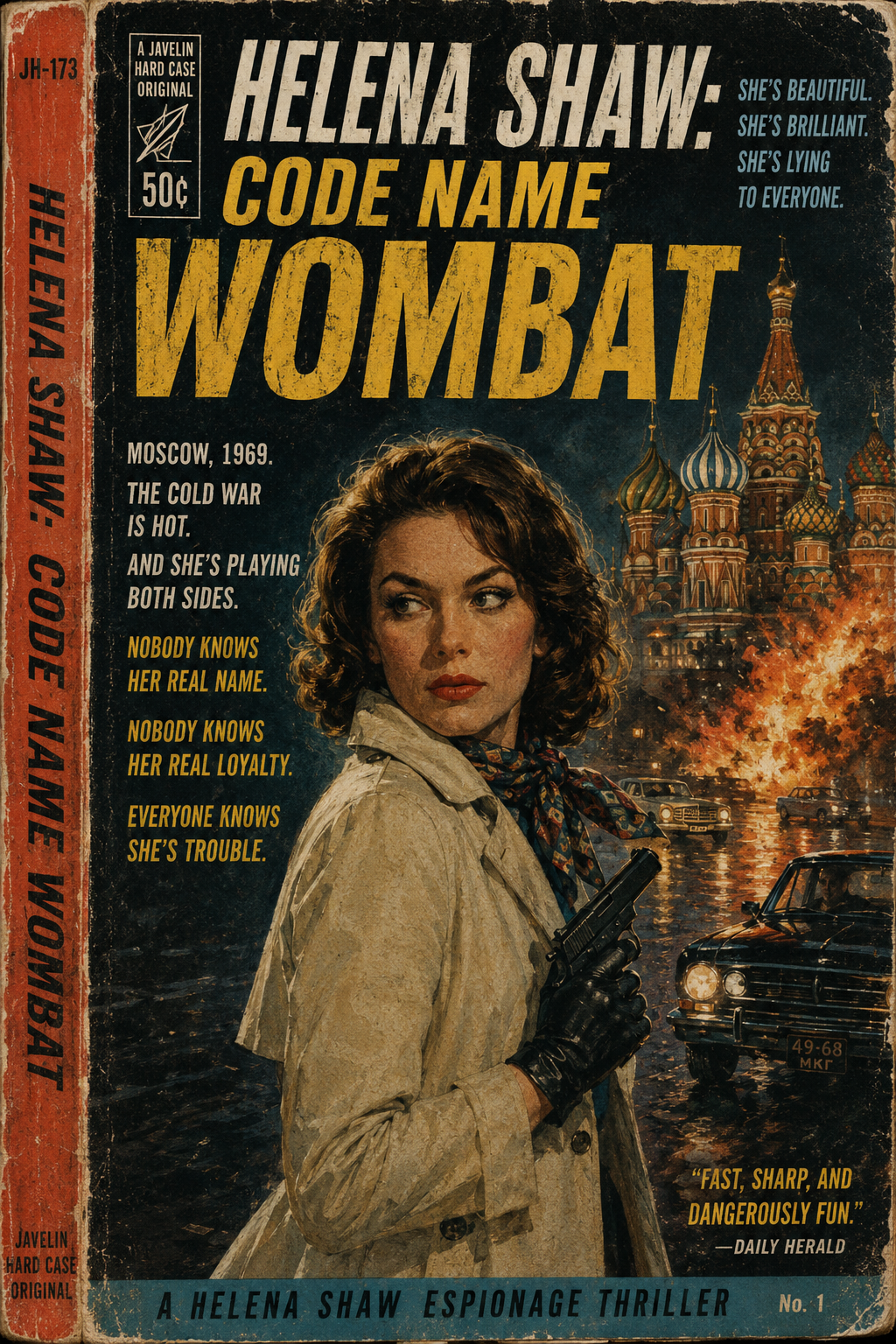
What was Helena Shaw doing before reconnecting with her godfather? Probably working both sides against each other, collecting government secrets, priceless relics, and selling whatever she uncovered to the highest bidder.
The only format that makes sense for her are dime-store pulp novels—stories steeped in Cold War paranoia, jewelry heists, espionage, and the occasional double-agent twist. (Not triple-agent. Let’s not get ridiculous.)
And honestly? I’ve had enough. You’ve had enough. It’s time to move on. This post isn’t going to finish writing itself.
THE ARTIFACT ROOM
I’m not going to lie—there aren’t a lot of behind-the-scenes stories or pieces of trivia about Indiana Jones and the Dial of Destiny that I found particularly worth sharing. I’m not sure why. Maybe it was a relatively smooth production. Maybe not enough time has passed for the gossip, rumors, and genuinely interesting stories to bubble up.
Either way, the display cases in the Artifact Room are a little emptier this time around, and I’m perfectly alright with that. These posts have already stretched far longer than I ever intended, so there’s no sense digging for artifacts that aren’t there.
RAIDERS OF THE LOST MOUNTAIN
Hey, is that the same dead horse he’s been beating the ever-living hell out of throughout this post? Maybe. Hard to tell. Could also be the one Indy rode down into the New York City subway system.
Anyway…
Back in 1979, George Lucas and Steven Spielberg made a five-film deal with Paramount Pictures—and yes, I know, I already touched on this in my Indiana Jones and the Kingdom of the Crystal Skull post. If you want the fuller version, you’ll have to go back one week in the archives. Lucasfilm produced the films, Paramount distributed them, and that’s why the Paramount mountain opens the first four movies.
Long story short, when Lucas sold Lucasfilm to Disney in 2012, Paramount lost distribution rights—leaving only a legacy credit, which effectively killed the site gag Spielberg came up with in 1980 while shooting Raiders in Hawaii. Frank Marshall explains:
“We were setting up in Kauai, and [Spielberg] called me over and he said, ‘Look, I need to find a mountain. I need you to go find a mountain that looks like the Paramount logo, where we can shoot.’ And I went, ‘Okay.’ And because it was sort of a last-minute request and we didn’t have CGI to fail back on, I had to drive around the whole island until I found a location that would work for us, and for a few extra pineapples, we got it.”
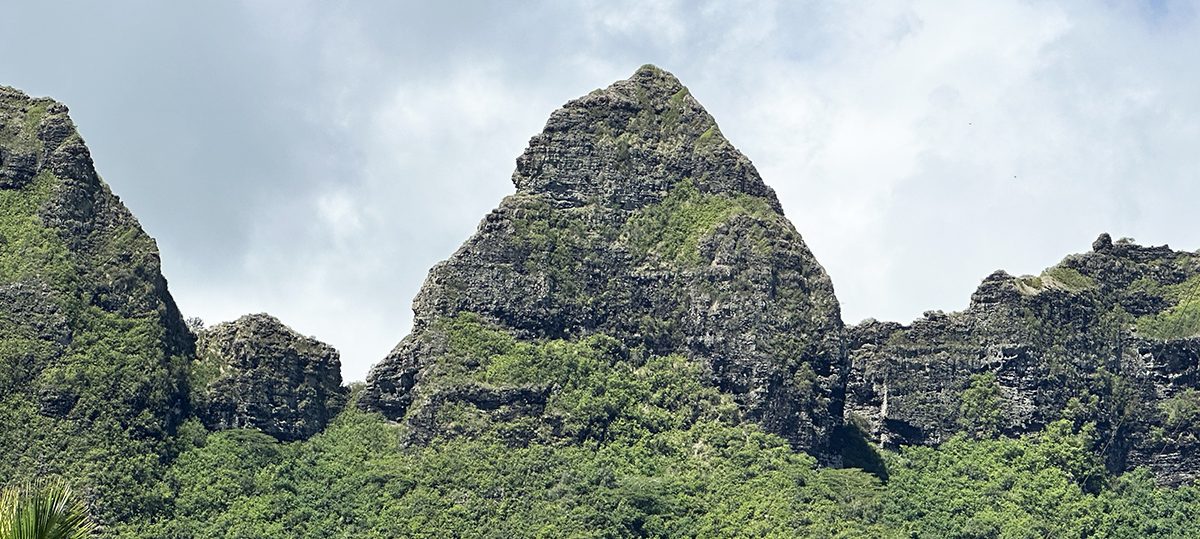
So here’s my thought: if Spielberg had directed Dial of Destiny, the site gag might have had one last hurrah. Maybe. Instead, the reins went to James Mangold—and no disservice to him—but I’m guessing he doesn’t have the same pull. I guess we’ll never know.
RECONSTRUCTED ARTIFACT
According to Harrison Ford during an interview with Stephen Colbert, the de-aging process wasn’t some simple digital facelift. Lucasfilm apparently fed decades’ worth of unused footage, old takes, and archived film into an AI program that could comb through every frame Ford ever shot for the studio—right down to how light hit his face and how certain expressions moved. Which, I suspect, is why this is the most convincing de-aging we’ve seen over the past decade or so. Instead of asking a computer to invent a younger Harrison Ford, they asked it to reconstruct one from Harrison Ford himself.
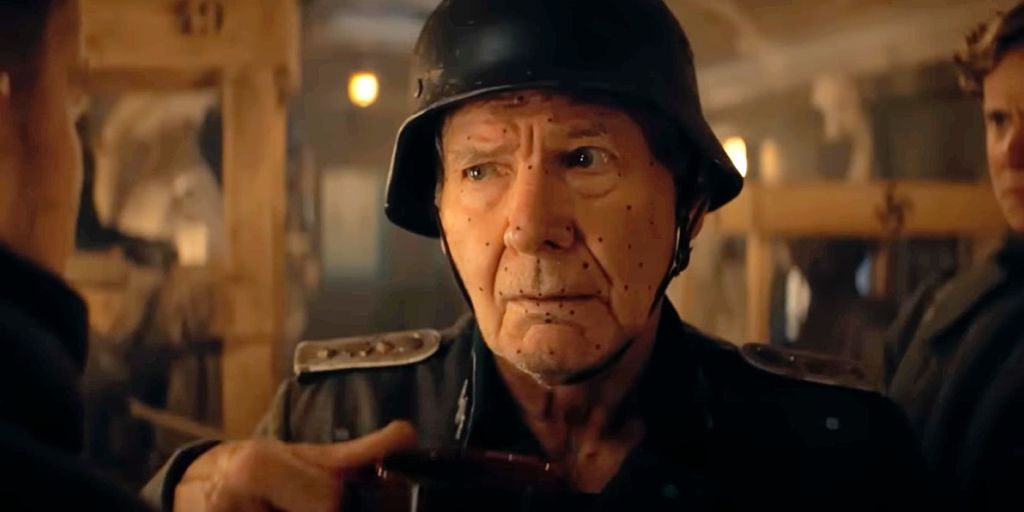
Ford still performed the scene himself, dots on his face and all, while the computer rebuilt forty years of mileage in post-production. And at eighty years old, that officially made him the oldest actor ever digitally de-aged for a film, which feels oddly fitting for a movie about time, regret, and trying to outrun both.
THE PRICE OF ADVENTURE
The film was originally slated for a 2021 release, but the pandemic—and later a shoulder injury to Harrison Ford—kept pushing it back. At some point it almost feels like the universe was politely suggesting everyone slow down for a minute. Disney and Lucasfilm, however, kept pressing ahead.
By the time Indiana Jones and the Dial of Destiny reached theaters, it had become one of the most expensive movies ever made, with nearly $400 million reportedly spent on production and marketing combined.
That’s an awfully expensive archaeology lesson.
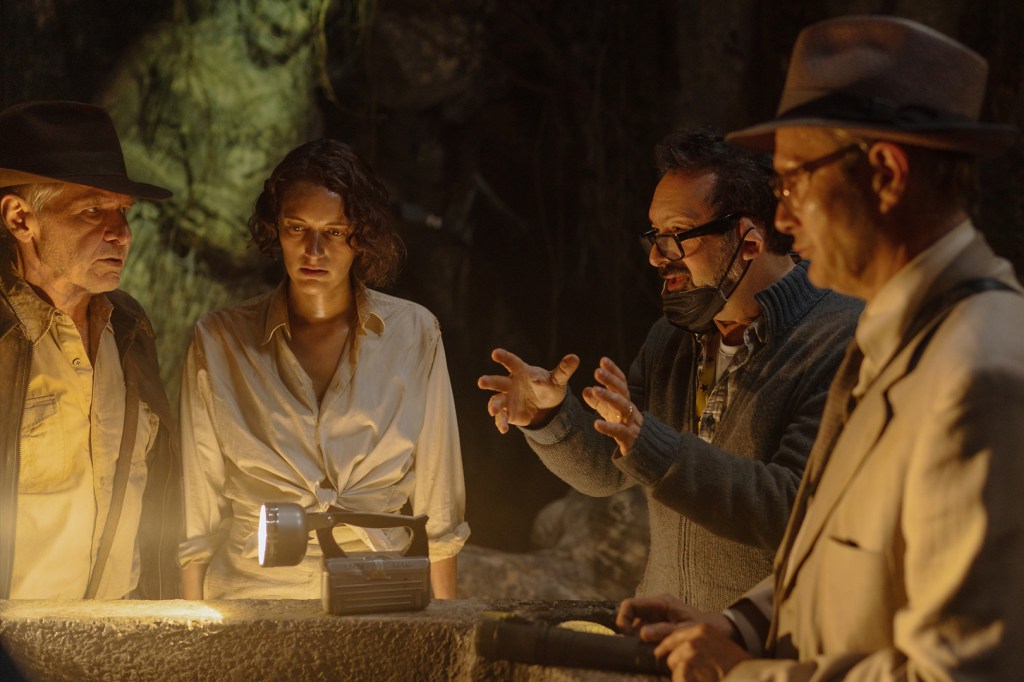
The film ultimately earned around $384 million worldwide, falling well short of what it needed to break even. You can blame streaming, changing audience habits, or a post-pandemic box office, but I think the bigger question is whether an Indiana Jones movie ever needed to cost this much in the first place.
The search for Archimedes’ Dial became the second most expensive archaeological expedition in history. And the only treasure Disney and Lucasfilm failed to recover… was the one they buried making it.
BUILT FORD TOUGH
In a Dutch interview on YouTube, Olivier Richters admitted he accidentally hit Harrison Ford hard enough during a fight scene to give him a mild concussion. Which, in fairness, barely cracks the Top 10 list of injuries Ford probably sustained while making these movies.

CLOSING THE JOURNAL
Indiana Jones and the Dial of Destiny is the true outlier of the franchise. Some people would argue Crystal Skull holds that title, but I don’t think that’s entirely fair. Dial of Destiny is the only film that deliberately breaks the formula the first four movies established. Whether those changes work will probably depend on what you wanted from Indy’s final adventure.
What I wasn’t prepared for was a grieving father becoming the emotional center of the story. Yes, he’s still Indiana Jones, but he’s also an old man watching his life slowly fall apart. He’s lost his son. He’s losing Marion. He’s yelling at his neighbors, drinking too much, and counting down the days until retirement. That’s not the Indy I grew up with—but it’s probably the one this story needed.
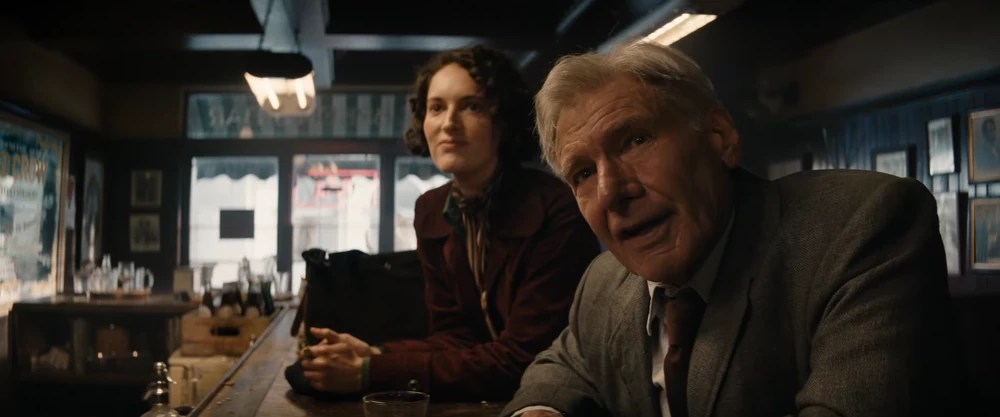
And to the film’s credit, that’s also what it gets right.
Dial of Destiny is ultimately about time, aging, and family, and unlike Crystal Skull, it doesn’t make age the punchline—it makes it the point. Voller is one of the franchise’s stronger villains because his obsession feels disturbingly believable, and bringing Marion back gives Indy something far more valuable than another artifact: a chance to finally begin healing.
The movie isn’t without its problems. The runtime could easily lose twenty minutes. Some of the CGI still reminds you that you’re watching eighty-year-old Harrison Ford’s face pasted onto someone else’s body, and the first hour takes its sweet time getting Indy back into the adventure. The action is exciting, but it often feels like the story exists to connect the chase scenes rather than the other way around.
More than anything, Dial of Destiny knows what an Indiana Jones movie looks like. It doesn’t always know what one feels like. Thankfully, Mangold gets close often enough that, by the end, the adventure still feels like Indiana Jones.
Steven Spielberg and George Lucas captured lightning in a bottle. Twice, without question. Three times if you believe Temple of Doom deserves to stand shoulder-to-shoulder with Raiders and Last Crusade. And if that sentence makes you irrationally angry, this probably isn’t the paragraph that’s going to change your mind.
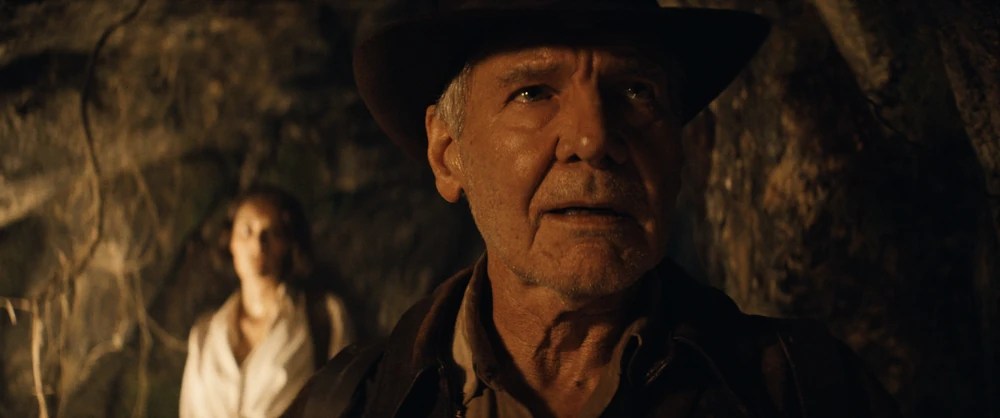
James Mangold was handed the impossible task of catching it again forty years later. Sometimes he does. Sometimes you can still see the seams. But even then, I still enjoyed the ride.
It wasn’t the farewell I expected. It wasn’t even the farewell I would’ve written. But it gave Indiana Jones something he’d never really had before: peace.
And for a man who’s spent a lifetime chasing history…
…that feels like the right place to close the journal.


Leave a Reply